You probably remember it clearly: one of your closest friends flirting with the person you liked while knowing exactly how you felt; finding out from someone else that someone you thought was your friend didn’t like you nearly as much as you thought they did. Maybe, with years behind you now, those memories don’t hurt much anymore, but we know moments of betrayal can be devastating for teens.
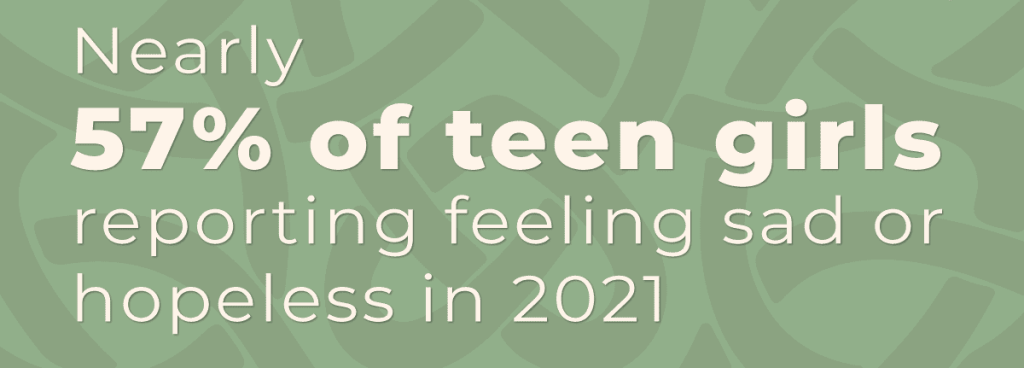
Betrayal shouldn’t be taken lightly, no matter how childish the matter may seem from an adult perspective. Any betrayal significant to a teen is significant when it comes to their mental health. Teens can also experience betrayal that would hurt adults, too, such as a friend not spending time with them anymore in favor of focusing on another relationship, or a friend abandoning them at a time when they could’ve really used someone to lean on. With nearly 57% of teen girls reporting feeling sad or hopeless in 2021, and evidence showing those numbers are only rising, it’s vital we take every step we can to ensure the girls in our community feel heard and supported, no matter the scale of the betrayal they’re facing.
Texas was ranked last in the United States when it comes to mental healthcare access in a study from 2022. At Roots Renewal Ranch, we’re determined to make high-quality mental healthcare and substance use recovery accessible to girls aged 13-17. We believe recovery is a family effort, too, so we happily involve families before, during, and after treatment.
Healing from betrayal works best with family support, so learning why betrayal happens, the effect it can have on your daughter, and how to help her recover, will be a huge help for anyone experiencing the heartbreak of feeling stabbed in the back.
Why Do Friends Betray You? Is There a Science Behind Betrayal?
Unfortunately, there isn’t a scientific way to explain why people choose to betray others, or what exactly leads to feelings of betrayal in the first place. All we can do is look at what we know about people, and human nature.
Betrayal ultimately involves breaking trust. After all, when you don’t trust someone, it doesn’t surprise you as much when that person does something hurtful, right? If that person is your friend, though, their wrongdoings sting. Sometimes, that trust isn’t split evenly. Maybe one person trusts the other, and because of past traumatic experiences, the other person has trouble trusting. That lack of trust makes them less invested in the friendship, and more likely to betray the friend that trusts them. Maybe, in some cases, they aren’t even aware of the amount of trust the betrayed person had in them.
It also comes down to motivations. Sometimes, people want something so badly that they’re willing to sacrifice other things that matter to them to get it. This can be especially true when it comes to romantic relationships. Maybe you feel betrayed because you think your friend dropped you for their significant other. From the perspective of “the betrayer,” they may feel insecure in the relationship and like they need to spend a lot of time with their partner out of fear of the relationship falling apart otherwise.
Sometimes, people may say what they feel they need to in order to fit in with someone they want to be friends with, and they don’t think about how much their actions will hurt other people. Sometimes, they do think about it, and decide it’s a worthwhile sacrifice. Other times, people betray friends because of some pain in the relationship that makes them angry, where they want to hurt their friend as a type of revenge.
There are many, many potential reasons for betrayal. The most important thing to keep in mind is that people are complex. There’s no “one size fits all” reason. The only way to know why someone betrayed someone is by asking them, and that can be really hard.
The Temporary and Lasting Effects of Being Betrayed by a Friend
Even if there’s no “one size fits all” answer to why people betray one another, there are some common emotions most people go through after someone breaks their trust, and these can be even more intense in the rapidly changing mind of a teen.
Your daughter will likely feel disappointed in her friend. It’s understandable; she had expectations for her friendship, and she has been let down. It will probably be surprising. After all, she trusted them, and there was no reason to expect them to give her a reason not to.
There will also be a lot of pain involved, and it’s okay for your daughter to feel hurt. More than that, it’s okay for her to grieve the loss of trust she had in that friendship. It may not seem like a big deal, but sometimes it is, and that isn’t anything to feel bad about.
Betrayal Trauma: How Betrayal Affects Mental Health
Yes, betrayal trauma is a real thing. It’s most common in cases such as abuse by a caretaker, or sexual abuse, but even less severe cases of betrayal can impact mental health, and shouldn’t be dismissed. This is especially true when it comes to teen mental health, because teen years are so formative, and their brains are still growing.
Any form of betrayal can cause grief. If you observe someone who has recently been betrayed, you may be able to watch them go through the same stages of grief as any other grieving person: denial, bargaining, anger, depression, and acceptance, though scientists in this area have found two other stages when it comes to betrayal trauma: shock and obsession.
People in the “shock” stage of betrayal trauma can’t wrap their heads around the betrayal happening. It’s that overwhelming surprise, and while this is often an early stage of betrayal trauma, the stages aren’t linear. That shock will likely make several appearances as the betrayed person heals.
The obsession stage comes when the betrayed person can’t stop thinking about the betrayal. It can involve paranoia and worry that other friends will betray them, and can greatly impact the person’s life and relationships.
No matter the severity of the betrayal, it’s okay to mourn the trust lost in that relationship. In fact, it’s important. Trying to move on from any pain without allowing time to grieve can lead to deeper feelings of despair, and can even cause depression long-term. Betrayal can also cause trust issues for the betrayed person in the future; they don’t have to be in the obsession stage to remember the way one friend hurt them, and fear that another will do the same thing. In some cases, this can lead to serious anxiety and other mental health concerns.
What to Do When Your Teen Turns to You For Help After A Betrayal
Learning about betrayal trauma and its impact may be frightening, but the good news is there are plenty of ways to help your teen recover from a friend betraying them. It’s good to know that betrayal trauma is serious, but it’s equally important to know that betrayal doesn’t always leave lasting trauma, and there are ways to make it less likely to happen.
It will require your teen to come to you for help, though, and after experiencing a breach of trust, it can be difficult for your daughter to want to open up to you. This will require a lot of patience. Understand that trying to force your daughter to open up to you won’t help the situation. Just make it clear to her that you care about how she’s feeling, and are willing to listen whenever she’s ready to talk.
When she does talk, it’s vital to value her feelings. This may seem like a given, but it’s harder than it seems, because it’s easy for adults to dismiss teens’ problems as immature or silly. Sometimes, you may come across this way without even meaning to. Practice active listening and empathy. You were a teen once. Did you go through something similar? Do you remember how devastating that moment was? Keep in mind, that’s how your daughter feels now. Handle the situation with care.
Lessening the Blow: How to Help Your Teen Recover When a Friend Betrays Her
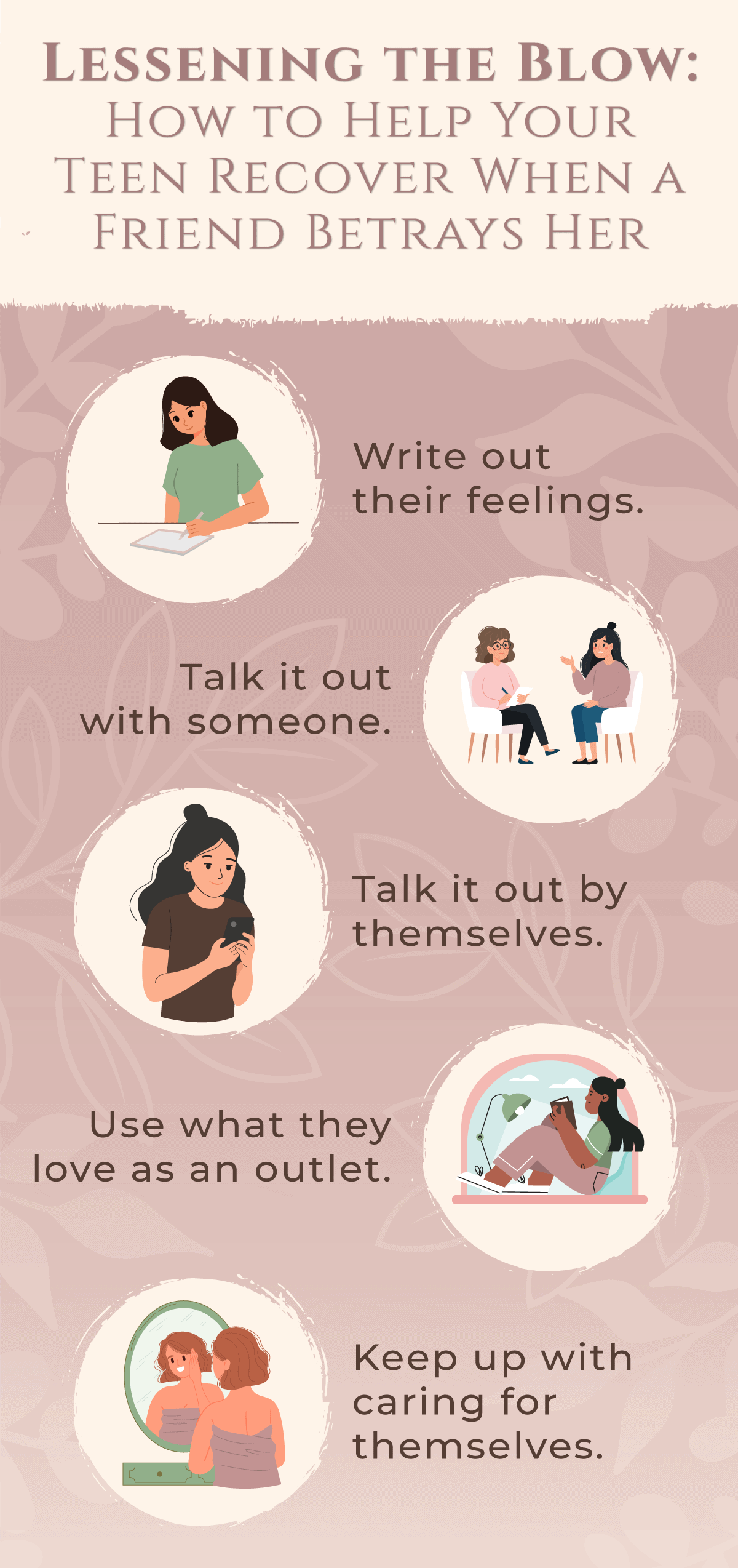
Once your teen opens up, you can suggest coping mechanisms to fall back on when dealing with the pain of broken trust. If you and your teen are in the aftermath of a betrayal, here are some things anyone can do to make those feelings more manageable:
- Write out their feelings. Even if your daughter isn’t usually a writer, getting how she feels out on paper (or typing it in a document) can help her organize her thoughts and better understand her feelings. Once she understands herself better, she can take bigger steps toward healing from the betrayal.
- Talk it out with someone. This will work better for some people than writing, but if both are possible, that’s great! You’ll probably be more than willing to listen to your teen’s troubles. You can encourage her to talk to you in detail about the problem. Keep in mind, though, that it may be more difficult for her to talk to you about the situation than a friend. That may hurt a little, but it’s okay. It’s usually just a matter of needing to talk to someone she’s sure can relate to her experience, and if anything, you can be glad that she has a friend she still trusts enough to vent to.That can be really beneficial, and help her get her thoughts in order, too. Even if her friend doesn’t offer the same helpful advice that you could, she’ll be able to get some of those feelings off her chest and be able to think more clearly going forward.
- Talk it out by themselves. This will seem like a weird one, but if talking helps your daughter, and she’s having a hard time trusting anyone else after being betrayed, you can suggest she tries recording herself talking, either through her phone or a video. It’ll feel less weird than just talking to herself, but still help her verbally figure things out if the other options aren’t for her. She doesn’t even have to keep the recording after, though if she wants to keep it as a “video diary” of a sort to refer back to later, that’s okay too. It may be tempting to want to watch or listen to whatever she records, and you can ask for permission if you want, but this is an important area to respect her space in so she feels free to process her feelings in the ways she needs to.
- Use what they love as an outlet. It’s a really good idea for your daughter to surround herself with friends and people she loves when she’s going through any kind of pain. When a person betrays someone, they may not want to talk to other people as much, and that’s fine, even if it’s also important not to isolate themselves. This is when it’s a good time to focus on hobbies. If your daughter likes art, music, or dancing, they can be a great medium to express herself, or just encourage her to channel her feelings into something that feels productive to her. If sports are her thing, exercise can really help kick negative feelings to the curb, too.
- Keep up with caring for themselves. When someone has been through something painful, it’s easy to focus so much on that pain that they forget about important things, even if they’re as seemingly simple as staying hydrated and eating enough. Keep an eye on your teen and remind her to drink water and eat regularly. If you notice she’s not, even with reminders, it may be helpful to take the initiative and bring her some water or a snack so she doesn’t have to worry about doing it herself at all. The act of kindness might help her feel a little better, too.

Finding Healing For Your Teen After a Friend Betrays Her
After your teen has taken some time to process her feelings, the next huge and difficult step to take is having a conversation with the person who betrayed her, if she can. There will be some situations where that isn’t safe or feasible anymore, and that’s okay. It’s still possible to heal from those betrayals too.
If the person agrees to talk to her, that’s great. She’ll want to stay as calm as possible. If she wrote down some of her feelings, like suggested in the previous section, it might be helpful for her to take them with her, or write down what she wants to say ahead of time. Conversations like this are better face to face, because a lot of honesty and emotion is lost through text and online messages.
There’s no telling how the person who betrayed her will react. It’s possible it was all a misunderstanding, and that they’ll willingly apologize and want to make amends. The opposite may be true too, however; you may find yourselves with someone who dismisses your daughter’s feelings and refuses to accept responsibility for hurting her. Remember that in the end, neither of you can control what the other person does. If your daughter reaches out, is honest, and tries to stay calm, she can end the conversation (and friendship, if necessary) knowing she did your best to make things right. That’s important!
If you’re both able to, you can also choose to look at the betrayal as a learning opportunity. Now, your daughter knows what hurts her in a friendship, and has more perspective on what matters to her. She knows the “red flags” of a friendship a little bit better, and also has a better idea of what she wants in a friendship, too. Now, she can spend more time with friends who have the qualities she wants, and build even better and stronger relationships. As a parent, you may think you already have all of this figured out for your daughter and that she should listen to your opinion on her friends. While that is true and important, sometimes the best way to learn these lessons is through experience.
At the end of all of the pain betrayal brings, forgiveness awaits. Forgiveness doesn’t mean deciding the betrayal was okay. It’s your daughter accepting that it happened, making peace with it, and letting go of that anger and pain so it doesn’t rule over her so much anymore. As a parent, you may be angry about this betrayal yourself, so this is a good step for you, too. Many people say it, and it’s true: forgiveness is for you, not the other person. Remember that you’re both the ones who will benefit most by letting go of resentment. Hanging on to those feelings long-term can cause even more problems and pain down the line.
Sometimes, the situation isn’t nearly as easy as this article makes it sound. Maybe you went through all of these steps and your daughter is still withdrawn and heartbroken, and nothing seems to help. Maybe her emotions are extreme and run haywire since the betrayal happened, or her relationships are tumultuous and unstable. You might feel like you “messed up” in helping your daughter through this difficult time, but just because the problem isn’t fixed doesn’t mean you did anything wrong. Even if you did, there are ways to make those wrongs right and promote further healing.
Your daughter may just need additional help from a professional, outside source. It may be useful to set her up with a counselor or therapist. In cases where nothing seems to make the situation better, or if additional trauma (such as abuse) is involved, it may be best to find her more intensive care.
At Roots Renewal Ranch, we understand the deep impact of trauma, whether that’s betrayal trauma or otherwise. That’s why we’re serious about addressing the trauma teen girls experience, alongside any mental health conditions that coincide with it. We approach treatment from a biological, psychological, social, and spiritual standpoint, and believe that these factors, combined with a safe and nurturing environment, can lead to teenage girls truly believing they are enough. For more information on our programs, visit our website or call us at 888-399-0489.

Frequently Asked Questions
What is the trauma of friendship betrayal?
Friendship betrayal can leave a lasting impact on how people perceive relationships. Betrayal trauma often makes it hard for those who have been betrayed to trust other people, as they’re afraid they’ll experience betrayal once again. It can also cause attachment issues, with betrayed people “clinging” to their relationships even more out of fear of losing them. It can also lead to long-term mental health problems, such as depression and anxiety.
What are the symptoms of betrayal trauma?
The biggest symptom of betrayal trauma is difficulty trusting again following betrayal in a relationship of any kind. Betrayal trauma can also manifest in different ways, though, including withdrawing from friends and family, depression, anxiety, nightmares, trouble regulating and expressing emotions, attachment issues, and even physical pain.

