
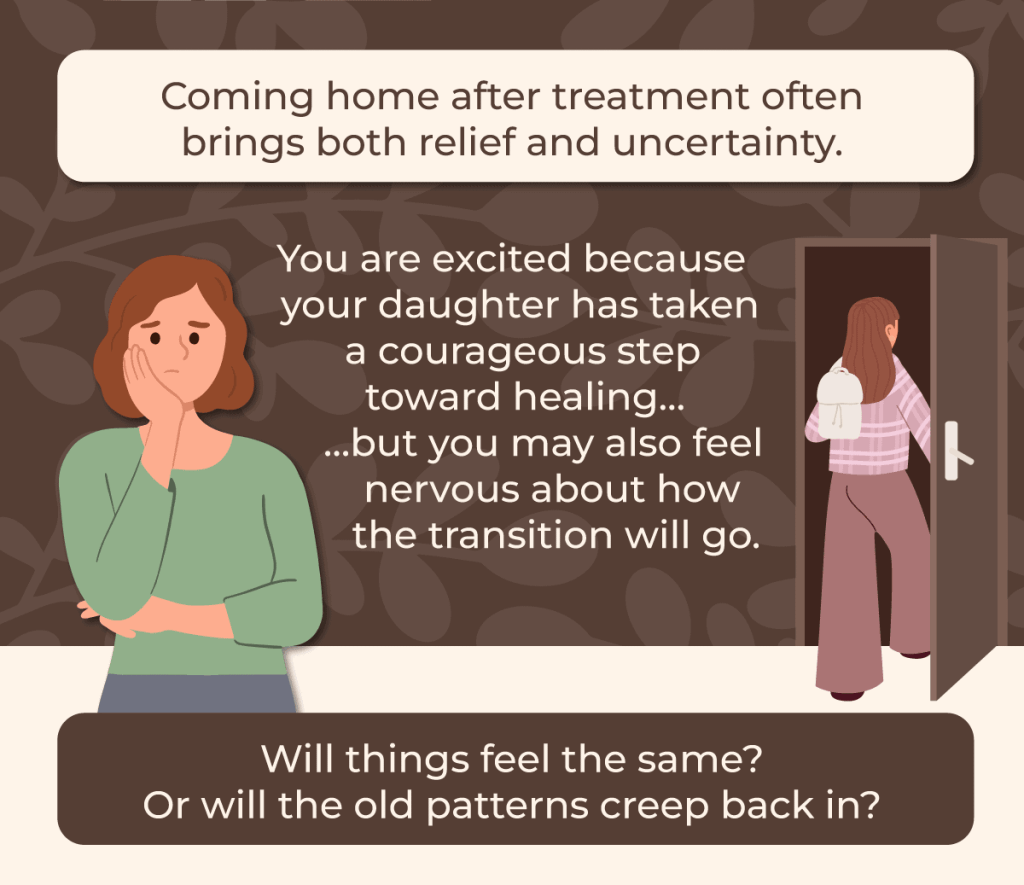
Coming home after treatment often brings both relief and uncertainty.
You are excited because your daughter has taken a courageous step toward healing…
…but you may also feel nervous about how the transition will go.
Will things feel the same?
Or will the old patterns creep back in?
It is okay to carry both the hope and the hesitation. It means you care deeply about her future. In Texas, many families face this next chapter without a clear road map. While treatment offers essential tools, reintegration into daily life can present new challenges. Routines change, relationships shift, and everyone is asked to grow.
Treatment is a milestone – but not the destination. What comes next happens in the home, in the everyday moments, the shared meals, and the new rhythms that you will create together.
At Roots Renewal Ranch, we help families prepare for this transition with empathy, structure, and confidence.
Key Takeaways: Healing Together, One Day at a Time
- Recovery continues at home. Treatment gives your daughter tools — but real growth happens in the everyday rhythms you create together.
- Consistency builds safety. Calm structure and predictable routines help her feel secure while she adjusts.
- Trust takes time. Small, steady actions from everyone rebuild the foundation of reliability and closeness.
- Boundaries are care, not control. Clear, collaborative expectations create mutual respect and accountability.
- Empathy strengthens connection. Supportive language invites honesty and openness, while fear-based reactions can close those doors.
- Everyone heals. Each family member’s emotions and growth matter in this shared recovery process.
- Support doesn’t end after discharge. Continued therapy or family support ensures lasting progress and prevents relapse.
Why Getting Back to Normal Can Feel Complicated
When a teen returns home from treatment, she is not the only one who has changed. Parents may carry fresh worries. Siblings may feel overlooked or uncertain. The family unit that once was has shifted – and that shift can bring both opportunity and tension.
Everyone adjusts at a different pace, and the process often exposes unspoken dynamics.
Hope can sometimes feel fragile. You may tremble between believing change is real and fearing relapse or disappointment. Your daughter may feel pressure: the pressure to be “normal” again, to fix what was broken, to re-enter social circles or school with no scars. Healing isn’t just about her – it’s about the relationships around her. Recovery is relational, not only personal. The key to a smoother transition back home is preparation, patience, and a shared understanding of what recovery looks like in this next step.
Next Steps: Building the Bridge Back
As your family moves into this new chapter together at home, the real work begins. Not because treatment ends, but because the next phase of healing is for you to work through as a unit. What follows below are some practical steps and strategies to help you support your daughter’s return home, rebuild relationships, and create a foundation where she can continue to grow.
Step One: Create a Supportive Home Environment
After treatment, consistency and calm are some of the most powerful tools parents can offer. Your daughter has spent weeks or months in a structured setting where expectations were clear and emotions were safely expressed. Bringing that steadiness home helps her re-adjust, reduces anxiety, and shows her that recovery is possible beyond the treatment walls.
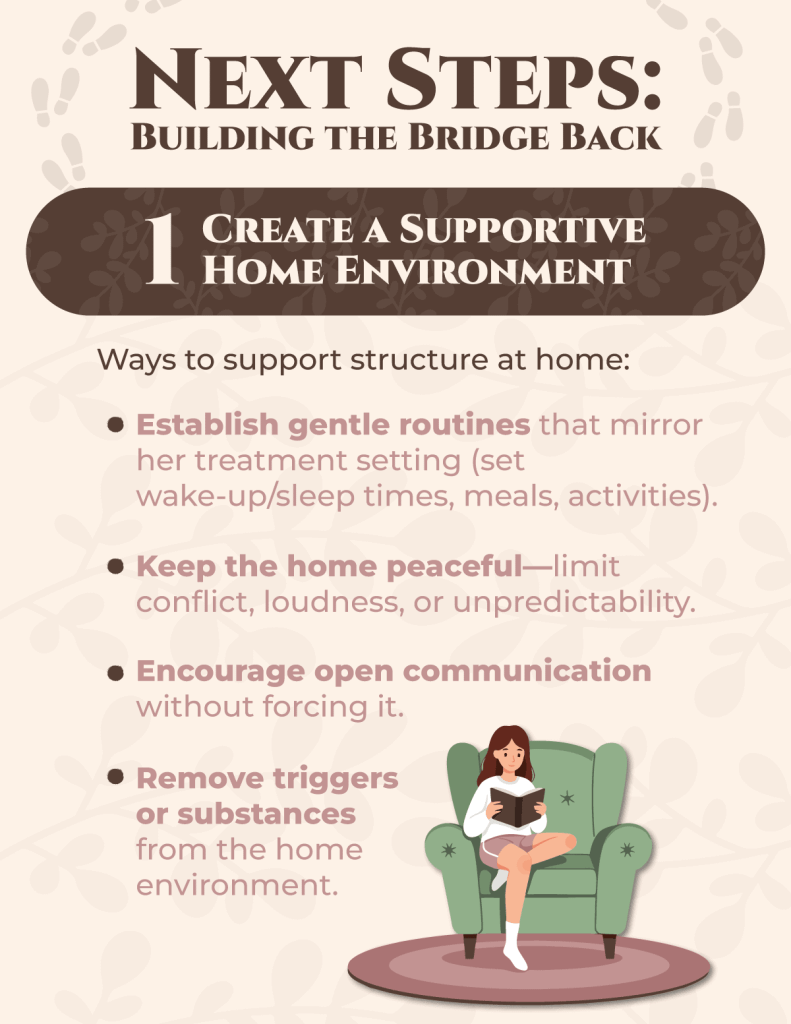
Ways to support structure at home:
- Establish gentle routines that mirror her treatment setting (set wake-up/sleep times, meals, activities).
- Keep the home peaceful—limit conflict, loudness, or unpredictability.
- Encourage open communication without forcing it.
- Remove triggers or substances from the home environment.
This isn’t about control – it’s about rebuilding safety and trust. When your home feels predictable and calm, your daughter learns that she can depend on that stability; even when emotions start to run high.
Step Two: Rebuilding Trust as a Family
Before treatment, trust may have been strained by secrecy, broken promises, or misunderstandings. Healing that dynamic takes time and shared effort. Every family member contributes by showing patience and accountability by proving through small, consistent actions that change is real.
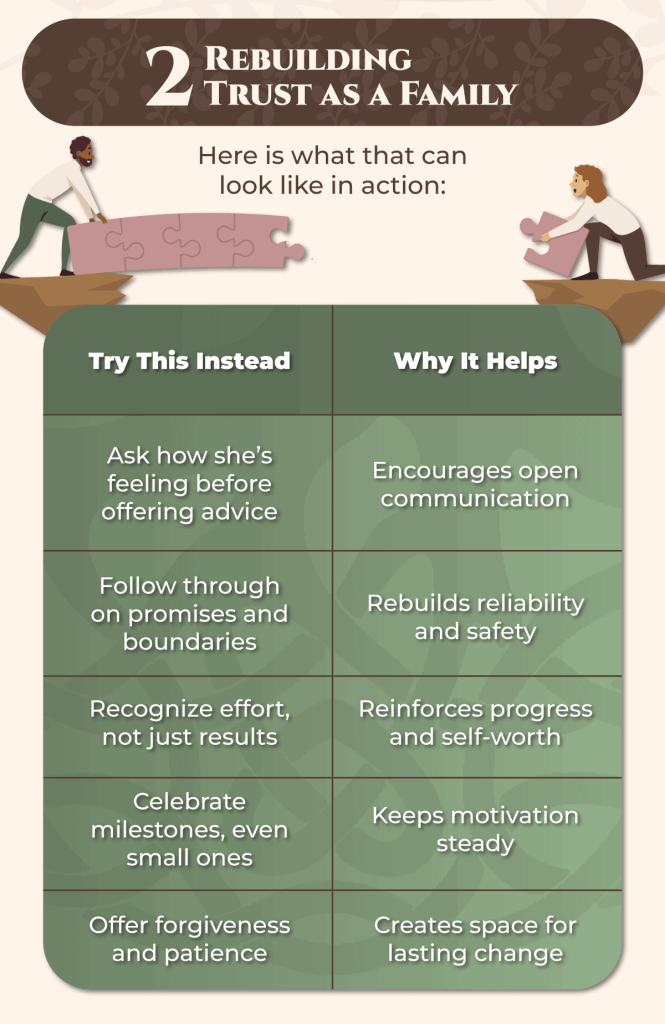
Here is what that can look like in action:
| Try This Instead | Why It Helps |
| Ask how she’s feeling before offering advice | Encourages open communication |
| Follow through on promises and boundaries | Rebuilds reliability and safety |
| Recognize effort, not just results | Reinforces progress and self-worth |
| Celebrate milestones, even small ones | Keeps motivation steady |
| Offer forgiveness and patience | Creates space for lasting change |
Trust is not rebuilt with promises – it grows through consistency. And over time, these moments of steady reliability create your a daughter a stronger foundation than was there before.
Step Three: Setting Healthy Boundaries and Expectations
Structure is one of the most loving things you can provide after treatment. Clear boundaries give your teen the sense of safety she needs to rebuild confidence and independence. They don’t restrict her – they guide her toward stability.
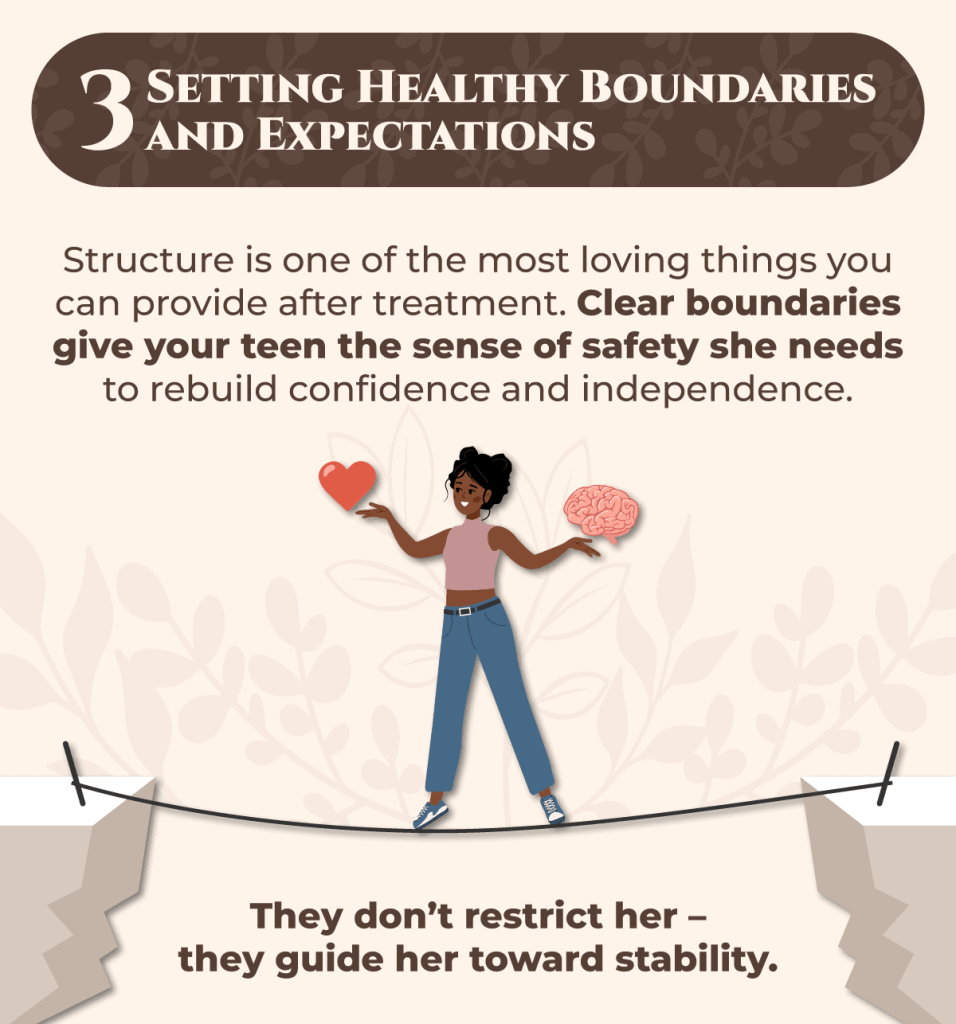
Work together to set expectations around curfews, phone or social media use, communication check-ins, and participation in recovery meetings or therapy. When these expectations are collaborative rather than imposed, your teen feels respected and invested in her own progress. Boundaries then become shared agreements, not punishments.
Step Four: Supporting Siblings and Family Dynamics
Siblings can often experience negative feelings; such as confusion, jealousy, or sometimes even fear during this transition. They may not understand what happened in treatment, or why things feel different now. Parents can help by maintaining open communication and a sense of balance within the home.
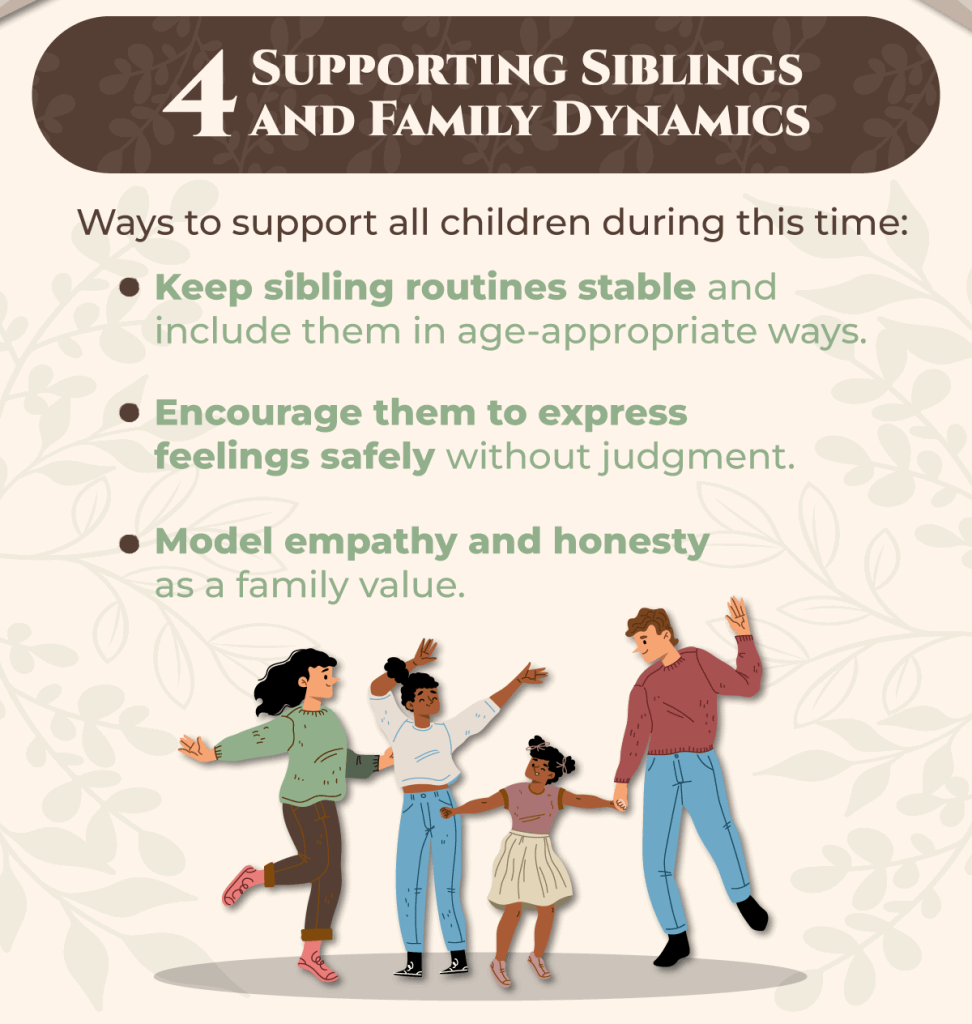
Ways to support all children during this time:
- Keep sibling routines stable and include them in age-appropriate ways.
- Encourage them to express feelings safely without judgment.
- Model empathy and honesty as a family value.
Healing as a family means recognizing that everyone’s emotions matter. Each person is finding their footing again – and when that process is met with understanding, unity grows stronger than before.
Step Five: Watch for Early Warning Signs — Without Becoming the Warden
It’s natural for parents to fear relapse … but watching too closely can feel like surveillance to your daughter, which erodes trust. The goal is awareness, not control: observing patterns while remaining supportive.
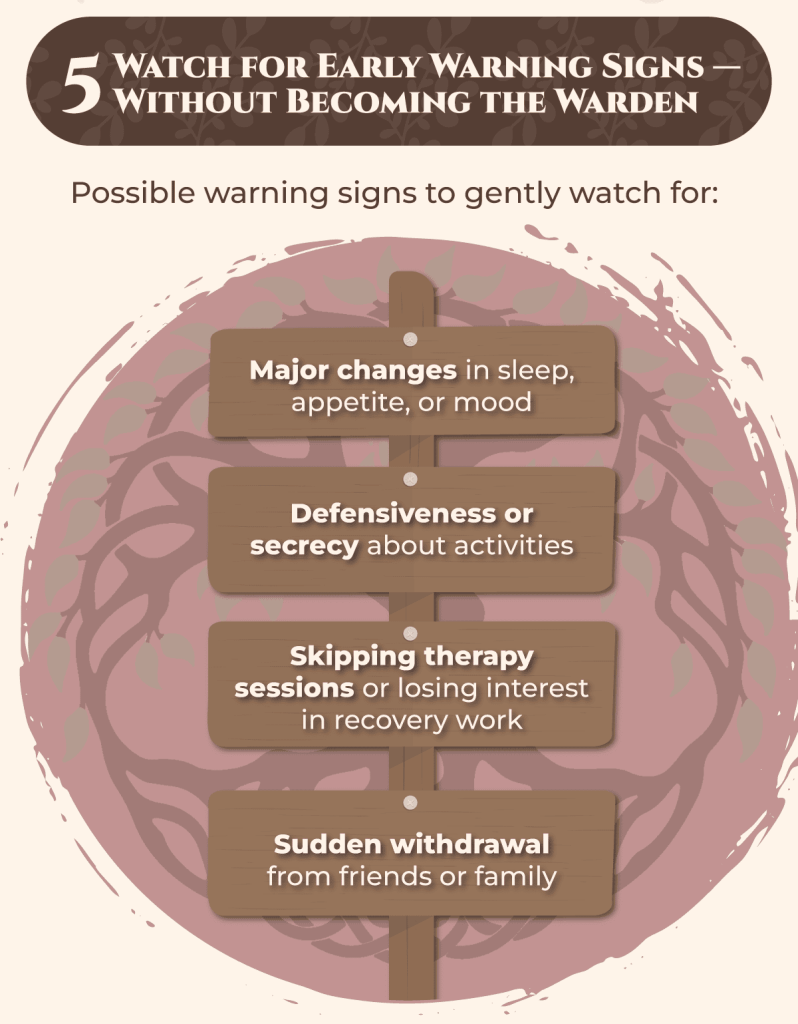
Possible warning signs to gently watch for:
- Sudden withdrawal from friends or family
- Major changes in sleep, appetite, or mood
- Defensiveness or secrecy about activities
- Skipping therapy sessions or losing interest in recovery work
Observation should be a tool for care – not suspicion. When you approach your teen with calm curiosity instead of panic, you reinforce connection and remind her that recovery is something you face together. Not something she must face alone.
Language of Support vs. Language of Control”
After treatment, the way families talk to each other shapes how safe and supported everyone feels at home. Words can either create space for growth or reinforce old fears. Supportive language focuses on teamwork, understanding, and trust – while controlling language often stems from fear and can unintentionally push teens away.
Here are a few examples:
| Language of Support | Language of Control |
| “I’m proud of how you’ve been working on yourself.” | “You’d better not mess up again.” |
| “Let’s talk about what’s been feeling hard lately.” | “You’re not trying hard enough.” |
| “I trust that you’re doing your best right now.” | “I can’t trust you anymore.” |
| “We can figure this out together.” | “You’re on your own if you slip up.” |
Empathy doesn’t mean overlooking accountability. It means practicing accountability with compassion. When parents focus on understanding instead of demanding, teens are more likely to stay engaged in recovery and continue reaching for the support they need.
When to Seek Ongoing or Additional Support
Relapse prevention often requires continued ongoing therapy – including outpatient care and family counseling – to help maintain your teen’s progress, and address any new challenges that may come up at home.
Each stage brings different emotional and relational hurdles, and continued guidance ensures families have the tools to navigate them.
At Roots Renewal Ranch, families are never left to figure it out on their own. We offer extended family involvement and post-treatment resources designed to sustain growth, strengthen communication, and reinforce the recovery foundation built during treatment.
Reconnect, Rebuild, and Renew at Roots Renewal Ranch in Dallas-Fort Worth
Recovery doesn’t stop at discharge.
It evolves at home.

At Roots Renewal Ranch, we help families navigate the transition from treatment to everyday life through trauma-informed family therapy, animal-assisted support, and SAMA-trained staff who ensure safety and emotional stability. Whether your daughter is preparing to come home or you’ve noticed challenges adjusting, our team is here to help you rebuild connection, trust, and confidence. Together.
Call 888-399-0489 today to learn how Roots Renewal Ranch supports families in healing as one.
