When your teenage daughter goes into treatment for a mental health condition, it’s an uncertain time. Will the mental health professionals she’s seeing treat her right? Will she feel judged? Will it do more harm than good?
You have a lot of questions when she’s home, too. The largest one is probably, “What can I do to help?”
The answer depends on each girl because everyone needs something different, but communication is the foundation for everything you can do to help your daughter heal.
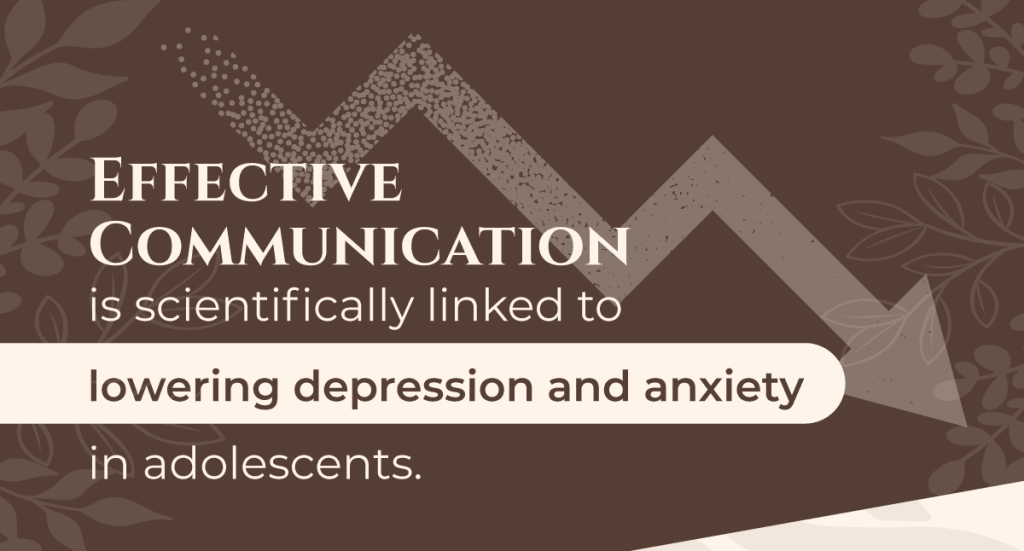
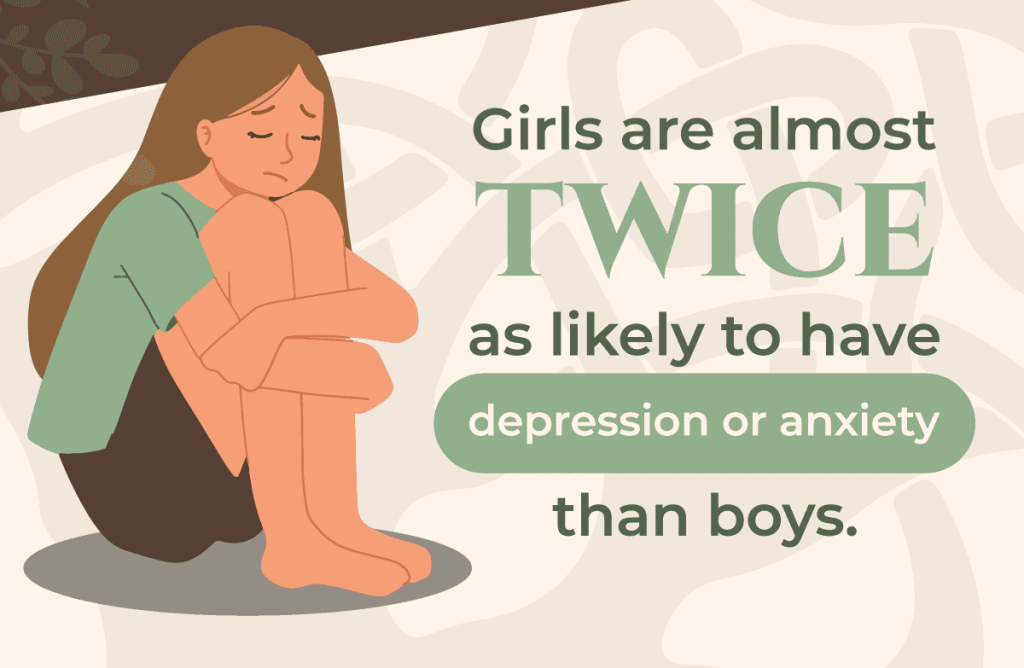
Effective communication is scientifically linked to lowering depression and anxiety in adolescents. That’s important, especially since girls are almost twice as likely to have depression or anxiety than boys. Even if your teen is managing a different mental health condition altogether, good communication helps.
We talk with families of girls in treatment a lot at Roots Renewal Ranch, both in family therapy and outside of it. Here’s what we’ve learned about effective communication strategies for parents of teenage girls in treatment.
Tips for Communicating With Your Teen That Every Parent Can Practice
To effectively communicate with your daughter while she’s in treatment, you need a good foundation for talking to teens in general. Let’s cover some of the most important things to know about communicating with teens that can benefit any parent.
Listen as Much as You Talk
As a parent, it can be tempting to tell your teen what to do. You might think about how you want to respond to something before your teen is even done talking.
The truth is, listening wholeheartedly to your teen when they talk is one of the most important parts of communicating effectively. It’ll help you with every other tip on this list. Try to resist your urge to offer advice if you aren’t sure your teen wants it. You can ask them, “Do you want advice, or do you just want to talk it out?” They’ll appreciate you respecting their ability to make their own decisions, and probably be more willing to listen to any advice you do give, too.
There are times when you might have to steer a conversation more, especially if you have a teen who isn’t particularly talkative. Once they’re willing to talk, though, go with the flow of where they want to take the conversation if you don’t have anything important you want to discuss. If you do, you’ll still have to find a balance between listening and figuring out an opportunity to say what you want, which can be tough.
Communication is a skill that takes practice, and it’s totally okay to “mess up” on listening well in conversations. What matters most is continuing to try your best.

Learn to Apologize to Your Teen
Adults often think they’re right in every conversation with a teen. This isn’t always the case – and even when it is the case, you can be right and miscommunicate in a hurtful way.
One of the most important parts of maintaining a healthy relationship with your teen is apologizing if you hurt them. This is especially true for girls in treatment, who might be more sensitive to missteps in conversations.
You’ll need to think critically about conversations with your teen if they react badly. Sometimes, teens get upset just because things didn’t go their way, and an apology won’t be necessary. Other times, you can genuinely mess up and hurt their feelings when there is a better way to talk about something.
If you reflect on a conversation and feel guilty about something you could’ve done better, take it to your teen. It can be hard to apologize, but in doing so, you’re teaching your teen to apologize, too. If you need a guide, try something like, “When we last talked, I [insert what you did wrong here]. I definitely messed up with that, and I’m sorry.”
If you think you hurt your teen but aren’t sure why, there’s nothing wrong with asking them about it. Saying, “You got upset when we last talked. I never want to hurt your feelings if I can help it. Do you think there was something I could’ve done better?” can be incredibly valuable, too. Your teen might not know the answer to that question, but she’ll appreciate you asking. If she does have some feedback for you, listen closely. If you take what she says into account when you talk in the future, it can completely transform the way you communicate for the better.
Stay Calm and Avoid Accusations
This is easier said than done, especially in the middle of a tense conversation, but if you can stay calm, it’ll be a huge benefit to your relationship with your teen. It’ll also provide her with additional stability, which is invaluable if she has mental health concerns.
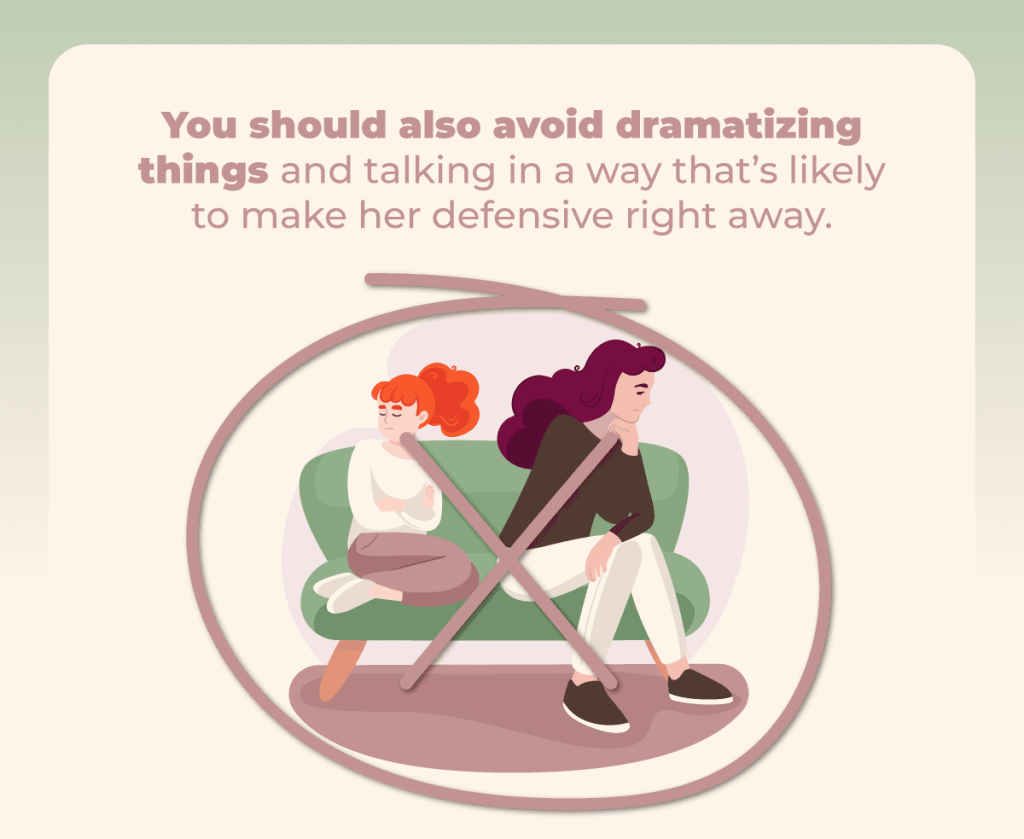
You should also avoid dramatizing things and talking in a way that’s likely to make her defensive right away. It’s helpful to focus on the facts when there’s a problem.
For example, if she hasn’t been finishing her homework on time, it can be tempting to say, “You never finish your homework on time!” especially if you’re frustrated. That’s not actually helpful, and chances are, not true. Focus on what she can’t argue with, and what has definitely happened. Instead, you can say, “You didn’t finish your homework on Monday, and that isn’t the first time this has happened. We need to do something about that. Is there any way I can help?” She’s a lot less likely to get defensive in this scenario, and you’re a lot more likely to have a productive conversation.
Have One-On-One Time
This may seem like a no-brainer, but think about it: when was the last time you sat down with your daughter and talked to her without anyone else there? This is especially relevant if you have multiple children and you’re all busy. Sometimes you don’t properly talk much outside of time together as a whole family.
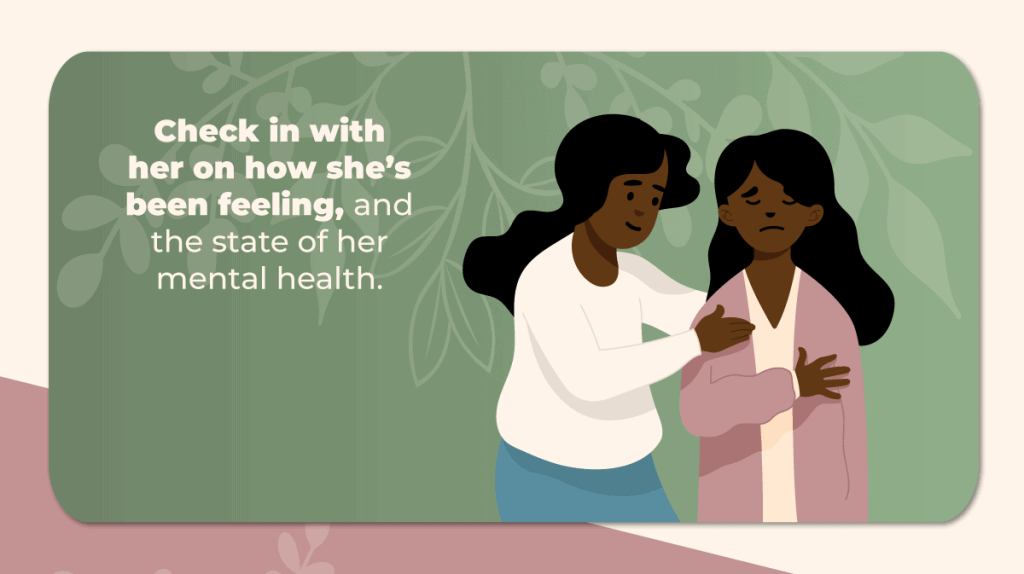
It’s important to invest your time in talking to her individually, though. Ask her about her day, and what she’s been up to at school. Ask her how her hobbies are going, and if anything exciting has happened lately. Most importantly, check in with her on how she’s been feeling, and the state of her mental health. Even if it might not seem like it, she’ll appreciate the one-on-one attention. It’s proof that you really care about and love her, and sometimes teens need that, especially if they aren’t in the best headspace.

Balance Criticism With Compliments
We can be very critical of our children, sometimes without realizing it. We also usually don’t realize how negatively this impacts them.
It’s so important to balance out criticism with more positive affirmations, especially if your daughter has mental health concerns. Parents’ criticism shapes teens’ insecurities, and if they receive a lot of it, can make them very harsh on themselves.
Criticism is an important and necessary part of growing up, so this doesn’t mean you should stop telling your daughter when she could do something better. It means doing it respectfully, and pointing out when she does things well, too – not just when she does something wrong.
Highlight the importance of character over achievements, too. For example, if your daughter auditions for a role in the school play and doesn’t get it, it’ll be disappointing. Telling her you’re proud of her for working hard and putting herself out there regardless can go a long way.
How Communicating With Your Teenage Girl in Treatment Is Different
Depending on what your teen is in treatment for, she might be more fragile during this time. That’s not to say she’s weak – anyone in treatment is incredibly strong! It just means she might be more sensitive and prone to outbursts than the average teen. More than that, therapy is tiring. It challenges teens to think and behave differently, and they’ll often have tasks given to them by their therapist to complete before the next session. If your daughter is still in school on top of treatment, she is managing a lot.
She’ll need extra patience, extra support, and extra love. Treatment isn’t easy for anyone. Teens, who are still growing and learning so much, and fear judgment from their occasionally cruel peers, face additional elements adults don’t. Be sure to tell your teen that you’re proud of her for what she’s doing in treatment. Let her know she can talk to you about anything, and regularly check in and ask her how she’s doing.

Your teen will also really appreciate it if you do some research on whatever concerns she’s in treatment for. Even if your teen does want to explain how she feels and her situation, it might be hard for her. Reading up on what she’s experiencing will help you be more empathetic and take some pressure off of her. She won’t have to worry about making sure you understand what she’s going through, and can focus on healing and being a regular teenage girl.
Treatment for Teenage Girls in the Dallas-Fort Worth Area
In communicating with your teen daughter, you might realize she needs additional mental health support beyond her current treatment. Therapy for teen girls is multi-faceted with a vast variety of options. Certain types work for some girls and not for others, and there’s no shame in that. Sometimes, it takes trying different things to find what suits your teen. That can be frustrating but don’t lose hope. You will find the care she needs to get better.

Roots Renewal Ranch offers a safe, peaceful environment where girls ages 13-17 can recover from their mental health concerns. They’ll learn valuable skills and lessons through traditional therapy modalities, and more unique ones, like animal therapy with the ranch’s many furry and feathery friends. Family involvement is vital always, but especially during the healing process. We offer programs for the entire family so you can grow in effective communication with your teen. She is strong, she is loved, and she is enough. Call us at 888-399-0489 for more on how we can help.

