
Teens are smarter and more resilient than adults give them credit for. If you don’t believe it, think about your teen’s schedule right now. Could you do her homework, or handle all of her social stress yourself without feeling a little frazzled?
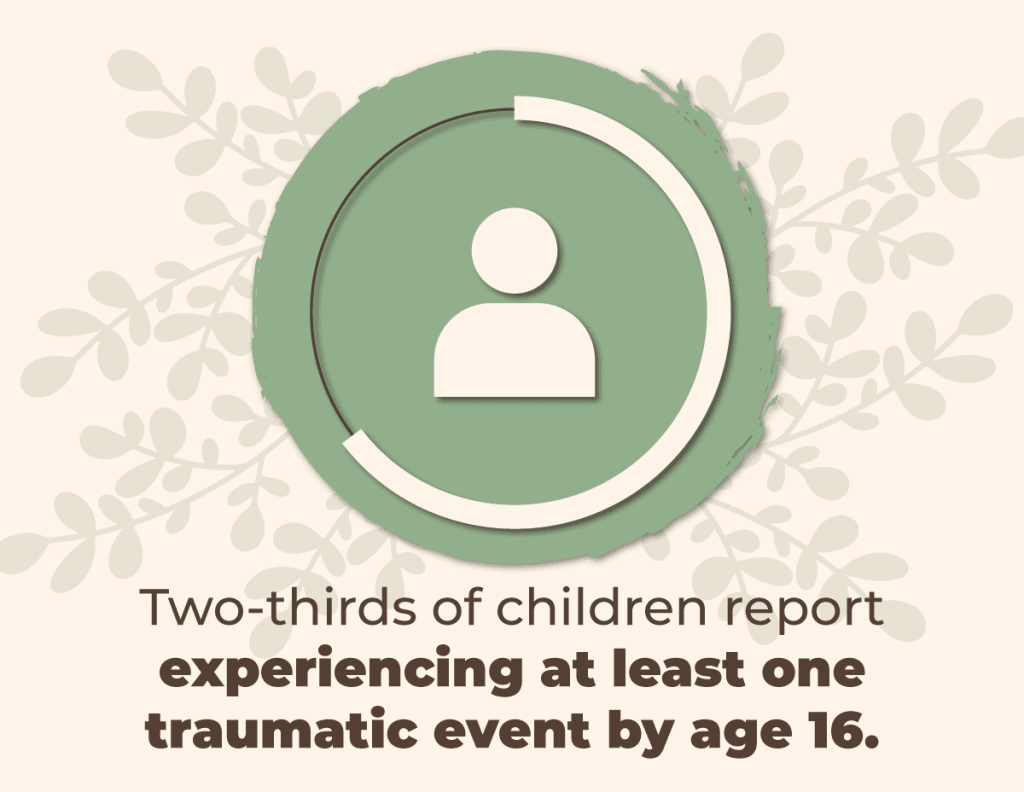
If your answer is yes, consider something more serious: Two-thirds of children report experiencing at least one traumatic event by age 16.
No one wants to talk about that. We want to believe children, including adolescents, are innocent and unmarred by the world, but that so often isn’t the case. It’s uncomfortable to discuss how trauma impacts children, so we usually don’t. That means we definitely don’t cover how trauma manifests differently in adolescent girls than it does in boys.
It’s such important information to know, though. Women develop PTSD twice as often as men, and at Roots Renewal Ranch, we believe that alone is enough reason to put teenage girls’ trauma front and center. Let’s cover all the details you need to know.
Why Do Girls React Differently to Trauma Than Boys Do?
One reason girls react differently to trauma than boys is because the types of trauma they go through are different a lot of the time. For example, girls are more likely to experience sexual and other types of abuse from people who are supposed to be taking care of them, and boys are more likely to experience or witness physical violence.
Scientists aren’t exactly sure why women develop PTSD more than men, but part of it is because the types of trauma they experience cause more severe mental health symptoms. 50% of women who experience sexual trauma will develop PTSD in their lives, and sexual trauma is the leading cause of PTSD in women. Girls who are exposed to this kind of abuse in adolescence are more likely to live with symptoms of PTSD and other mental health conditions in adulthood.
Some people theorize that PTSD is more common and severe in women due to the roles they have to fulfill in life, too. They’re often expected to look after others, sometimes at the expense of themselves, and this can exacerbate any mental health concerns, including symptoms related to trauma.
Girls and boys are different when it comes to expressing emotions, too. Chances are you didn’t need anyone to tell you that, but research has come up with some interesting information. Girls seem to be better at expressing anxiety and sadness than boys, as well as seeking out support – but they also ruminate more.
It’s easy to assume that girls are “more impacted” by trauma than boys are due to their reactions to it, but it could just be exactly that: how they react. It’s very possible that boys and girls experience the same amount of pain when they go through something traumatic, and that girls just have more of a tendency to express their distress. We also have the aforementioned gender roles to thank for that. In adolescence, children start learning how men and women are “expected” to act in society at large, and that impacts how they react to trauma too – at least outwardly.
The Science Behind How Trauma Affects Teen Girls Differently
Ultimately, there’s a lot more we have to learn about the differences in trauma between girls and boys, especially during adolescence. No trauma is the same, from the way someone experiences the traumatic event the first time, to the symptoms they manage after. This makes the scientific differences a little hard to pin down.
One study from 2016 highlighted differences in the brains of these girls and boys, though. It found that girls who lived through trauma in childhood had a smaller insula – a part of the brain that processes emotions and empathy – than their male counterparts in the study. This part of the brain gets smaller in everyone as they age, so these findings indicate that in some ways, trauma literally makes girls grow up faster. Many people say children who experience especially challenging childhoods “had to grow up too fast,” but this study puts scientific evidence to the phenomenon.
Common Experiences and Responses to Trauma in Teenage Girls, and Why the Uncommon Is Important, Too
According to the American Psychological Association (APA), “Trauma is an emotional response to a terrible event like an accident, crime, natural disaster, physical or emotional abuse, neglect, experiencing or witnessing violence, death of a loved one, war, and more.” That and more is important. Someone might experience trauma outside of this list, and what causes trauma in one girl might not cause it in another. That is completely okay, and it’s also normal.
While trauma itself is ultimately an unproductive response to an extremely stressful event, there’s no “wrong way” to be traumatized. It can be easy for teenage girls especially to feel like their trauma isn’t as “valid” as other trauma if it falls outside of the “typical list.” In reality, bullying, racism, sexism, homophobia, and other harassment related to your identity can be traumatic. Having to leave behind friends and moving can be traumatic, and parents getting divorced can be, too. Even living through a pandemic can be traumatic.
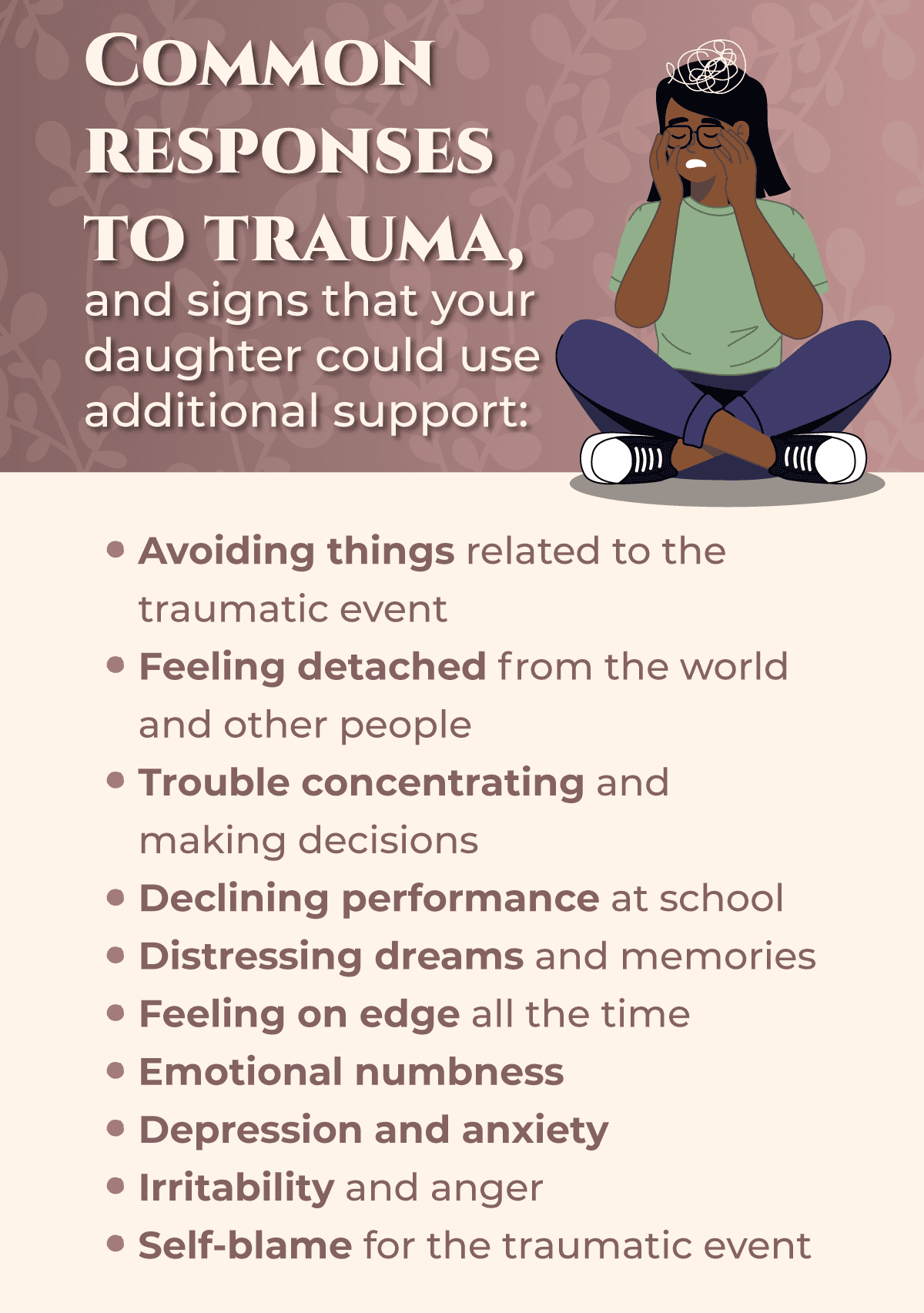
Everyone responds to trauma differently, too. Here are some of the most common responses to trauma, and signs that your daughter could use additional support:
- Avoiding things related to the traumatic event
- Feeling detached from the world and other people
- Trouble concentrating and making decisions
- Declining performance at school
- Distressing dreams and memories
- Feeling on edge all the time
- Emotional numbness
- Depression and anxiety
- Irritability and anger
- Self-blame for the traumatic event
These are symptoms that all people, regardless of sex, can experience. Evidence shows that women and girls are more likely to be jumpy and on-edge, feel emotionally numb, avoid things that remind them of the trauma, and feel depressed or anxious than their male counterparts, though.
Having the Tough Conversations: What to Do if Your Adolescent Girl Shows Signs of Trauma
If you notice some signs outlined in this article in your daughter, it’s a good idea to talk to her about it. If you assume the worst and are wrong, there’s no harm done, but if she has gone through something traumatic, your support can change her life.
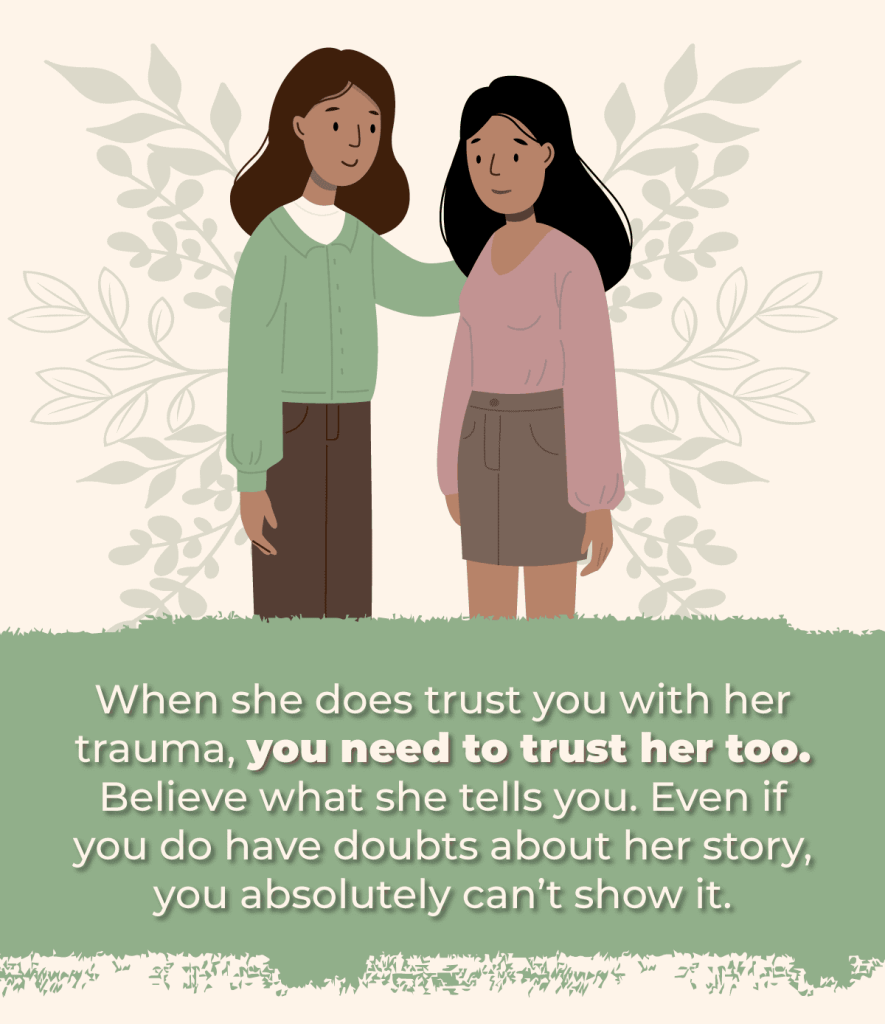
The first thing to do is ask her if something happened. Often, teenagers are hesitant to share trauma with others, especially family members. Some of them want to be “cool” or “strong” enough to handle it on their own, but even more are afraid the adult they choose to trust with their trauma won’t believe them or do anything about it. You can encourage her to open up to you, but don’t try to force anything. Just let her know you’re there to listen and support her whenever she needs you. When she does trust you with her trauma, you need to trust her too. Believe what she tells you. Even if you do have doubts about her story, you absolutely can’t show it. Understand that anything traumatic she shares with you is immensely difficult for her to open up about.
It’s also important to understand that she’s going to tell you something you don’t want to hear. It’ll be hard to hear your daughter went through something traumatic at all, but if she’s dealing with abuse, it could very well be at the hands of someone close to your family. 90% of child sexual abuse in particular is committed by someone the child knows. You need to prepare yourself to stay calm no matter what. If your response to her sharing her trauma is dramatic or extreme, she might regret saying anything, and that’s the last thing you want. Instead, you need to listen very closely to what she says without interrupting, and be ready to be her number one advocate, supporter, and defender.
Chances are, your daughter will blame herself for the trauma in some way. This is very common in youth, so you’ll need to reassure her that her traumatic experience is not her fault. It’ll also help to acknowledge that telling you about her trauma is brave, and let her know that you’re thankful she told you.
Depending on the trauma, you might need to contact the authorities. If your daughter has experienced abuse, you’ll probably want to confront the person responsible right away, but it’s better to talk through the process with an expert on the subject first. Even if it’s hard, it’s what’s safest for your daughter. No matter the trauma, contacting a mental health professional is a good idea.
Actionable Steps to Help Your Teen Heal From Trauma
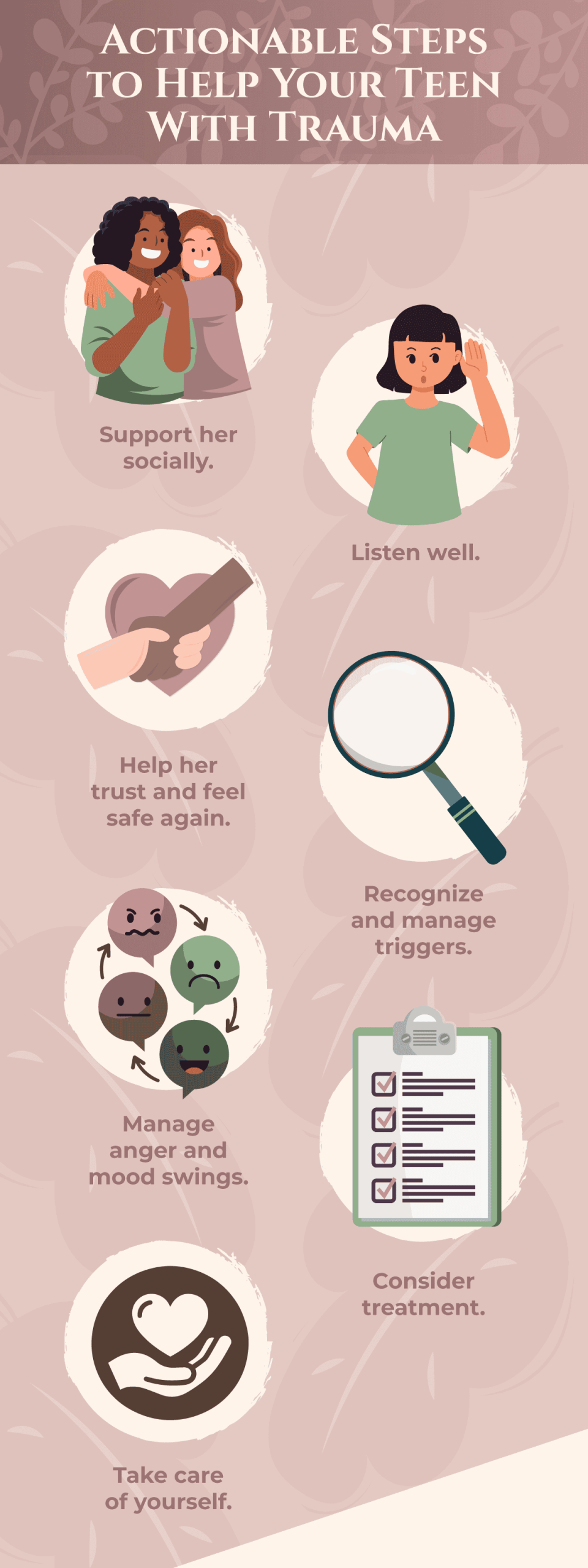
There’s a lot you can do to help your daughter. Our chart below can walk you through it.
| What to Do | How to Do It | How It Helps |
|---|---|---|
| Support her socially. | Do things unrelated to the trauma with her, like hobbies and exercise. Let her take the lead on what to do. Don’t force her to talk about her trauma, but do learn more about trauma and PTSD as a whole. | Your daughter will feel accepted and stay socially engaged when she might otherwise want to withdraw. |
| Listen well. | Understand she might repeat herself a lot when she talks about her trauma, and that it won’t be easy to hear. Stay level-headed. Let her talk without giving unsolicited advice, invalidating her feelings or trauma, comparing how she’s coping to others, telling her it could’ve been worse, or making the conversation about yourself. | Your daughter will feel more willing to open up to you, and be able to process her trauma through talking about it. You might have the opportunity to provide valuable insight and support. |
| Help her trust and feel safe again. | Express that you’re there for her and aren’t going anywhere. Create consistent routines and reduce stress where possible. Talk about the future, make plans, and follow through on what you say you’ll do. Allow her the opportunity to make her own choices. | Your daughter will find stability in life again. She’ll start to believe she has a promising future, and that she’s strong and capable of recovery. |
| Recognize and manage triggers. | Sights, sounds, people, locations, dates, weather, physical discomfort, similar emotions, and more can all be triggers. Talk to your daughter about what hers are and what helps when she’s triggered. Make a game plan on how to respond to future triggering situations. When she’s triggered, find ways to ground her, like deep breathing, recounting her surroundings, and telling her the trauma isn’t happening again. | Your daughter will feel safer, and learn how to better manage the most intense and debilitating effects of trauma. She will feel a little less afraid to face the world. |
| Manage anger and mood swings. | Recognize anger is often a coping mechanism to feel strong instead of weak. Learn the signs she’s angry, and diffuse situations before it gets out of control. Remain calm, give her space when needed, and ask how you can help. Consider calling the police if her anger is a danger to herself or others. Seek anger management treatment when necessary. | Your family will experience less turbulence as a whole. Your daughter will be more equipped to heal, even in the face of overwhelming emotions. |
| Consider treatment. | Don’t expect to be able to manage your daughter’s trauma on your own. If these strategies aren’t enough, seek treatment for her trauma. Talk to her about it, and focus on how treatment can help her with specific challenges she’s facing. Anyone living with trauma can benefit from therapy. | You won’t feel the pressure of trying to “fix” your daughter. She’ll be in the hands of a skilled medical professional who knows exactly what to do to help, and she’ll take tried-and-true steps toward healing. |
| Take care of yourself. | Don’t forget to eat, sleep, and practice your own self-care. Develop your own support system and talk to them as needed. Set boundaries with your daughter, and reasonable expectations for yourself. Make time for what you love, and enlist the help of other trusted people to care for your daughter. | You’ll make sure you stay safe and healthy so you’re in the best shape possible to help your daughter. |

Getting Help for Your Teen Girl in the Dallas-Fort Worth Area
So, you think your daughter has experienced trauma. We’ve given you some ideas on how to get started in talking to her and caring for her, and they’ll help – but a lot of the time, they aren’t enough. Trauma-informed care for teen girls changes lives every day, and your daughter could benefit from it, too. It might be exactly what she needs to face her trauma and heal.
Roots Renewal Ranch provides care specifically for girls ages 13-17. All of our therapy is trauma-informed, and focuses on empowering her to conquer her fears, overcome obstacles, manage her emotions and thoughts, and embrace every aspect of who she is. Your daughter is strong, she is loved, and she is enough. Call us at 888-399-0489 today, and we’ll work with you to help her believe it.

