Almost every part of a teen’s body begins to change during puberty. During this time, they’re experiencing massive changes to their bodies and minds. Sex hormones are spiking, which affects their emotions and impulses. The prefrontal cortex of a teen brain (the area that controls decision-making) won’t be fully formed until over the age of 20. This is why it’s fairly “normal” to see changes in their behaviors and moods. It can be difficult to distinguish between the changes that come with puberty from a mood disorder like depression, but it’s important for parents to be aware of the differences.
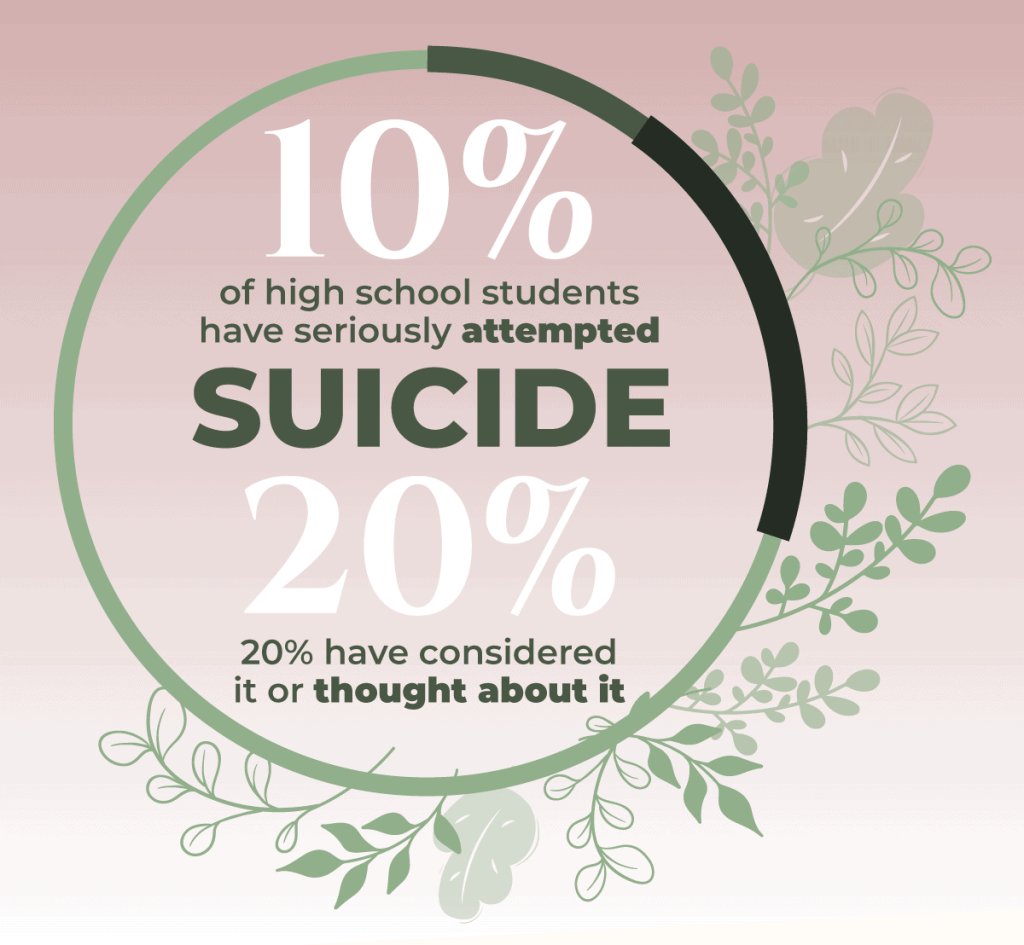
Almost 10% of high school students have seriously attempted suicide, while another 20% have considered it or thought about it. Developmentally speaking, a teen’s brain is hardwired for making decisions without considering the consequences. If her depression becomes bad enough, it could lead to suicidality. A teen girl may have stronger emotions and impulses due to puberty, but that doesn’t mean her feelings shouldn’t be taken seriously. At Roots Renewal Ranch, we know this can be a scary or uncertain time for parents, but we want to help. Let’s talk a little bit about teen depression, how to spot it before it gets out of control, and where to find help.
Why Do Teens Get Depressed?
There is more going on inside the life of a teen girl than many of us realize. While the hormonal spikes, changing bodies, and mood fluctuations certainly don’t help, they’re not the only catalyst for depression. Let’s talk about some of the reasons why teens get depressed:
- Neglect or physical, psychological, or sexual abuse. Trauma is a common reason for depression in teen girls. Studies show that up to 43% of teen girls have experienced significant trauma, while another 6% manage post-traumatic stress disorder (PTSD). If this kind of trauma isn’t coming from the home, it could be coming from other areas of their life.
- Pressure to “be perfect” or do well in school. Academic pressure can have multiple sources, including parents, teachers, peers, or even themselves. If your daughter is prioritizing perfection, feeling satisfied with her life or her accomplishments won’t come easily. This kind of pressure isn’t just limited to academics – she could also be feeling pressure to do well in sports or in her extracurricular activities as well.
- Bullying. When we think of bullying, we often think of young children pushing each other on the playground or shoving each other into lockers. That’s not always the case. In fact, 19% of high school students report being regularly bullied. If your daughter isn’t feeling safe or comfortable in school, it can certainly contribute to (or cause) depression.
- Social Media. Generally, social media can be a positive thing for teen girls. It’s a way for them to connect with their friends, find new interests, share their lives, and more. Unfortunately, social media often comes with the pressure to look or act a certain way. Teens can get caught up in what their online image should be and how they should present themselves to the world. That can be a heavy burden for someone so young.
- Genetics. There have been multiple studies genetically linking depression, but the results are often conflicting and not resolute. What we know is that depression can be inherited from the mother or father, but predicting the severity or progression of the disorder isn’t reliable. We also know that just because an individual shares “depression genes” with her family, that doesn’t mean she will have depression. Many times, depression in teen girls is environmental or situational.
Early Signs of Teen Depression
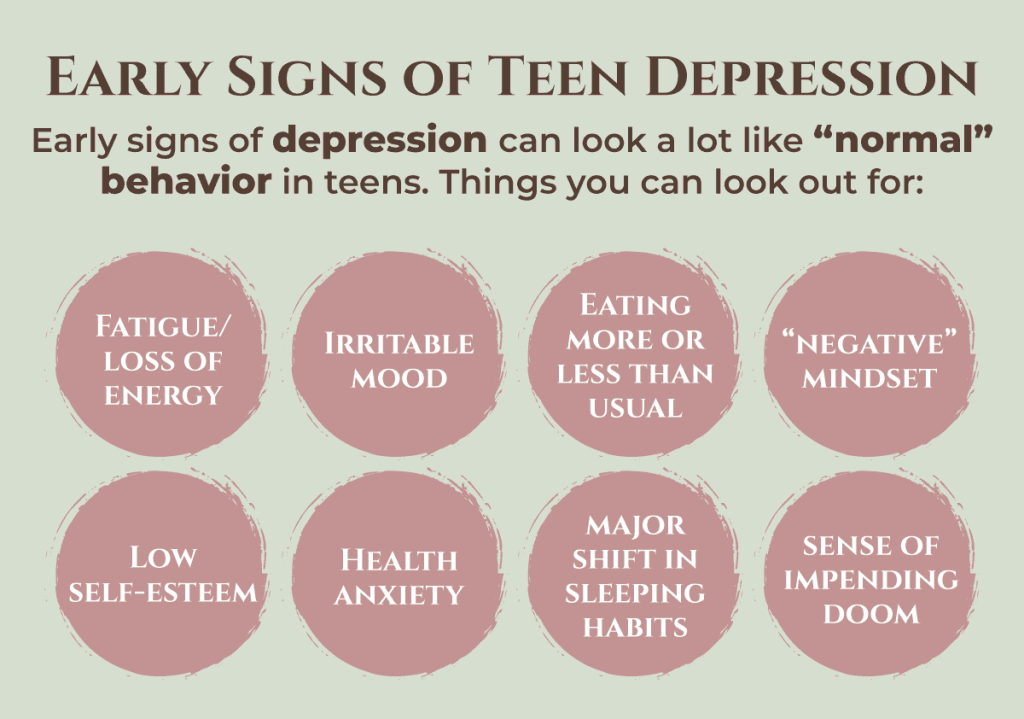
Not everyone will share the same signs or symptoms when it comes to depression. Some girls hide it more than others, which is why it’s important to have an ongoing conversation with her about where she’s at in her life and how she’s feeling. Early signs of depression can look a lot like “normal” behavior in teens, but let’s talk about some things you can look out for:
- Fatigue/loss of energy
- Irritable mood
- Eating more or less than usual
- A “negative” mindset
- Low self-esteem
- Health anxiety (she often complains of physical ailments)
- A major shift in sleeping habits
- Frequent feelings that something bad is going to happen (a sense of impending doom)
Major Signs of Teen Depression
Depression often gets to a point where it’s fairly “obvious” that something is wrong. When you start noticing major signs, it’s likely time to get help from a medical professional. Some of these major signs include:
- Suicidality or thoughts of suicide
- Making a plan for suicide
- Isolation
- Self-harm (like cutting, not eating, etc.)
- Frequent thoughts of death and dying
- A drop in grades
- Frequent absences from school
- Slowed thinking, moving, or speaking
- Outbursts of anger
- Less attention to self-care or personal hygiene
- Substance use (alcohol or drugs)
- Frequent feelings of worthlessness
- Frequent feelings of guilt
Emotional and Physical Symptoms of Teen Depression – What’s Normal and What’s Unhealthy?
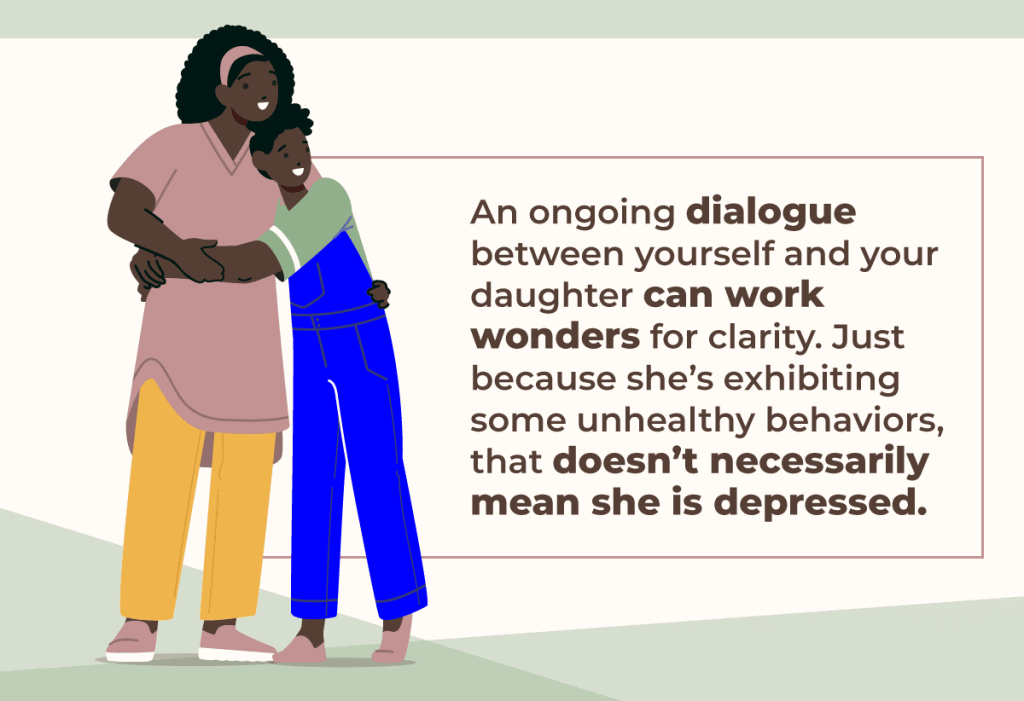
Because of all of the changes teen girls go through (both physical and emotional), it can be difficult to gauge what’s “normal” and what’s unhealthy. An ongoing dialogue between yourself and your daughter can work wonders for clarity. At this age, her self-image is prone to take a nosedive or two, and that doesn’t necessarily mean she’s managing a depressive disorder. There are a lot of pressures going on behind the scenes at school and with her friends. If your family is going through financial hardship or a divorce, that will likely impact her as well.
The signs and symptoms listed above are a helpful “go-to” if you’re unsure of whether or not something is healthy. Again, just because she’s exhibiting some unhealthy behaviors, that doesn’t necessarily mean she is depressed. It could simply mean she could use some help finding healthy coping mechanisms or working through situations with her friends/school/relationships.
Can Teen Depression Run in Families?
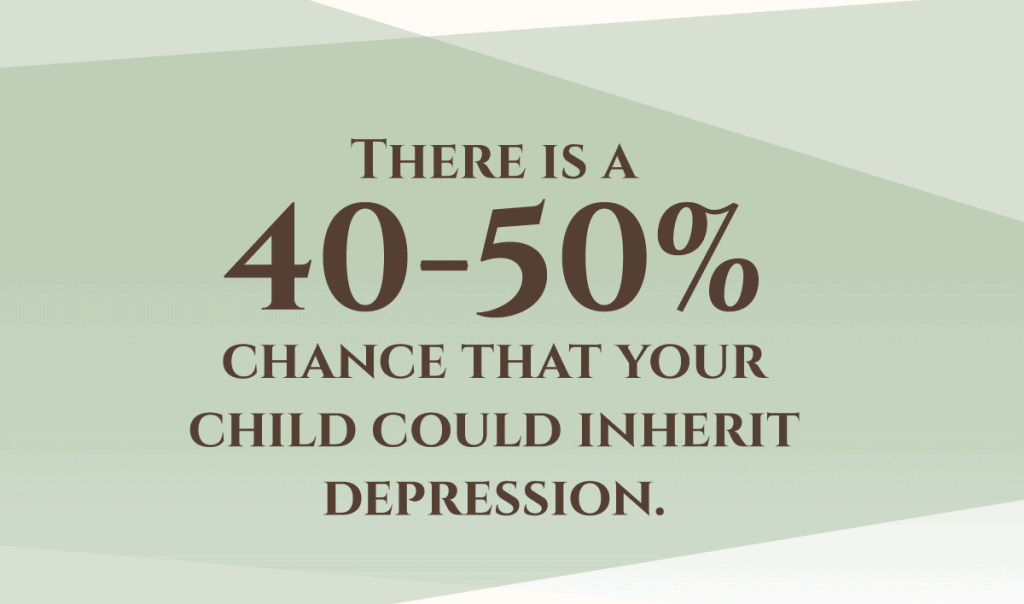
There is a 40-50% chance that your child could inherit depression. This is complex – we don’t quite know how many genes are involved in depression. We do know that it isn’t one single gene; it’s usually a mix of inherited genes that can influence someone’s mental health. If you or your partner has depression, it’s a good idea to keep an eye out for it in your daughter. If there has been a suicide in your family, that could also influence whether or not she experiences suicidality or depression.
Is Early Intervention Critical in Alleviating Teen Depression?
Early intervention is necessary – not just for alleviating teen depression but also for preventing it from getting worse. If you suspect that your daughter’s mental health is in trouble, don’t hesitate to see a therapist or a physician about it. Therapy can teach your daughter how to manage her depression and alleviate any symptoms that come along with it. Early intervention will also remind your daughter that she’s not alone; it shows her that she has your support and that you’re there for her.
A critical component of early intervention is something called “affective awareness.” It’s the ability to perceive, describe, understand, and differentiate emotions and moods, and it can make all the difference for your daughter. If she’s able to identify what she’s feeling as sadness and rule out other emotions, she can begin to recognize her responses along with her triggers. This kind of emotional regulation is needed for any growing person – but especially for those who are managing big feelings like depression, guilt, or self-loathing.
Getting Help for Your Teen Daughter’s Depression
At Roots Renewal Ranch, we use a comprehensive, whole-child approach to implement a safe, nurturing, and distraction-free environment for emotional growth and healing. We want your daughter to journey through her story and discover a loving sense of self. Here, we build hope in a healthy and purposeful life while helping your daughter develop the whole-hearted belief that she is worthy of love and happiness. If you think your daughter could benefit from depression treatment, call us today at 888-399-0489 so we can help.
Frequently Asked Questions
Is my teenage daughter depressed?
Early symptoms of depression include fatigue/loss of energy, irritable mood, eating more or less than usual, a “negative” mindset, low self-esteem, health anxiety, a major shift in her sleeping habits, and frequent feelings that something bad will happen (a sense of impending doom).
When should I seek help for my teen daughter?
Early intervention is necessary – not just for alleviating teen depression but also for preventing it from getting worse. If you suspect that your daughter’s mental health is in trouble, don’t hesitate to see a therapist or a physician about it. Therapy can teach your daughter how to manage her depression and alleviate any symptoms that come along with it. Intervention will also remind your daughter that she’s not alone; it shows her that she has your support and that you’re there for her.
What are some common signs of teen depression?
Suicidality, self-isolation, self-harm, a drop in grades, outbursts of anger, slowed thinking or movement, substance use, feelings of worthlessness, and feelings of guilt are all major signs of teen depression.
