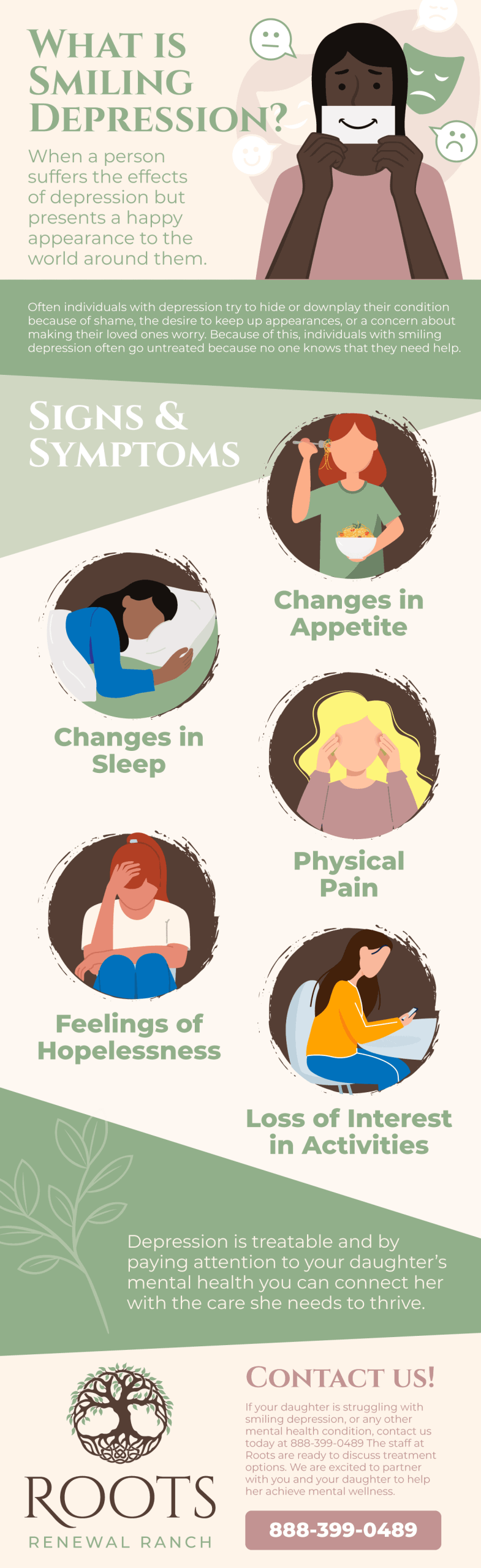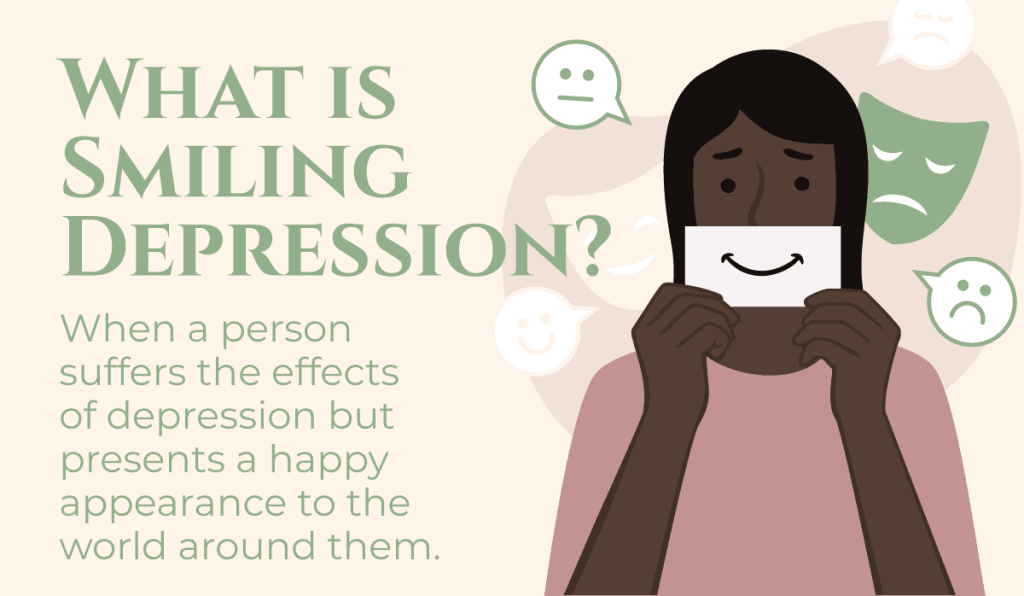
Smiling depression is not an official medical diagnosis, but is the name used by many professionals for when a person suffers the effects of depression but presents a happy appearance to the world around them. Someone with smiling depression will seem like they are perfectly fine to many who observe them. They could be funny, outgoing, or charismatic, but this is not the whole story of a person’s emotional well-being. Often individuals with depression try to hide or downplay their condition because of shame, the desire to keep up appearances, or a concern about making their loved ones worry. Because of this, individuals with smiling depression often go untreated because no one knows that they need help.

What is Smiling Depression – Signs and Symptoms
You may be wondering how you might know if your teenage daughter is experiencing smiling depression. The signs can be difficult to see but there are some red flags to watch for. When a person has smiling depression they are likely feeling the symptoms of depression, such as sadness, loss of interest in things, or low energy, but they are masking those signs of depression and will be difficult to detect. Some depressive symptoms are more difficult to conceal and can indicate that your daughter needs assistance managing her mental health.
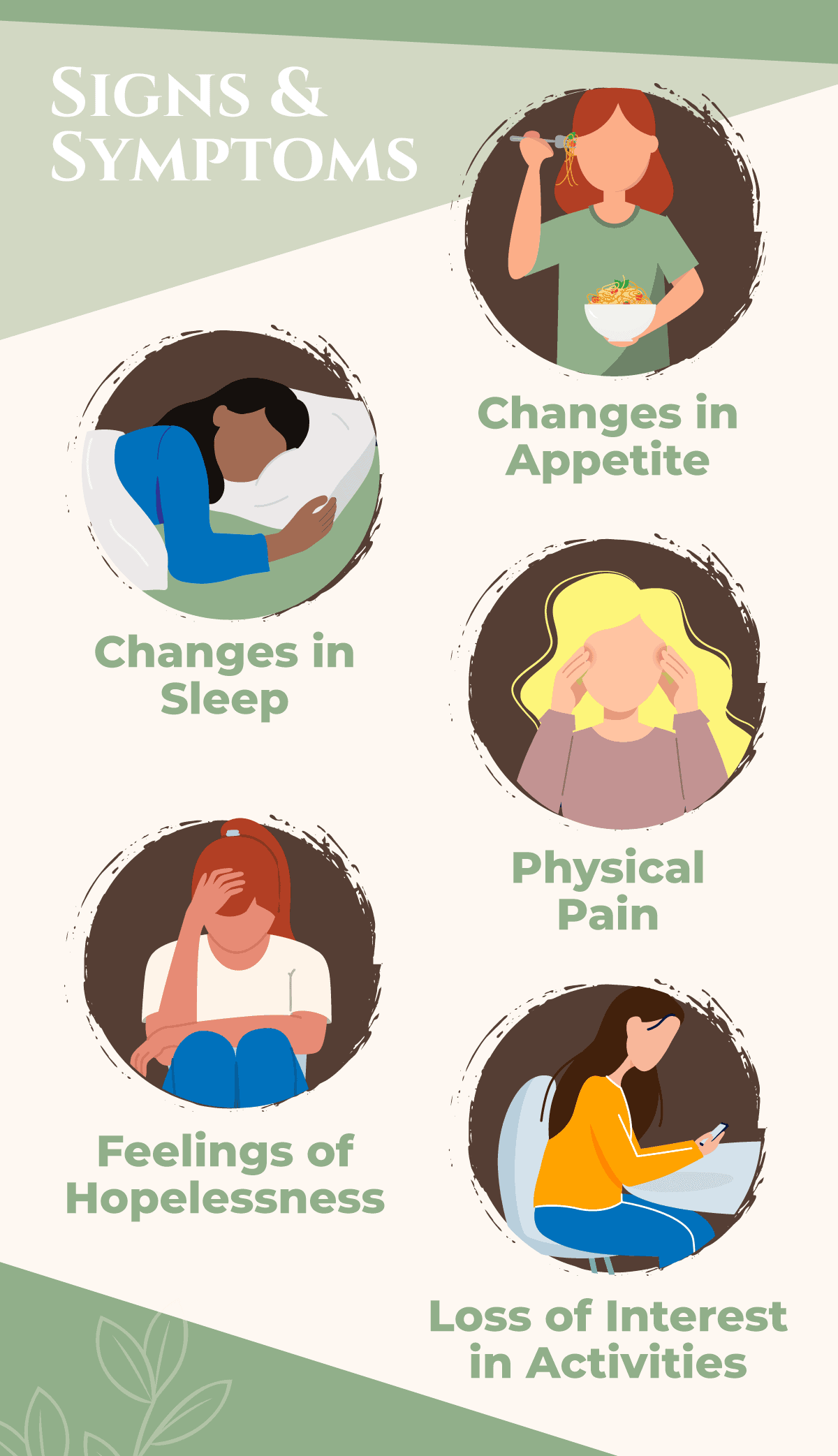
Changes in Appetite
Often when a person is depressed their normal eating patterns change. Some people lose their appetite and will eat very little when depressed. Others use food as a way to cope with the way they feel and may increase the amount that they consume. During depression weight fluctuations are normal because of these appetite changes. While you would never want to address this in a way that would make your daughter feel self-conscious about her appearance, taking the time to notice changes in her appetite can give you insight into potential mental health needs.
Changes in Sleep
Sleep patterns often change when a person is depressed. Is your daughter using the extra time to sleep instead of socializing or engaging with hobbies? This could be a sign of depressive disorder even if she seems happy. Furthermore, if she reports that she is not sleeping at night this can be another indication that her mental health requires some attention.
Physical Pain
Some people who experience depression may feel physical side effects. These effects could be headaches, muscle pain, or back pain. If your daughter is complaining about these physical issues and there is no obvious medical reason why she would be feeling these things, this pain could be related to a mental health issue.
Feelings of Hopelessness
People who are depressed often feel hopeless. However, with smiling depression they may not communicate these feelings. What can you do to understand if your teenage daughter is feeling hopeless if she is not willing to share? It is important to regularly check in with your daughter and ask her about her well-being. She may not answer all of your questions when you ask, but taking the time to inquire about her feelings and well-being communicates that you care about these things. When you consistently demonstrate that her mental health is important to you, she will be more willing to discuss her feelings when she is ready to confront them.
Loss of Interest in Activities
If your daughter suddenly loses interest in activities that she used to enjoy, this might be an indication that she is experiencing depression. Someone with smiling depression may make excuses about why they are no longer participating, but as a parent, this can be a red flag that prompts you to ask some questions and explore your daughter’s reasoning. It is possible that she will not be ready to tell you the real reasons she has lost interest in activities that she once loved such as her social life, but by taking an interest you are communicating that when she is ready you will be a safe person for her to confide in.
Why do People Hide Depression?
There are many reasons why a person might hide their depression from those they care about. One reason is that they may be afraid of burdening others. Some people feel a great deal of guilt about their depression. They might feel that they should not experience depression, which can lead to shame about the fact that they are depressed. They might feel a responsibility to not trouble anyone else with their burden.
Another reason that a person might hide their depression is that they may be in denial. This means that they are attempting to make themselves believe that they do not have a mental health condition, when really if they would be honest with themselves they would realize that they are experiencing depression. Often people do not want something to be wrong with them, so they act as if everything is fine and hope that it will become true.
Some people are embarrassed by their mental health needs. These people may feel that depression is a sign of weakness or a character flaw. People who feel this way are likely trying to “fake it until they make it,” believing that if they continue to put on a happy face and keep going they will eventually overcome their depression.

Suicide Risk From Depressive Disorder
Individuals who suffer from depression do not usually turn to suicide. However, those who do experience major depression do have an increased risk of attempting suicide. Do not feel scared or hopeless about this fact. Depression is treatable and by paying attention to your daughter’s mental health you can connect her with the care she needs to thrive. Some warning signs that a person may be suicidal are:
- Being more withdrawn than usual.
- Frequently talking about suicide, or making statements such as “I wish I was never born.”
- Mood swings
- Purchasing a gun, stockpiling medication, or collecting other means to take their own life
- A preoccupation with death
- Feelings of hopelessness
- Changes in the normal routine
- Substance use
- Risky or self-destructive behavior
- Saying goodbye to people as if it is their final opportunity
If your daughter says that she wants to die, it is important that you take her seriously. She will need professional help as soon as possible. The best way to connect her with immediate help is to take her to the emergency room of your nearest hospital. A great resource for those who are dealing with depression or suicidal ideation is the national suicide hotline number, which is 800-273-8255. This will connect your daughter to a trained counselor who can assist her in working through her feelings.
Treatment for Smiling Depression
Smiling depression, like any other types of depression, is treatable. Often a person starts by talking with their usual doctor. They will be able to refer your daughter to a mental health provider who specializes in the treatment of adolescents. In therapy, your daughter will have a safe space to express her feelings, and she will learn techniques for managing those feelings. Instead of masking her depression with a smile, she will learn to process her feelings honestly.
Sometimes, in consultation with a doctor or mental health provider, a person is prescribed medication that can help treat the depression symptoms. It is important that these medications are taken as directed for maximum effectiveness. If your daughter is taking medication to treat her depression, be sure to have conversations with her about the side effects. These should be discussed with a healthcare provider. Sometimes it takes a while to determine the right medication or right dosage, so communication with a doctor about these matters is vital.
Sometimes the best way to treat depression is with residential treatment. In residential treatment, your daughter will live at a treatment facility and receive attention and care from trained professionals. Roots Renewal Ranch offers a treatment program for depression for girls ages 13-17 who are suffering from this condition. This treatment includes evidence-based therapeutic approaches, group therapy with other girls seeking mental wellness, a structured environment that includes a commitment to continuing education, and the beautiful countryside of Argyle Texas.

Keep Smiling, There Is Hope!
If your daughter is struggling with smiling depression, or any other mental illness, contact us today at 888-399-0489 The mental health professionals at Roots are ready to discuss treatment options. We are excited to partner with you and your daughter to help her achieve mental wellness.
FAQs About Smiling Depression
Do People Smile When They Are Depressed?
Yes, often people with smiling depression are attempting to project happiness to mask the way they feel. You might say they are hoping to “fake it until they make it.” Even if a person appears happy, it is important to seek treatment for mental disorders so that a person can process their emotions and be truly happy.
Are There Smiling Disorders?
Angleman disorder is a genetic condition that sometimes causes people to smile and laugh frequently. It is not related to smiling depression.
Why Do I Keep Smiling When I’m Sad?
There are a number of reasons that a person with depression may keep smiling. You might think it is polite. You may be anxious about sharing your true feelings. It could be that you are hoping to act happy until you are happy. Whatever your reasons, it is important to reach out to someone you do trust and process your honest feelings. A therapist can be a helpful resource in learning to manage feelings of sadness.