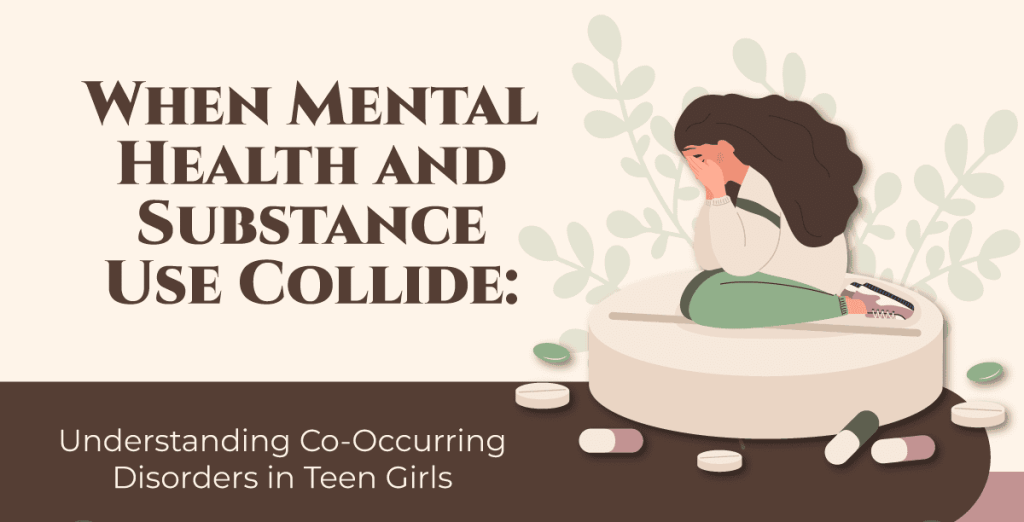
Sometimes, what can appear to be mood swings or typical teenage behavior may actually be signaling something deeper. Maybe your daughter seems distant, impulsive, or shut down, or maybe you’re starting to feel like you’re losing the connection you once had. Co-occurring disorders – when a teen experiences both a mental health condition and a substance use disorder at the same time – are more common than many realize. According to the 2023 National Survey on Drug Use and Health, nearly one in five adolescents with a substance use disorder also had a major depressive episode in the same year. Oftentimes, these challenges can fuel one another. But with the right care, healing is possible – not just from the behavior, but from the pain beneath it.
At Roots Renewal Ranch, we specialize in treating co-occurring disorders in teen girls through a deeply individualized, trauma-informed approach. Your daughter isn’t broken; she’s hurting. And with the right support, she can begin to believe in herself again.
Signs of Co-Occurring Disorders in Teen Girls
Co-occurring disorders in teens often look like emotional chaos on the surface, but underneath the outbursts, the withdrawal, or the risky behavior, there’s usually a deeper battle being fought. The signs aren’t always obvious. Sometimes, what looks like rebellion is really a coping mechanism. What seems like laziness could be untreated depression. What feels like defiance might be anxiety masked by marijuana use or alcohol. And because adolescence is already a time of change and instability, it’s easy to miss the red flags until they start stacking up.
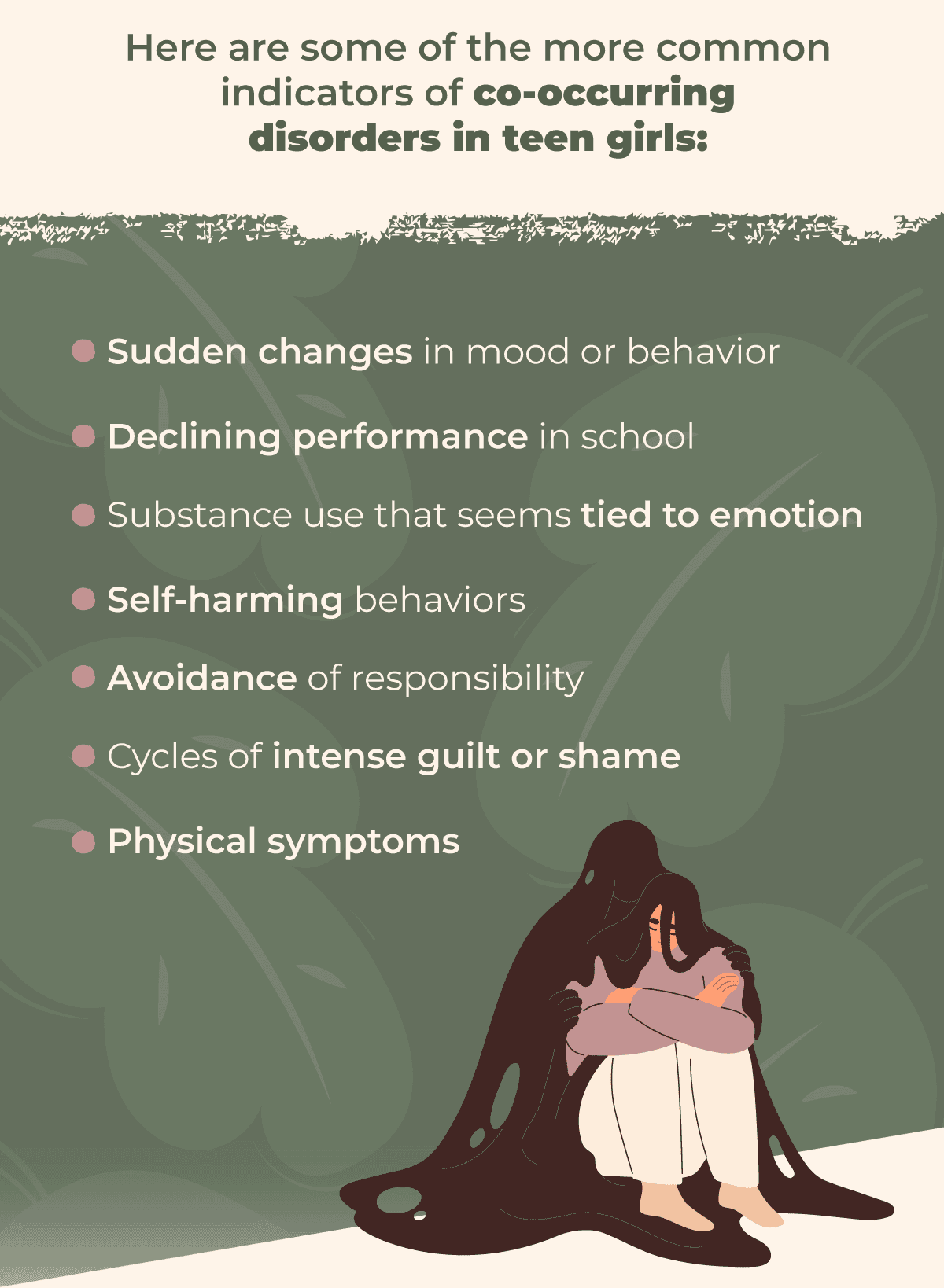
Here are some of the more common indicators of co-occurring disorders in teen girls:
- Sudden changes in mood or behavior – including irritability, isolation, or emotional numbness
- Declining performance in school – skipping classes, falling grades, or loss of interest in activities
- Substance use that seems tied to emotion – using drugs or alcohol after arguments, high-stress events, or to sleep
- Self-harming behaviors – cutting, burning, or other forms of self-injury, often kept secret
- Avoidance of responsibility – missing curfews, refusing to communicate, or withdrawing from family life
- Cycles of intense guilt or shame – especially after substance use or emotional outbursts
- Physical symptoms – headaches, stomach issues, or fatigue with no clear medical cause
One of the most telling signs is that nothing seems to “work.” Maybe you’ve tried grounding her, encouraging her, or even sending her to outpatient therapy, only to see the same issues return again and again. That’s often because the root cause hasn’t been addressed.
When mental health conditions and substance use are tangled together, treating just one piece of the puzzle rarely brings real change. That’s why recognizing co-occurring disorders for what they are is such a vital first step: it opens the door to a more effective, whole-person approach to healing.
Substance Use Disorders as a Symptom of Mental Illness
Substance use in teen girls is rarely just about experimentation or peer pressure. When a teen is coping with anxiety, depression, PTSD, or another mental health condition, substances can become a way to self-soothe. What starts as a temporary escape can quickly become a dependency.
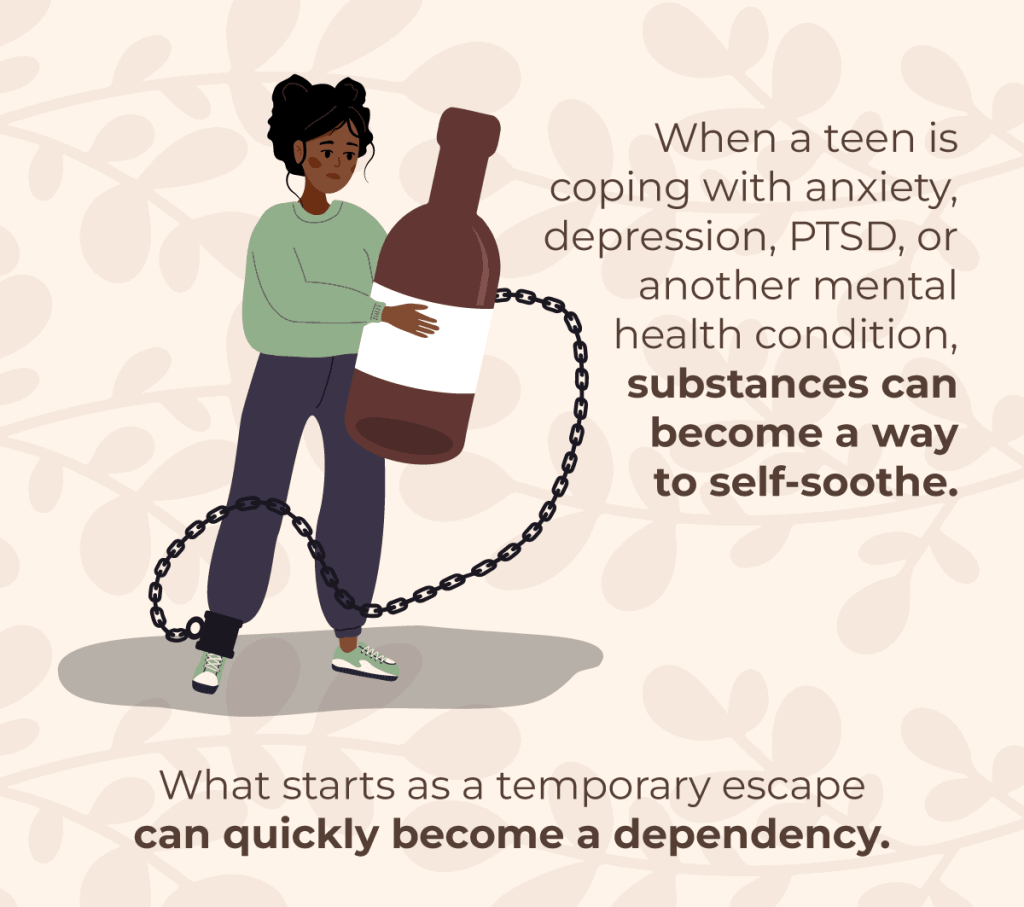
In these cases, the substance use isn’t the root of the problem. It’s a symptom. It’s a way to manage pain when healthier coping skills feel out of reach.
Here are a few common patterns:
- A teen with undiagnosed social anxiety might use alcohol to feel more comfortable in social settings.
- A teen with depression might turn to stimulants to escape the heaviness or feel something (anything) again.
- A teen with unresolved trauma might use prescription pills to numb intrusive memories or panic attacks.
- A teen with ADHD might misuse substances to slow down racing thoughts or manage energy swings.
Unfortunately, substance use doesn’t just fail to treat the underlying issue; it often makes it worse. Drugs and alcohol can distort emotions, damage relationships, and change brain chemistry, all while pushing the real mental health struggles further into the background.
By the time many families reach out for help, they’re dealing with a teen who is not only dependent on a substance but also drowning in untreated emotional pain. That’s why addressing co-occurring disorders as a unified issue is so critical. You can’t separate the two, and healing one without the other usually leads to relapse, frustration, and more pain for everyone involved.
Talking to Your Teen About Mental Health and Substance Use
Starting a conversation with your teen about mental health and substance use can feel overwhelming. You may worry about saying the wrong thing, pushing them away, or opening a door you’re not sure how to walk through. But here’s the truth: silence doesn’t protect your teen. It only isolates them further.
Teen girls dealing with co-occurring disorders often feel like no one sees what they’re really going through. They may act out, shut down, or mask their pain with substances, not because they’re “bad,” but because they’re hurting and unsure of how to ask for help.
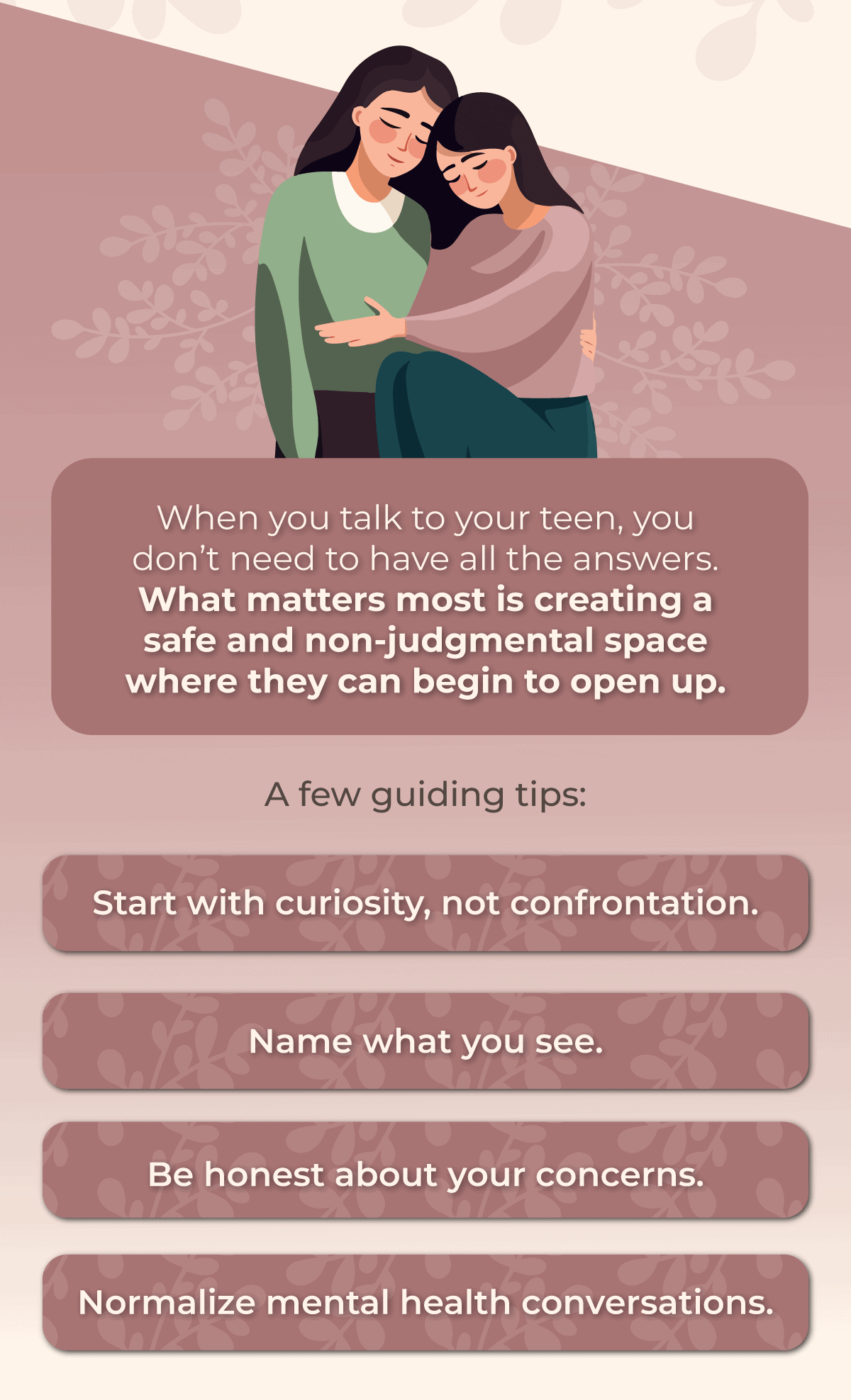
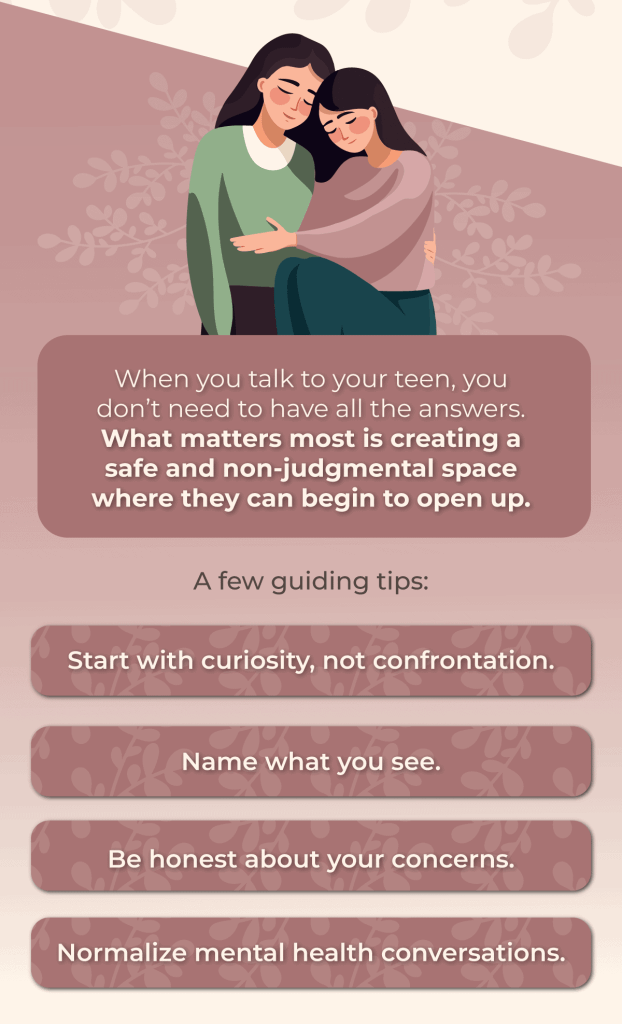
When you talk to your teen, you don’t need to have all the answers. What matters most is creating a safe and non-judgmental space where they can begin to open up. A few guiding tips:
- Start with curiosity, not confrontation. Instead of “Why are you doing this?” try “I’ve noticed you’ve been struggling lately, want to talk about it?”
- Name what you see. Gently reflect behaviors or changes: “I’ve seen that you’ve been sleeping more and seem really down. I’m here if you want to talk.”
- Be honest about your concerns. Let them know you’re coming from a place of love: “I’m worried because I care deeply about you, and I want to understand what you’re going through.”
- Normalize mental health conversations. Let them know that therapy, mental health troubles, and asking for help are all valid and common.
If your teen doesn’t open up right away, that’s okay. What you’re doing is planting a seed and showing them that they’re not alone. That you’re a safe person to turn to. When they’re ready, you want them to come to you instead of substances. That starts with a conversation, and sometimes, that conversation starts with just listening.
Why Co-Occurring Disorders Treatment Matters
When a teen is dealing with both a mental health disorder and substance use, treating just one issue isn’t enough. Co-occurring disorders are deeply intertwined. Substance use can worsen mental health symptoms, and mental health challenges can drive substance use. If only one is addressed, the other is likely to resurface, pulling your teen back into a painful cycle.
That’s why comprehensive, integrated treatment is so important. It doesn’t just aim to stop the behavior. It works to understand it.
Effective co-occurring disorders treatment for teen girls includes:
- Dual-diagnosis therapy that treats both the mental health condition and substance use disorder at the same time.
- Trauma-informed care that recognizes how past pain might be fueling current behaviors.
- Group support and peer connection to reduce shame and isolation.
- Family involvement that strengthens communication and rebuilds trust at home.
When treatment is designed with your teen’s whole story in mind, it becomes more than just a way out. It becomes a path toward healing, self-understanding, and a renewed sense of hope.
Mental Health Treatment at Roots Renewal Ranch
Your teen deserves more than surface-level support. She deserves care that addresses the full picture. At Roots Renewal Ranch, we specialize in mental health treatment for teen girls, offering compassionate, trauma-informed care that addresses co-occurring disorders at the root.
With a blend of evidence-based therapies, animal-assisted interventions, and family-centered healing, we walk alongside your family every step of the way.

If your daughter is coping with co-occurring disorders, you don’t have to navigate this alone. Call us today at (888) 399-0489 to learn how we can help.
She is strong. She is loved. And she is enough.

