
80% of parents think their children have a good school-life balance. That statistic would be great if it were actually accurate. The reality is that less than half of students feel like they have a positive school-life balance.
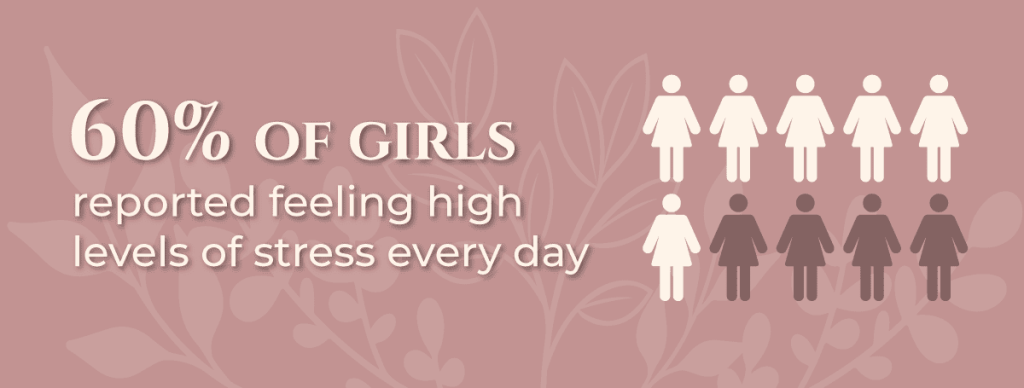
This is especially true when you consider that 60% of girls reported feeling high levels of stress every day in one study. There’s sometimes a disconnect between what parents think and how teens feel. We all need to be on the same page to make girls’ lives easier and more fulfilling.
The statistics speak for themselves. Even if it seems to you that your daughter is great at balancing different areas of her life, she might feel like she spends her entire life on schoolwork and getting good grades. Even though grades are important, they’re not important enough to compromise the state of your daughter’s mental health.
Thankfully, there are things adults can do to help the girls in their lives achieve harmony between academics and socializing. After working with teen girls for years at Roots Renewal Ranch, we have some ideas. Here are some tips for girls to balance school and social life.
The Importance of Balancing School and Social Life: The Role of Mental Health
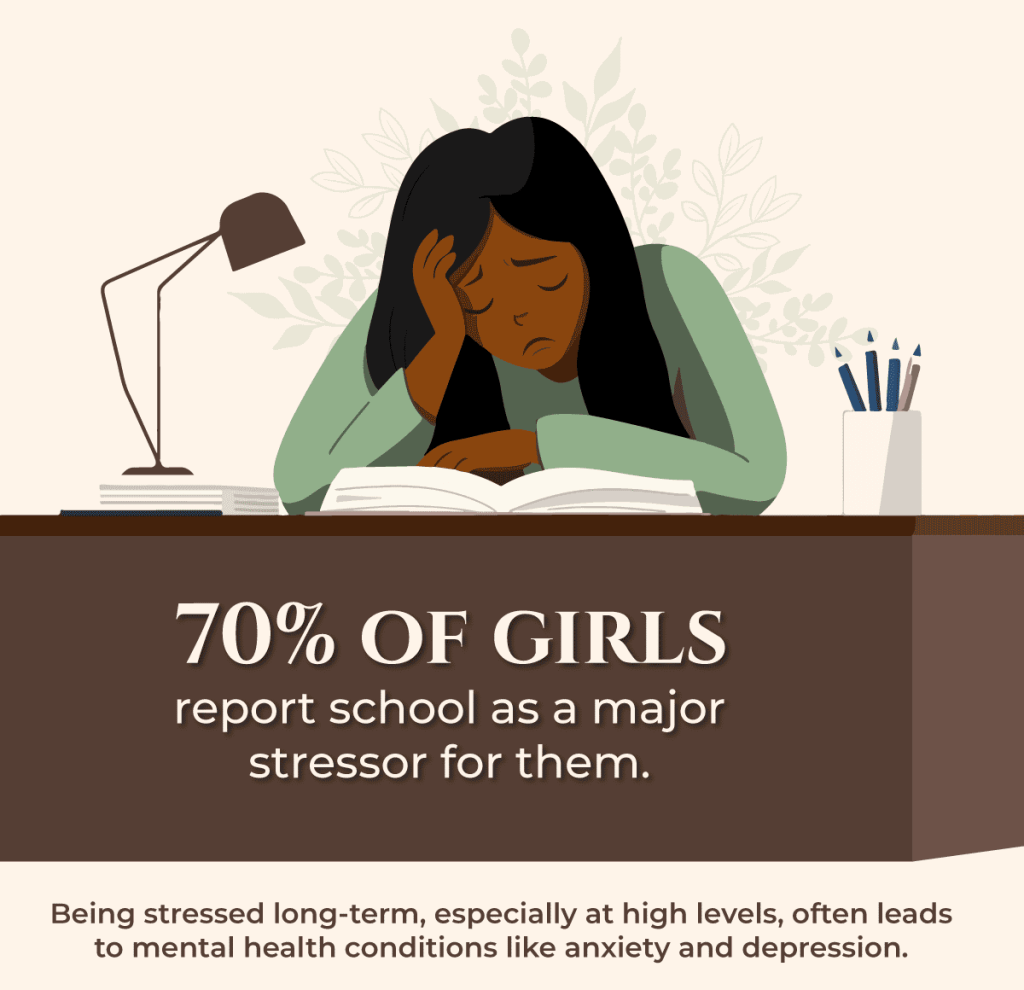
70% of girls report school as a major stressor for them. School-related stress could be a major component of why 53% of teen girls felt persistently sad or hopeless in 2023.
A key way to combat that stress is ensuring teens have time to do things they enjoy – especially hanging out with friends. Friends offer each other support during difficult times, and share their excitement and happiness, which can be contagious. Social interaction decreases loneliness, which is another massive component of staying healthy mentally and emotionally. A sense of belonging in a friend group can be life-changing for teens, especially as they learn more about themselves, the world, and who they want to be.
If the balance of a teen’s life is heavily shifted toward school, they can become isolated outside of the socialization they get in school. While that amount of social interaction can help, teens need time to have fun with other teens outside of an academic context. Teens won’t be in school forever, and having support and social skills they can carry with them into adulthood is so important. School alone can’t provide that.
If your daughter is constantly sacrificing free time in favor of studying, it might be unhealthy for her. Even if it’s your instinct to make sure she has schoolwork done before she does anything fun, if she’s been working hard and seems tense, it’ll be worth it to let her sacrifice some study time to hang out with friends. You’ll see the positive impact maintaining her social life has on her mental health. When her mental health is in better shape, she’ll enjoy school more, and her academic performance will probably improve, too.
Of course, some teens will swing in the other direction, and focus more on their social life than their education. Those cases are harmful, too. While teens may want to spend time having fun now – and that’s certainly important – focusing on school and learning will set them up for success later in life.
Tip 1: Develop Time Management Strategies
The earlier girls learn time management skills, the better. But what does that actually mean? It’s way simpler and broader than you might think.
Time management skills are anything that helps you organize how you use your time. It’s not just about creating a schedule for yourself and sticking to it no matter what. Goal-setting is a time management skill! Deciding which tasks are most important and doing them first is a time management skill – and yes, so is being able to stick to a schedule.
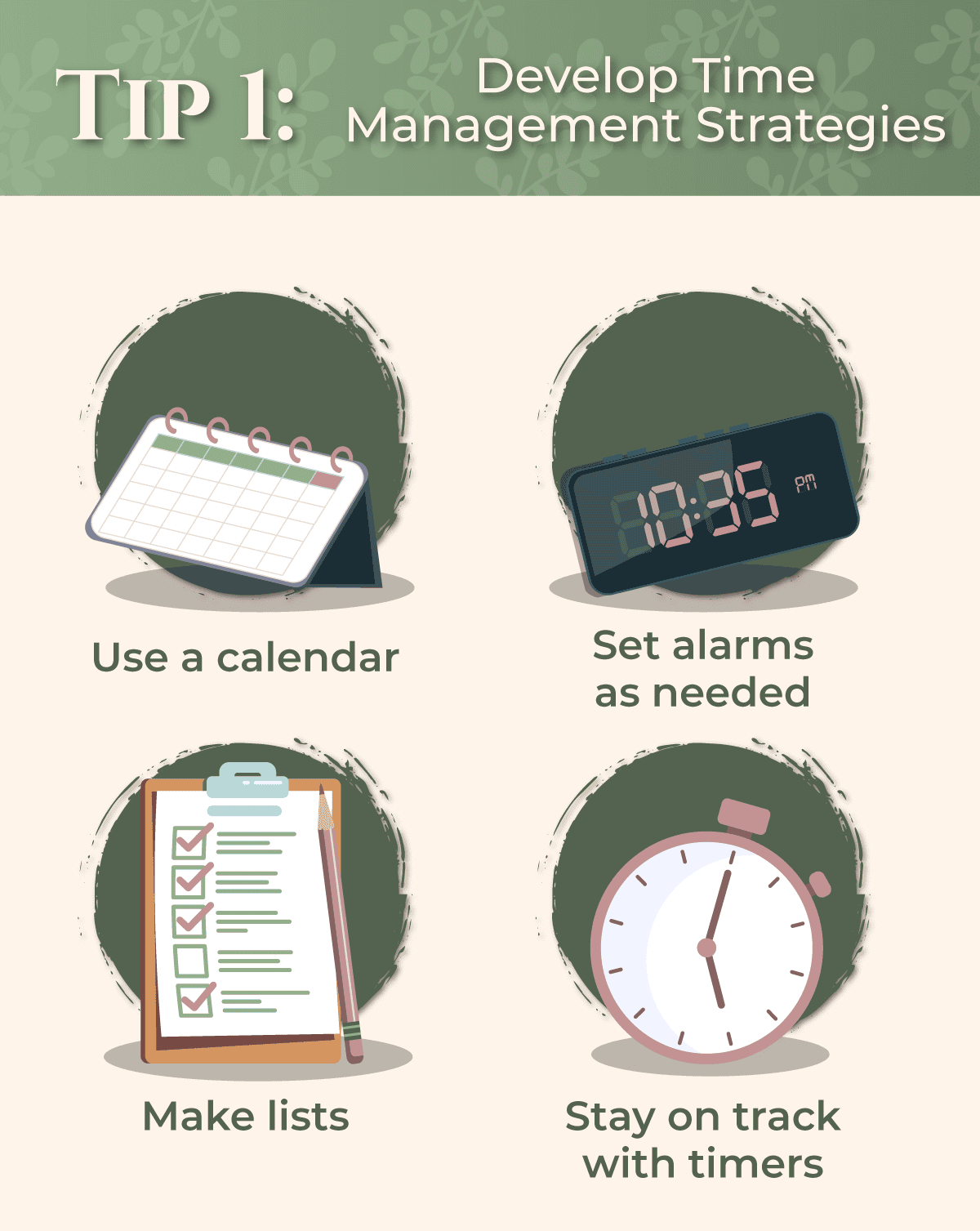
Here are some other ideas to help teens use their time more wisely:
- Use a calendar. Whether it’s in a physical planner, a calendar on her wall, or a calendar on her phone – they’re super helpful, and ensure teens know what’s coming up so they can prepare accordingly.
- Set alarms as needed. You don’t need a great memory to have time management skills. Your teen can set alarms on her phone to remind her of just about anything.
- Make lists. Whether they want to go with something more complicated like a bullet journal, or a list on a Post-it note, making lists of tasks they want to complete for the day can be very helpful for teens. It’s a reminder of important tasks, a tool to help them prioritize, and a way to set goals all in one.
- Stay on track with timers. If you want to take “time management” more literally, your teen can use timers on her phone to break up study time and time for relaxation. For example, set a timer for 45 minutes of studying. Once that goes off, set another one for 15 minutes of break time. Once that alarm rings, return to studying, and repeat as needed.
Remember, time management isn’t all about studying well. It’s also about making sure there’s enough time in a teen’s schedule for them to relax and have fun.
If you want your teen to work on their time management skills, framing it more positively might help. Instead of, “You need to get better at time management so you waste less time,” try, “If you get better at managing your time, you’ll have more of it to spend relaxing and having fun.” It helps to reduce the negative, boring connotation teens might have with the term.
Tip 2: Setting Boundaries on Both Ends of the Spectrum
Boundaries are important when it comes to balancing teens’ school lives and social lives, both for parents and the teens themselves.
Teens need to learn how to say “no” when faced with opportunities to “overbook” their own schedules. If they’ve been slacking in the studying department recently, they’ll have to turn down some social engagements with friends to make sure they’re still dedicating adequate time to school. On the other end of the spectrum, some teens might have to let some extracurricular opportunities go so they still have time to unwind and spend time with friends unrelated to school.
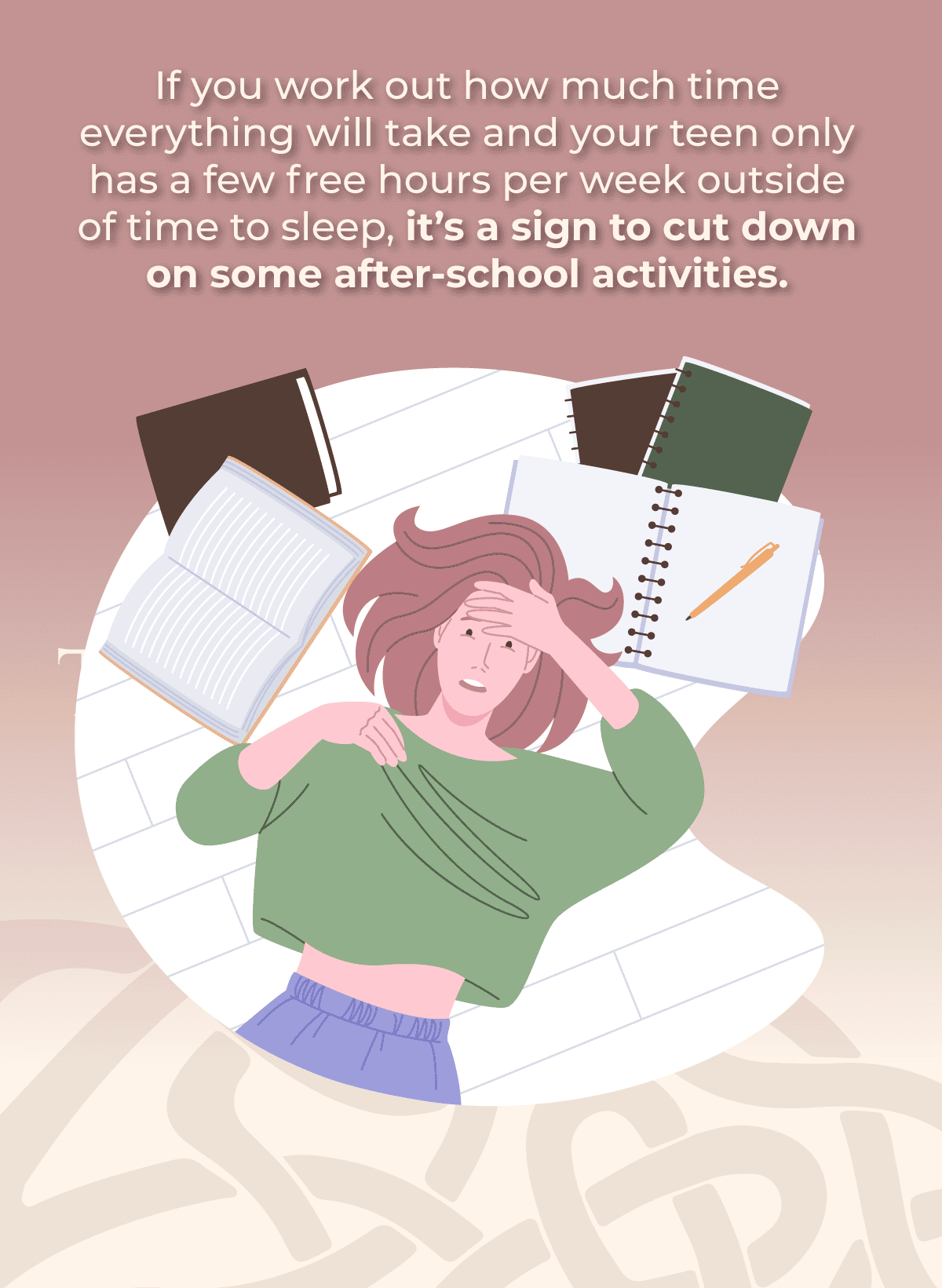
Figuring out a schedule will bore most teens, but realizing how much of a time commitment all of their activities will require is a huge help when finding a balance between academics and socialization. If you work out how much time everything will take and your teen only has a few free hours per week outside of time to sleep, it’s a sign to cut down on some after-school activities. It may seem strange when teens are so heavily encouraged to get involved at their school and told repeatedly how good it will look on college applications – but preserving time to relax and hang out with friends is just as important.
Parents also need to set boundaries, though, especially with teens who socialize a bit too much, and neglect their schoolwork. Make some rules with your teen, and make the consequences of not following them clear and consistent. For example, you might decide if your teen gets home later than 10 PM, they won’t be allowed to hang out with friends at all for the next week. You could also say they need to finish all of their homework before they can go hang out with friends. Different rules will work for different girls, so you’ll have to figure out what works best for your family.
Tip 3: There’s Nothing Wrong With Asking for Help
This goes for both parents and teens alike.
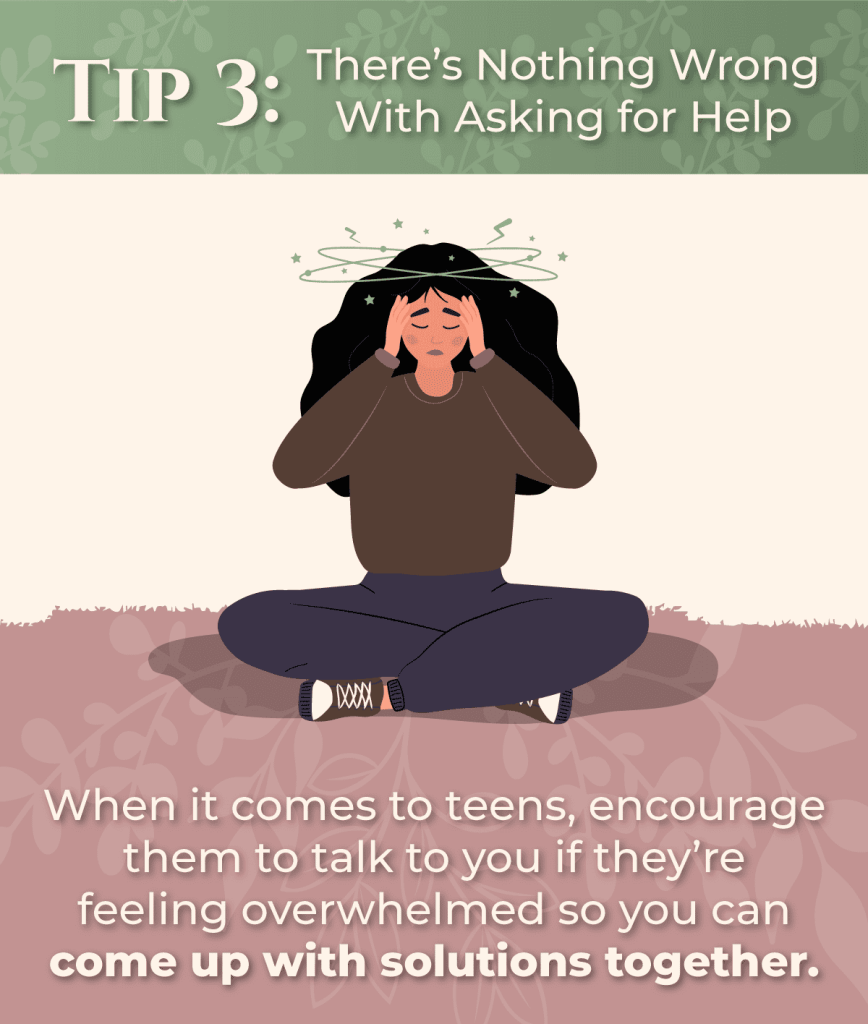
When it comes to teens, encourage them to talk to you if they’re feeling overwhelmed so you can come up with solutions together. If they’re having a tough time with a certain subject in school, suggest they reach out to a friend who understands the material better. Maybe the two teens can meet together, and get some social time in while studying. It’s a win-win situation! It’s also important for girls to know their school guidance counselors are there to help them. They’re experts in the realm of school-related stress, so they’ll definitely have more suggestions on how your teen can balance her life to best benefit her mental health.If your teen is having a hard time, it can be tough on you as a parent, too. There’s never anything wrong with seeking advice or asking for help from other parents, counselors, or even mental health professionals. Sometimes it’s the best thing you can do.

Getting Help in the Dallas-Fort Worth Area
There comes a point when you can’t expect yourself to have all the answers. If your daughter’s mental health is taking a turn for the worse, and you can’t figure out a solution alone, it’s time to seek additional help. Therapy for teen girls can be beneficial when it comes to balancing different areas of life, and with a host of other subjects.
If you’re very concerned about your daughter’s mental health, it might be a good idea for her to attend a residential program. She’ll still have daily time for academics, but the primary focus will be her mental health and getting better.
No matter what you choose, you and your daughter can do this! She can absolutely achieve a well-balanced life that empowers her as she grows into an amazing young woman.
Roots Renewal Ranch, located in the Dallas-Fort Worth area, offers residential treatment for girls ages 13-17. All of our care is trauma-informed, and our staff all receive SAMA training to compassionately and effectively manage any conflict that arises. Where Roots really shines, though, is with our family of animals. Every girl who stays with us helps to take care of them and will receive plenty of love, affection, and comfort from them on her journey to healing. Your daughter is strong, she is loved, and she is enough. Give us a call at 888-399-0489. We’d love to welcome you into the Roots family.

