At Roots Renewal Ranch, we believe that the true journey begins when teens are free to push back against those labels. Through therapy and connection, we help girls reclaim their stories, rediscover their voices, and build confidence rooted in who they truly are – beyond the stereotypes.
Key Takeaways:
- Gender stereotypes sneak in early. They can shape how girls measure their worth and leave them wrestling with stress, anxiety, or self-doubt.
- When teens start questioning those old patterns, they gain confidence in their own voice and a clearer sense of who they are.
- Confidence also grows when self-expression feels genuine. Being true to themselves makes it easier to stand up to the pressure of comparisons.
- Media is everywhere, but limits help. Healthy boundaries protect teens from unrealistic standards and the damage of constant self-critique.
- A good therapist can make a big difference. It’s a safe place to untangle harmful messages and practice resilience.
- Families have incredible influence. Modeling fairness, support, and open conversations gives teens the foundation to rise above bias and carry new and healthier habits into adulthood.
The Weight of “Should”: How Stereotypes Shape Teen Identity
Teen girls are navigating in a world that is filled with unspoken rules about who they “should” be. From comments about their appearance to expectations about their behavior, these subtle messages can accumulate over time, eventually shaping a young girl’s self-perception and confidence.
Stereotypes, to many teens, can feel like invisible chains, influencing how girls see themselves, the choices they make, and the way they interact with peers.
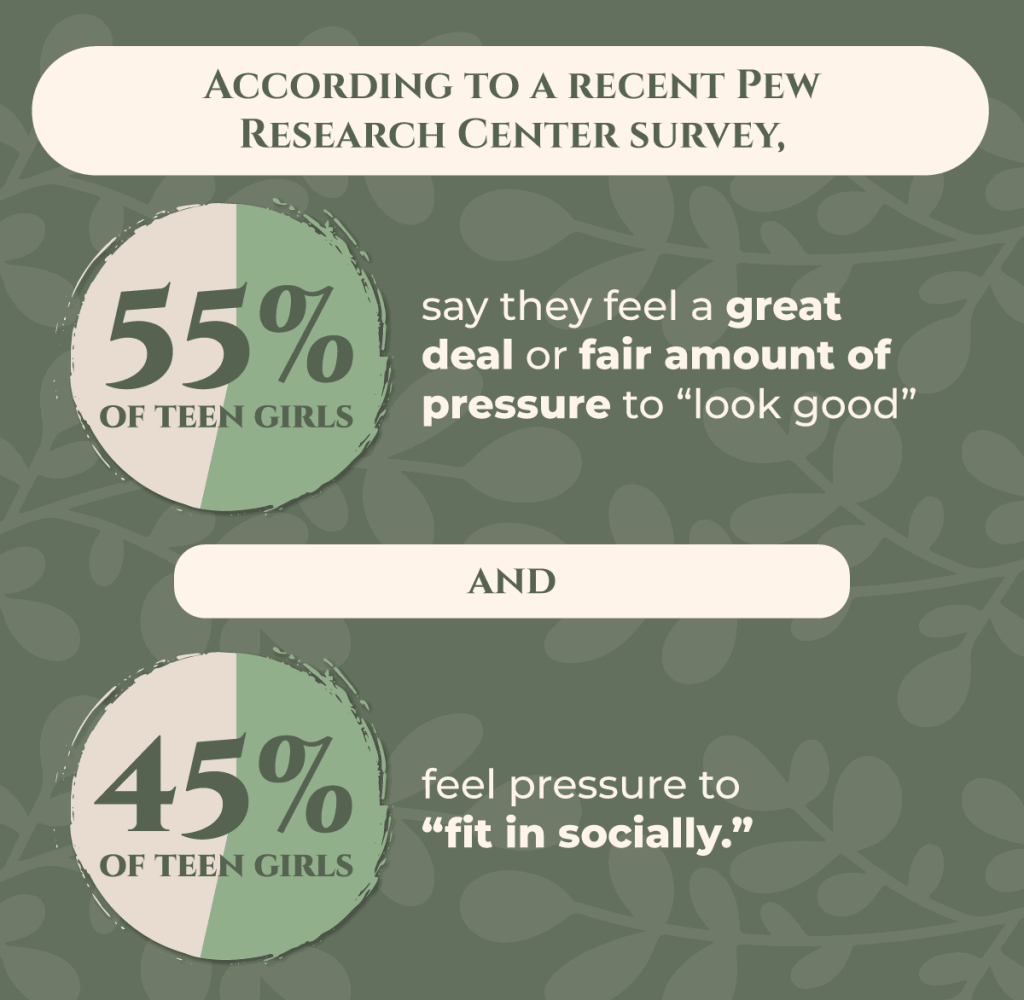
Research even shows that exposure to rigid gender norms can increase anxiety, self-doubt, and feelings of inadequacy. For teens in Texas, these pressures are expressed further by social, academic, and familial expectations. This can create an environment where “being enough” often feels unattainable. Recognizing the weight of these expectations is the first step toward helping teens reclaim autonomy over their identities.
By talking openly and honestly about these pressures, validating feelings, and exploring the ways stereotypes influence daily life, families and educators can help girls begin to lift the weight of “should” and explore who they genuinely want to be.
Rewriting the Story – Teaching Teens to Challenge Stereotypes
Empowerment begins with awareness.
Teens benefit from learning to identify and question stereotypes, understanding that what society often prescribes isn’t an unchangeable rule. Education, reflection, and guided discussion allow girls to spot biases in media, school settings, and even casual conversations.
Key strategies include:
- Questioning assumptions: Encouraging your teens to ask why certain behaviors, careers, or interests are labeled “for girls” or “for boys.”
- Reframing narratives: Help them tell stories of themselves that center their choices, strengths, and goals rather than societal expectations.
- Modeling empowerment: Adults can demonstrate how they challenge stereotypes in daily life – whether at work, home, or social settings.
Through consistent practice, girls gain the tools to rewrite the story of who they are meant to be, shaping identity around authenticity instead of imposed roles.
Invisible Pressure: Bias in School, Sports, and Social Life
Bias often hides in plain sight.
Sometimes it’s woven into rules or comments, or hidden in everyday expectations.
It’s not always blatant discrimination.
In school, girls may feel pressured toward certain subjects, discouraged from raising her hand, or expected to take on the “helper” role instead of one of leadership.
Assumptions about ability can even limit a teen girl’s opportunities and eventually dampen their confidence on the field or in the gym. Sometimes, even among friends the subtle pressures to conform to these norms or interests can silently shape their life choices and self-image.
Eventually, these pressures build up stress, erode their self-confidence, and they can even take a toll on a girl’s mental health – everything from anxiety over performance to questioning their own worth. Recognizing these biases is the first step toward reclaiming autonomy and developing her resilience.
- Reflect on Experiences: Encourage your teen to identify moments when they can see bias influenced their decisions, feelings, or self-perception. Awareness is power.
- Advocacy Skills: Teach respectful ways to challenge assumptions – asking questions, speaking up, or providing alternative perspectives.
- Safe Spaces: Create environments at school, home, or extracurricular activities where girls can explore new ideas or try new things, and express themselves without judgment.
By acknowledging bias and equipping girls with tools to navigate it, we help them transform invisible pressures into opportunities for growth, confidence, and self-determination.
Strength in Authenticity – Encouraging Girls to Define Themselves
Authenticity is a skill, not just a concept.
Teens benefit when they are supported in exploring their values, passions, and goals independent of societal pressures. Family conversations, mentoring, and therapeutic exercises can help girls clarify what matters to them, what they enjoy, and who they want to be.
Ways to do this:
- Celebrate their interests that may not fit traditional gender norms.
- Encourage leadership in areas where girls feel naturally confident.
- Reinforce that making choices aligned with values, not expectations, builds resilience and self-esteem.
By consistently validating their authentic expression, adults help teens develop a strong sense of self that withstands external pressures.
Mental Health Matters: The Emotional Toll of Gender Roles
Rigid gender roles can do a lot more than just limit a teen’s choices, though. They can have a measurable impact on mental health. Girls navigating conflicting expectations may experience anxiety, depression, or social withdrawal. The constant pressure to perform can also further push stress-related physical symptoms, like sleep disturbances or headaches.
Tips to mitigate emotional impact:
- Normalize discussion of both their emotions and mental health.
- Model healthy coping strategies for stress yourself.
- Provide access to therapy, mentoring, and even support groups that encourage girls to process experiences safely.
Understanding the real mental health impact of stereotypes is crucial for families with teens, as well as educators who want to create environments that prioritize emotional well-being over conformity.
From Bias to Belonging – Creating Spaces Where Girls Thrive
Creating inclusive and affirming spaces can also help girls feel not just seen, but also respected and capable. This includes in classrooms and clubs, on teams, and even in family environments where curiosity, creativity, and leadership are encouraged rather than constrained by gender expectations.
Teens benefit when they are supported in exploring their values, passions, and goals independent of societal pressures. Family conversations, mentoring, and therapeutic exercises can help girls clarify what matters to them, what they enjoy, and who they want to be.
Ways to do this:
- Celebrate their interests that may not fit traditional gender norms.
- Encourage leadership in areas where girls feel naturally confident.
- Reinforce that making choices aligned with values, not expectations, builds resilience and self-esteem.
By consistently validating their authentic expression, adults help teens develop a strong sense of self that withstands external pressures.
Mental Health Matters: The Emotional Toll of Gender Roles
Rigid gender roles can do a lot more than just limit a teen’s choices, though. They can have a measurable impact on mental health. Girls navigating conflicting expectations may experience anxiety, depression, or social withdrawal. The constant pressure to perform can also further push stress-related physical symptoms, like sleep disturbances or headaches.
Tips to mitigate emotional impact:
- Normalize discussion of both their emotions and mental health.
- Model healthy coping strategies for stress yourself.
- Provide access to therapy, mentoring, and even support groups that encourage girls to process experiences safely.
Understanding the real mental health impact of stereotypes is crucial for families with teens, as well as educators who want to create environments that prioritize emotional well-being over conformity.
From Bias to Belonging – Creating Spaces Where Girls Thrive
Creating inclusive and affirming spaces can also help girls feel not just seen, but also respected and capable. This includes in classrooms and clubs, on teams, and even in family environments where curiosity, creativity, and leadership are encouraged rather than constrained by gender expectations.
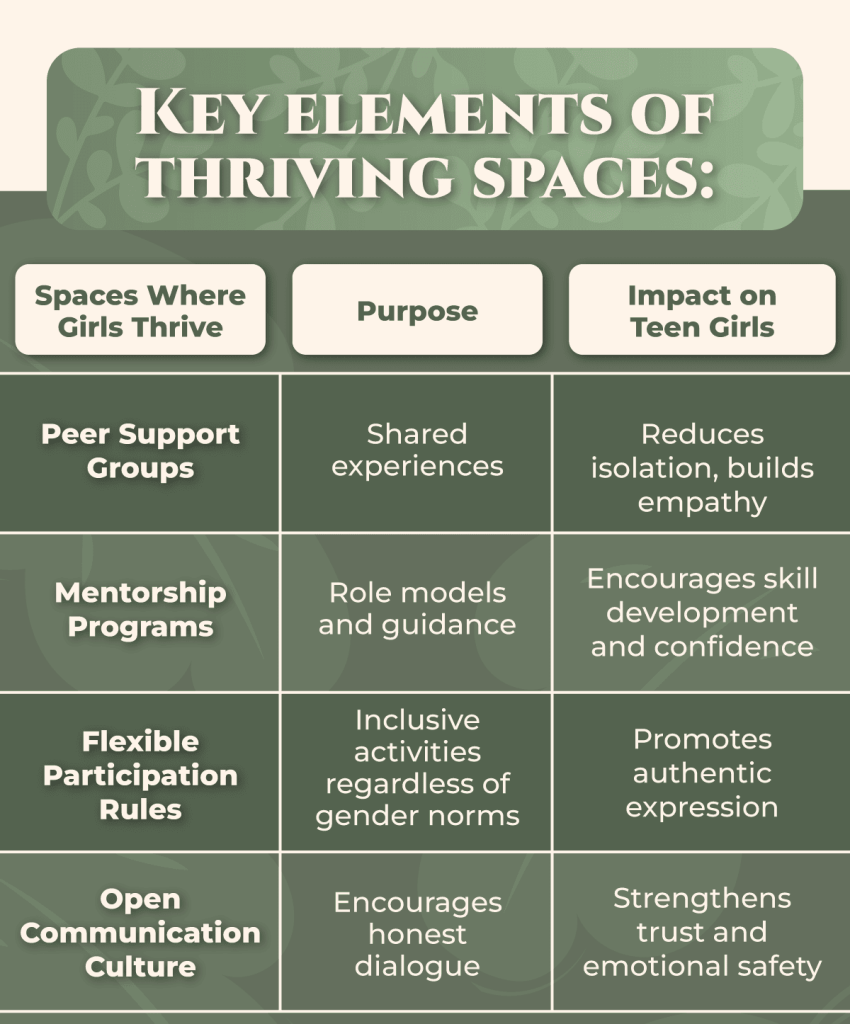
Key elements of thriving spaces:
| Purpose | Impact on Teen Girls | |
|---|---|---|
| Peer Support Groups | Shared experiences | Reduces isolation, builds empathy |
| Mentorship Programs | Role models and guidance | Encourages skill development and confidence |
| Flexible Participation Rules | Inclusive activities regardless of gender norms | Promotes authentic expression |
| Open Communication Culture | Encourages honest dialogue | Strengthens trust and emotional safety |
By intentionally shaping these spaces for teens, adults can help girls feel valued for who they are, fostering resilience and self-assurance.
Double Standards and Silent Battles: Why Girls Feel the Squeeze
Teen girls often face contradictory expectations.
Be assertive – but not too aggressive.
Be ambitious – but not “bossy.”
These double standards can create pressure to perform in multiple roles simultaneously, leaving girls anxious, self-conscious, or even hesitant to fully express themselves.
This can lead teen girls to have:
- Difficulty making decisions without second-guessing themselves
- Increased stress and worry about peer judgment
- Internalized shame or guilt when they don’t meet every expectation
Empowering teen girls means being able to name these pressures and teaching strategies to navigate them. Encourage self-reflection, boundary setting, and open dialogue about when societal expectations feel unfair.
She Is More Than a Stereotype – Helping Teens Reclaim Their Voice
Stereotypes subtly shape how a girl sees herself and how others treat them. But therapy and mentorship offer spaces for teens to explore identity outside these narrow roles. When girls practice speaking openly and honestly about their opinions, interests, and goals, they reclaim a sense of agency.
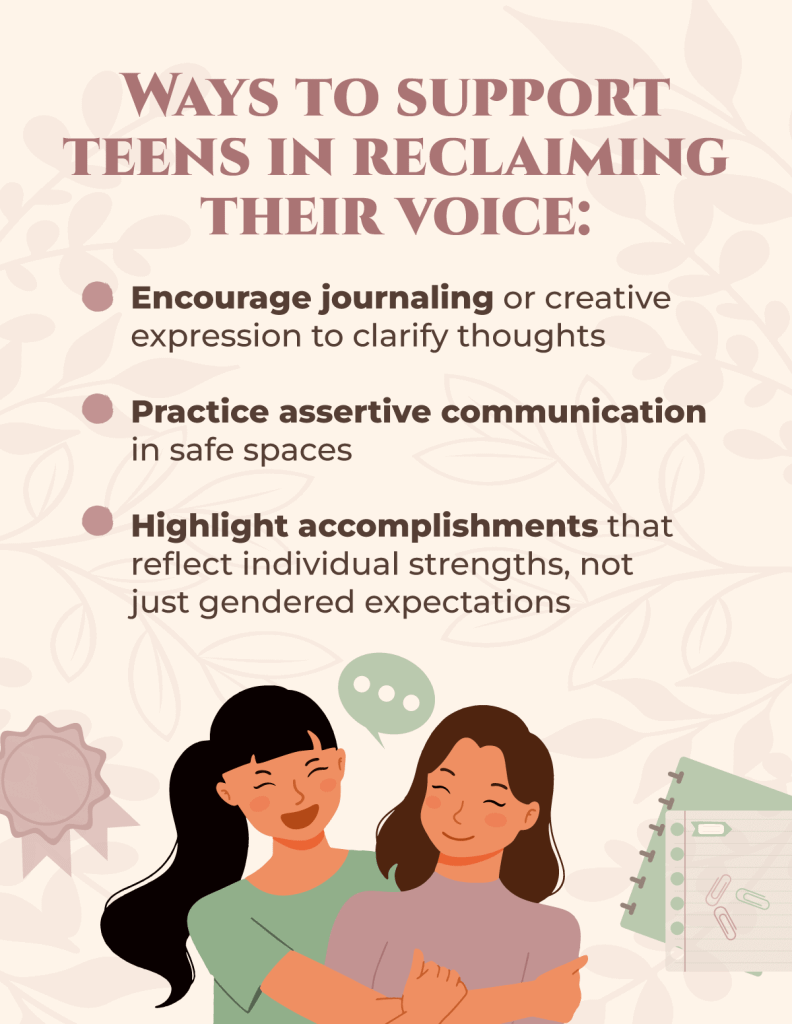
Ways to support teens in reclaiming their voice:
- Encourage journaling or creative expression to clarify thoughts
- Practice assertive communication in safe spaces
- Highlight accomplishments that reflect individual strengths, not just gendered expectations
Supporting girls in reclaiming their voice isn’t just about short-term confidence, though. It can lay the groundwork for lifelong self-awareness and empowerment.
Every time a teen expresses her authentic thoughts, explores her own interests, or celebrates her unique strengths, she reinforces the belief that she is capable, valued, and worthy of being seen on her own terms. With consistent encouragement, these moments compound into a resilient sense of self that will carry beyond adolescence.
Social Media, Self-Image, and the Gender Trap
Digital life these days amplifies these pressures. Social media often presents these perfectly curated images of what a girl “should” look like, or “should” act like. Even what they should want to achieve. These constant comparisons can exacerbate a girl’s anxiety, self-doubt, and body image concerns.
Strategies for mindful media engagement:
- Encourage that they think critically about online content
- Set boundaries for screen time and social media use
- Promote accounts and communities that celebrate diverse experiences and bodies
By learning to approach social media just a bit more thoughtfully, your teen will learn to engage online without letting it define who they are. Encouraging them to reflect on what they see and connect with more supportive communities allows your girls to enjoy the benefits of digital platforms while still being able to protect their own self-esteem and identity. These practices help teens develop a healthy, mindful relationship with social media that strengthens their confidence and resilience in real-world interactions.
Healing Beyond Labels – How Therapy Supports Authentic Growth
Therapy at Roots is here to provide a space for girls to unpack all of these pressures safely. Licensed clinicians help teens identify how bias and stereotypes impact their mental health, relationships, and self-concept.
Through structured approaches, girls can:
- Recognize internalized messages and challenge them
- Explore their identity beyond all of the societal labels
- Develop coping strategies that reinforce resilience and self-worth
Therapy equips teens with more than coping tools. It helps them reclaim agency over their own identity and life choices. Over time, this safe exploration fosters self-compassion, critical thinking, and the courage to define themselves outside societal expectations. When teens leave therapy, they carry with them a clearer understanding of who they are, as well as the skills to navigate a world that may try to label them.
Bias at Home: When Expectations Become Walls Instead of Support
Even well-meaning parent expectations can create an invisible pressure for your child. However, rather than acting as a wall, they can become opportunities to teach them about self-reflection, empathy, and resilience. When parents intentionally notice where assumptions or traditional roles influence interactions, they can transform expectations into guidance, rather than limitations.
Key ways families can transform bias at home:
- Encourage open dialogue about feelings, goals, and frustrations
- Reflect together on your household roles and responsibilities to ensure fairness
- Validate successes and failures equally, emphasizing learning over perfection
- Model inclusive attitudes by acknowledging and challenging personal biases
This shift turns everyday moments into new opportunities for growth, soon helping teens to feel supported while simultaneously learning to navigate the expectations of the world around them.
Parent Power – How Families Can Break the Cycle of Bias
Parents should play a pivotal role in modeling what equitable and open-minded attitudes look like to their teens. By actively reflecting on their own assumptions and fostering conversations about biases they see, they can teach their teens to think critically.
Action steps for parents:
- Model fairness and respect – Treat all family members’ voices equal
- Validate experiences – Acknowledge when societal pressures or biases affect your teen
- Create inclusive spaces – Encourage participation in hobbies, sports, or clubs free from gendered expectations
- Celebrate individuality – Highlight and honor strengths, interests, and choices that reflect your teen’s authentic self
Not all biases are obvious, and even subtle messages at home can shape how teens see themselves. This chart highlights common expectations that can unintentionally limit growth, and pairs them with actionable steps parents can take to turn those moments into opportunities for empowerment. By actively addressing these dynamics, families help teens build their confidence, resilience, and even a stronger sense of self.
| Common Bias/Expectation | Empowering Action | Teen Impact |
|---|---|---|
| “Girls shouldn’t speak up too much” | Encourage expressing opinions in family discussions | Builds assertiveness and confidence |
| Comparing teen to peers or siblings | Highlight individual strengths and achievements | Fosters self-esteem and self-worth |
| Assigning gendered chores or responsibilities | Share household tasks fairly | Reinforces equality and collaboration |
| Minimizing emotions (“Don’t be so sensitive”) | Validate feelings and model healthy expression | Strengthens emotional regulation |
Every small, intentional change at home reinforces the lessons teens learn in therapy and everyday life. When families commit to awareness, reflection, and support, they model the kind of healthy, empowering environment that allows girls to thrive.
If you are ready to take the next step in supporting your teen’s growth and self-discovery, Roots Renewal Ranch is here to guide your family through that journey.
Breaking Barriers, Building Confidence: Roots’ Commitment to Girls
At Roots Renewal Ranch, we believe every girl deserves to be celebrated for who she truly is, not pressured into a role she never chose. Through family therapy, trauma-informed care, and holistic healing, we help girls challenge stereotypes, embrace their strengths, and build resilience that lasts.

If your daughter is ready for a space where she can grow free of labels and start a journey of mental health healing, call us at (888) 399-0489. Together, we can write her next chapter.
She is strong, she is loved, and she is enough.
