
For teen girls, the pressures of school, friendships, social media, and family dynamics can feel overwhelming. Dealing with mental health challenges or substance use can make them feel even more alone – unsure of who to turn to, and disconnected from the people who matter most. During this time, teen girls often feel like no one truly understands what they’re going through – that their troubles are theirs alone.
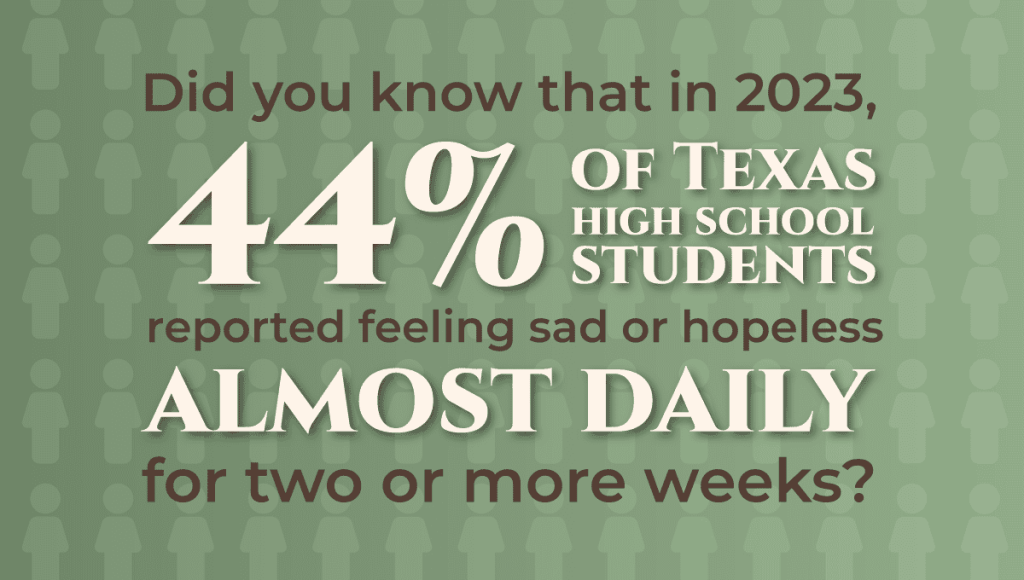
Did you know that in 2023, 44% of Texas high school students reported feeling sad or hopeless almost daily for two or more weeks? This underscores the urgent need for comprehensive support systems, including family involvement, to help teens navigate these challenges. Feeling understood, supported, and seen by family can be a powerful anchor during this critical time.
At Roots Renewal Ranch, we recognize that family involvement is a cornerstone of lasting recovery. By integrating family therapy into our programs, we guide teens and their loved ones in rebuilding trust, improving communication, and strengthening the support system that is essential for long-term well-being.
Family: The Heart of Healing
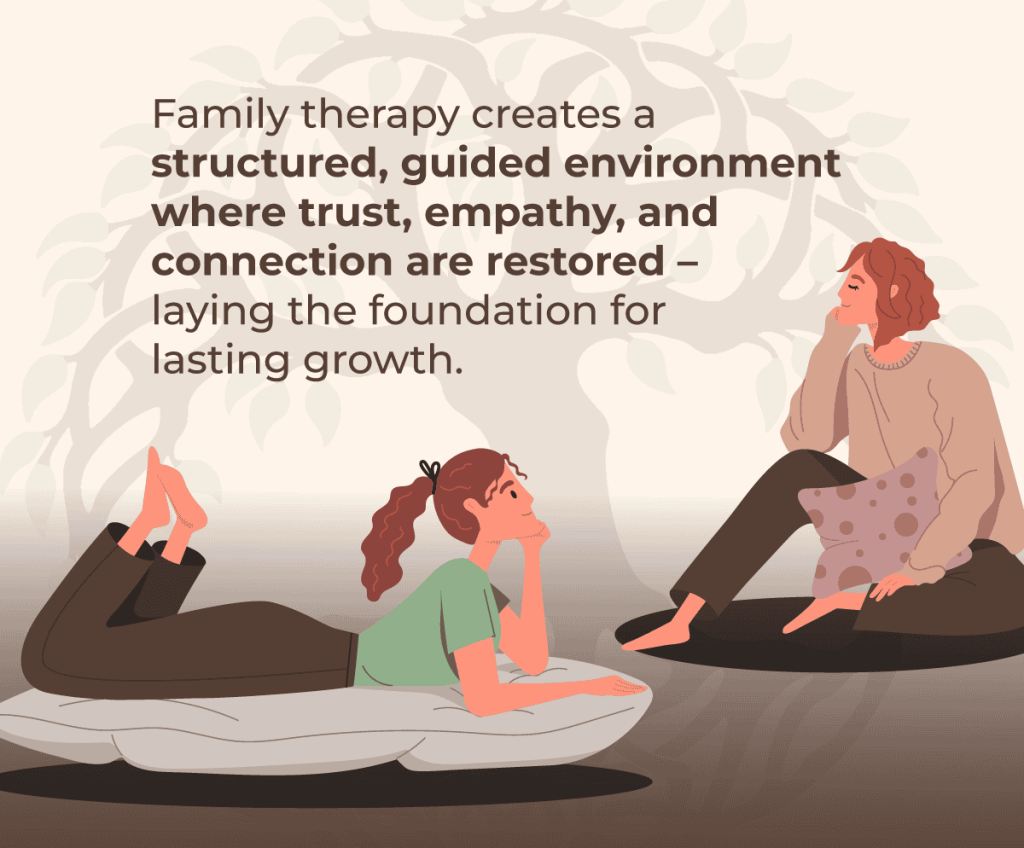
Families are the first social network, the first mirror, and often the first source of emotional cues. When family dynamics are supportive, consistent, and understanding, they provide a sense of safety that helps teens navigate stress, anxiety, and the challenges of adolescence. Conversely, strained or disconnected relationships can exacerbate emotional challenges and impede recovery. Family therapy creates a structured, guided environment where trust, empathy, and connection are restored – laying the foundation for lasting growth.
Family therapy also provides a space for reflection and learning, helping both teens and their caregivers recognize patterns that may have gone unnoticed. Through guided sessions, families can explore how past experiences, communication styles, and unspoken expectations influence present interactions. This insight allows everyone to make intentional changes, repair misunderstandings, and build healthier routines. By practicing empathy, active listening, and mutual respect in a supportive setting, families model the very skills that teens need to navigate the wider world with confidence and resilience.
Bridging the Gap: Family Therapy and Connection
Family therapy is more than talking about feelings – it’s a bridge that connects teens to the people who matter most. Through structured sessions, families learn to communicate effectively, understand one another’s perspectives, and develop collaborative problem-solving skills. The goal is not just to resolve conflicts but to create patterns of interaction that build resilience and mutual respect.
Turning Conflict into Growth: Tools Family Therapy Provides
Conflict is inevitable, especially during adolescence. Family therapy equips both teens and their parents with strategies to approach disagreements constructively. These tools not only help resolve conflicts in the moment but also build lifelong communication and coping skills.
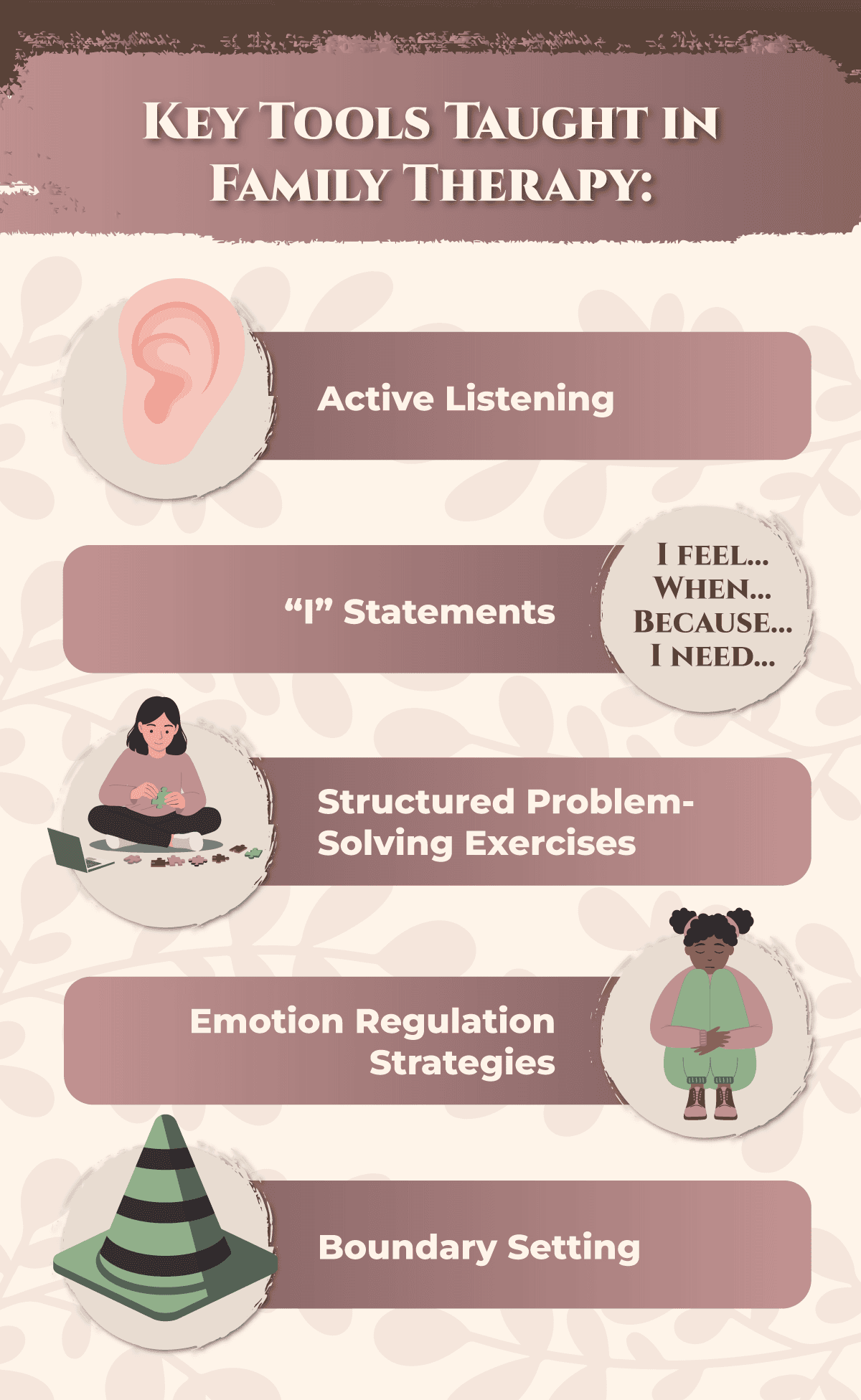
Key Tools Taught in Family Therapy:
- Active Listening: Teens and caregivers practice fully attending to what the other person is saying, reflecting back understanding before responding. This fosters empathy, reduces misunderstandings, and shows that each perspective matters.
- “I” Statements: Using statements like “I feel… when…” helps express emotions and needs without assigning blame. This encourages honest dialogue while minimizing defensiveness and escalating tension.
- Structured Problem-Solving Exercises: Families learn step-by-step approaches to tackle challenges collaboratively, from brainstorming solutions to evaluating outcomes. This teaches teens how to navigate conflicts thoughtfully rather than reacting impulsively.
- Emotion Regulation Strategies: Through guided practice, teens develop skills to recognize, label, and manage intense emotions during disagreements. These techniques help maintain calm and prevent conflicts from spiraling.
- Boundary Setting: Learning to communicate personal limits respectfully empowers teens to advocate for themselves while respecting others, promoting healthier and safer family interactions.
Research shows that adolescents who learn healthy conflict resolution within the family experience improved self-esteem, stronger relationships, and reduced behavioral issues – building a foundation for resilience that extends far beyond the therapy room.
Life Skills in Action: Empowering Teens Beyond the Therapy Room
The skills learned in family therapy extend far beyond the session. Teens practice these abilities in real-world scenarios, creating continuity between therapy and daily life:
- Emotional Regulation: Recognizing emotions and responding in constructive ways.
- Constructive Communication: Expressing needs and frustrations respectfully.
- Problem-Solving: Collaborating with family members to address challenges together.
- Time Management: Planning tasks, balancing responsibilities, and prioritizing commitments.
- Decision-Making: Weighing options thoughtfully and considering consequences before acting.
These practical skills help teens apply what they’ve learned in therapy to school, friendships, and everyday situations, strengthening resilience and self-confidence.
Daily Practices That Support Lasting Change
Consistency is key. Small, daily practices like family check-ins, gratitude sharing, or mindful breathing together reinforce communication skills, emotional regulation, and connection. Studies indicate that daily family routines paired with therapy reduce teen stress and improve overall family cohesion. These practices transform abstract concepts into lived experience, creating a rhythm of trust and support that endures beyond formal therapy.
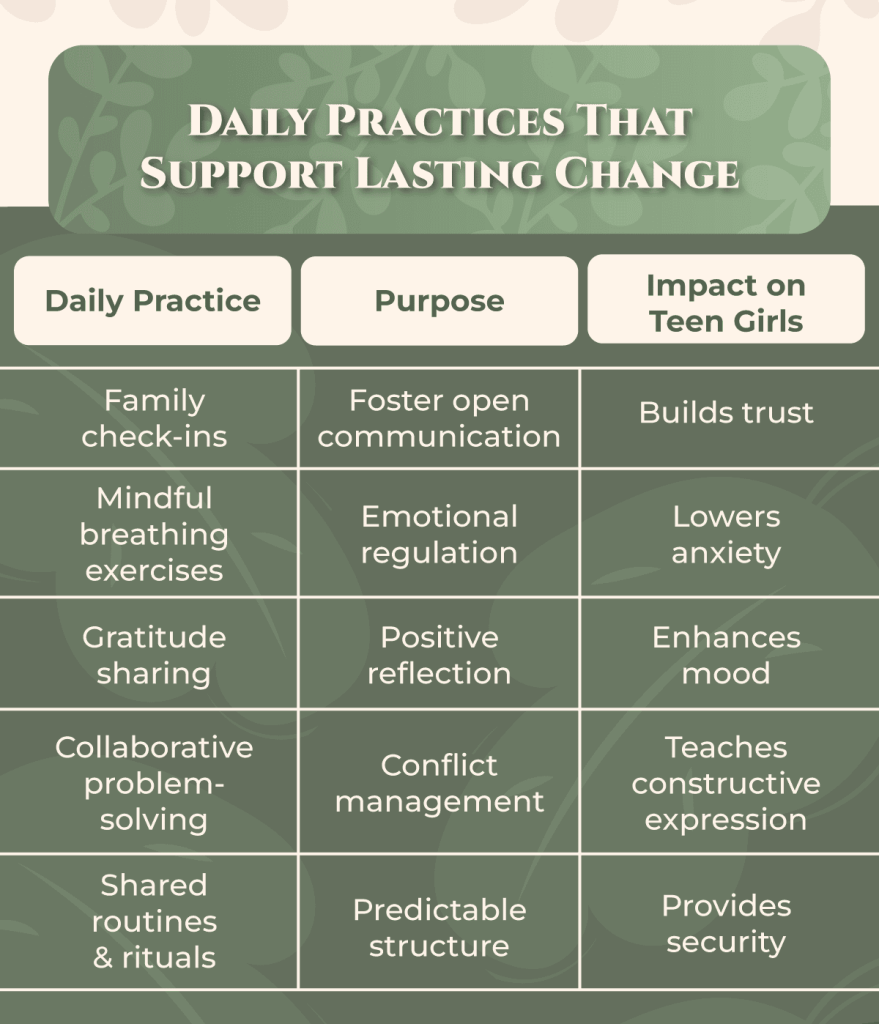
| Daily Practice | Purpose | Impact on Teen Girls |
|---|---|---|
| Family check-ins | Foster open communication | Builds trust, reduces misunderstandings |
| Mindful breathing exercises | Emotional regulation | Lowers anxiety, improves focus |
| Gratitude sharing | Positive reflection | Enhances mood, strengthens family bonds |
| Collaborative problem-solving | Conflict management | Teaches constructive expression, resilience |
| Shared routines & rituals | Predictable structure | Provides security, reinforces therapy skills |
By weaving these small practices into everyday life, families turn intention into habit. Each check-in, shared moment, or mindful pause reinforces the skills teens are learning in therapy, making growth tangible and sustainable. Over time, these routines help families move from simply coping with challenges to thriving together, building a foundation of trust, resilience, and lasting connection.
Your Role as a Parent: How Small Changes Make a Big Impact
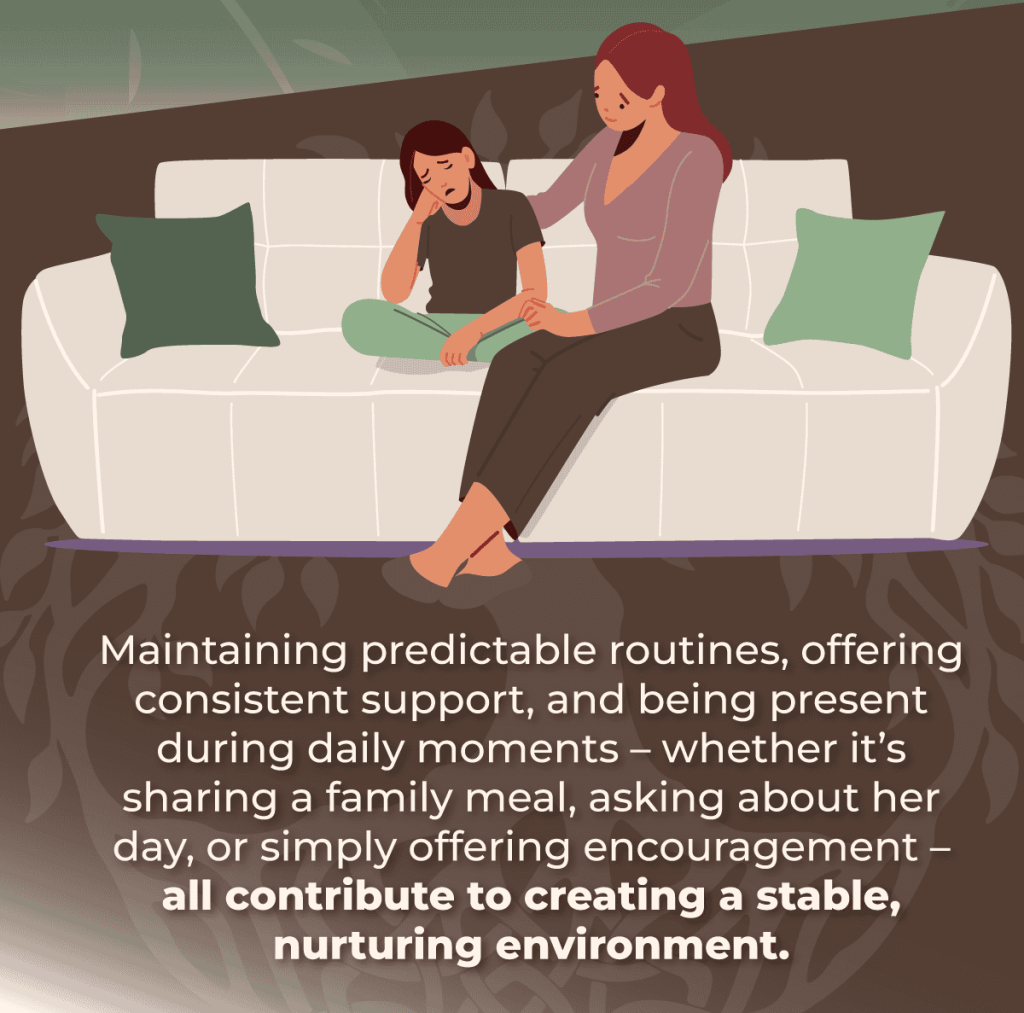
Parents are not passive observers in therapy – their involvement is essential to the process. Every interaction, from acknowledging a teen’s emotions to modeling healthy ways of expressing them, plays a role in reinforcing the lessons learned during family sessions. Maintaining predictable routines, offering consistent support, and being present during daily moments – whether it’s sharing a family meal, asking about her day, or simply offering encouragement – all contribute to creating a stable, nurturing environment.
These ongoing interactions help teens internalize skills like emotional regulation, problem-solving, and resilience, turning the insights gained in therapy into habits that will support them throughout their lives. When parents show up intentionally and consistently, they become active partners in their teen’s growth, demonstrating that connection, trust, and understanding are not abstract concepts, but lived experiences within the family.
Compassion Meets Science: Trauma-Informed Care for Teens
Roots Renewal Ranch’s approach blends evidence-based science with a compassionate understanding of trauma. Trauma-informed care acknowledges that past experiences shape current behaviors and emotional responses. By addressing these patterns in a supportive environment, therapists help teens and their families to regulate emotions, build self-awareness, and develop strategies for coping with triggers.
Focusing on Strengths, Not Just Struggles
Recovery is about more than addressing difficulties – it’s about cultivating what’s already strong. At Roots, therapists intentionally highlight a teen’s existing skills, talents, and coping strategies, encouraging her to apply them in everyday situations. Strength-based approaches boost motivation, engagement, and self-efficacy, helping teens recognize their own capability and resilience. When a teen internalizes that she is resourceful and able to navigate challenges, she is more likely to take ownership of her healing journey and maintain positive changes long after treatment ends.
In family therapy, shifting focus from struggles to strengths helps teens see themselves as capable, resilient, and resourceful. Small changes in perspective can make a big difference in motivation, self-esteem, and engagement in recovery.
| Instead of… | Try… |
|---|---|
| Highlighting only mistakes or shortcomings | Celebrating skills, achievements, and small wins |
| Focusing on problems or deficits | Encouraging problem-solving using existing strengths |
| Seeing challenges as failures | Viewing challenges as opportunities to practice resilience |
| Comparing to peers or external standards | Recognizing personal growth and unique capabilities |
| Reacting to setbacks with frustration or blame | Reflecting on lessons learned and building confidence |
By practicing these strength-based approaches, families reinforce positive behaviors and empower teens to take ownership of their growth. Over time, this mindset shift turns everyday challenges into opportunities for confidence, connection, and lasting change.
Old Dynamics, New Possibilities
Family therapy doesn’t erase the past, but it provides a structured way to understand and reframe it. Parents and teens learn to recognize recurring conflicts, unhelpful communication habits, and triggers for stress that may have gone unaddressed for years. With guidance, they practice responding differently – pausing instead of reacting, listening instead of assuming, and expressing needs without blame.
By replacing outdated dynamics with intentional, mindful practices, families create interactions that reinforce security, trust, and collaboration. Over time, these new patterns become the default, fostering a home environment where teens feel supported, understood, and empowered to navigate challenges both inside and outside the family circle.
Animal-Assisted Therapy: Strengthening Bonds in Healing
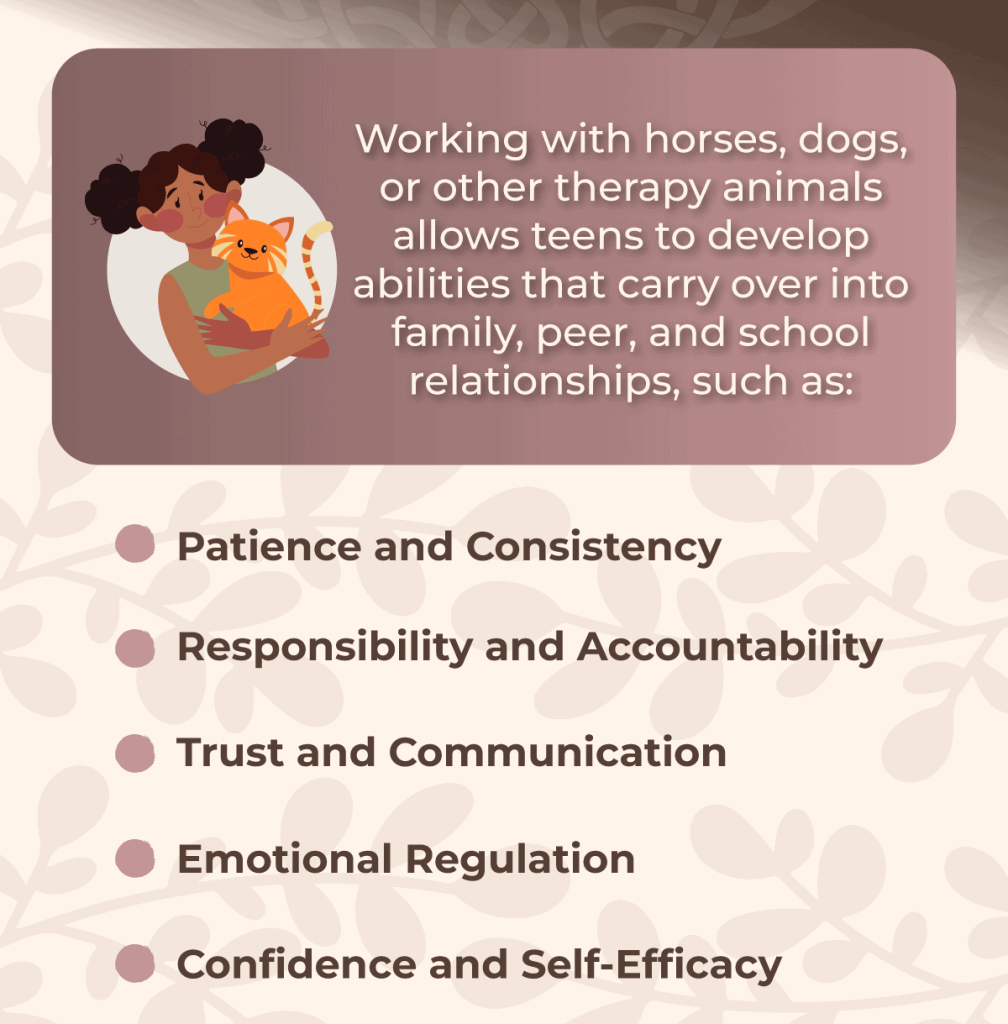
Interaction with animals has been shown to reduce cortisol levels, lower anxiety, and increase feelings of safety and attachment. For teen girls, animal-assisted therapy offers a supportive space to explore emotions, practice skills, and build confidence in a nonjudgmental environment. Working with horses, dogs, or other therapy animals allows teens to develop abilities that carry over into family, peer, and school relationships, such as:
- Patience and Consistency: Caring for and interacting with animals teaches teens to approach tasks with calm and persistence.
- Responsibility and Accountability: Feeding, grooming, or guiding an animal helps teens practice following through on commitments.
- Trust and Communication: Reading an animal’s cues encourages girls to develop awareness, empathy, and nonverbal communication skills.
- Emotional Regulation: Animals provide immediate feedback on behavior and energy, helping teens notice and manage their emotions in real time.
- Confidence and Self-Efficacy: Successfully connecting with an animal reinforces a sense of competence and achievement, which extends to other relationships.
Through these experiences, animal-assisted therapy becomes more than just interaction with animals. It’s a way for teens to practice essential life skills in a safe, nurturing, and engaging context.
Finding Family Therapy for Teen Girls in Texas
Family therapy is most effective when it is integrated, trauma-informed, and individualized.
At Roots Renewal Ranch, we combine mental health and substance use treatment, animal therapy, family involvement, and SAMA training for aggression management to create a holistic recovery environment. Our daily schedule follows the Healthy Mind Platter, ensuring teens receive balanced experiences that support brain development and emotional resilience.
Parents, you don’t have to navigate this alone. If your teen is struggling with mental health challenges or substance use, call us today at (888) 399-0489 to learn more about how family therapy can transform her recovery journey. She is strong, she is loved, and she is enough.
She is strong, she is loved, and she is enough.

