
Conversations about substance use are never easy.
Especially when it’s your own child you’re worried about.
Many parents find themselves caught between fear and love, wanting to protect their daughter while not pushing her away. But the truth is, these moments are deeply emotional because they come from the same place all parents start: care. You want her to be safe, happy, and whole. Yet when you notice changes in her behavior or mood … or even her friends – it can stir a mix of worry, confusion, and helplessness.
According to Texans for Safe and Drug-Free Youth, “Texas Students use alcohol more than any other drug. More than half of 7th-12th graders have used alcohol at some point in their lives.” Behind every one of those lives is a family trying to understand what happened and how to make things right again.
Talking to your teen about substance use isn’t about accusation or control – it’s about connection. The goal shouldn’t be to have all the answers. It should be to keep the conversation open so she knows she is never alone.
At Roots Renewal Ranch, we believe that healing begins with understanding. Our programs help families rebuild trust, strengthen communication, and rediscover connection. One honest conversation at a time.
Key Takeaways:
- Start with connection, not control. Conversations about substance use are most effective when your goal is understanding, not lecturing.
- Empathy opens doors. Using curiosity-driven, non-judgmental language encourages honesty and strengthens trust.
- Pay attention to patterns. Signs like secrecy, mood shifts, or loss of interest in activities can indicate your teen needs additional support.
- Healing happens together. Recovery is relational—teens thrive when families practice patience, communication, and shared problem-solving.
- Roots Renewal Ranch supports the journey. Our trauma-informed programs, animal-assisted therapy, and family involvement help teens rebuild confidence, strengthen relationships, and navigate substance use challenges safely.
Why These Conversations Matter
It’s normal to feel uncomfortable bringing up substance use with your teen. Many parents worry they will say the wrong thing, making the problem worse, or hearing something they’re not ready for.
But silence creates distance.
And distance breeds misunderstanding.
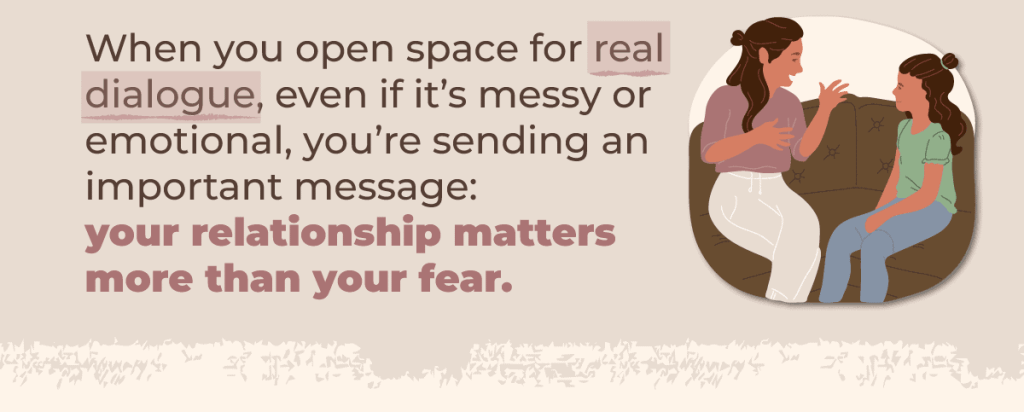
Empathy and curiosity change the tone of these talks. Instead of focusing on mistakes or consequences, you’re focusing on understanding what she’s feeling and why she might be turning toward certain behaviors. That shift builds safety – the foundation of trust that makes healing possible. At Roots Renewal Ranch, we help parents and teens practice these conversations in a guided, supportive way so they can start rebuilding the bond that substance use often strains.
Understanding the Barriers: Why It’s Difficult for Teens to Open Up
Even the most loving parents can find it hard to reach their teen when it comes to topics like substance use. What may look like resistance or indifference is usually something way more vulnerable … fear.
Teens might avoid talking about drugs or alcohol because they’re scared of disappointing you or unsure how to explain what’s really going on.
Common reasons your teen might hesitate to talk include:
- Fear of judgment or punishment – Worrying that being honest with you will lead to you being angry and strict consequence for them.
- Shame or guilt – Feeling embarrassed about their choices or believing they have already “let you down.”
- Peer pressure and social identity – Not wanting to stand out or lose friends by admitting they’re struggling.
- Lack of trust or comfort – Unsure if adults will listen without lecturing or reacting strongly.
- Confusion and overwhelm – Having difficulties making sense of their own emotions and actions.
Remember, it’s not about getting your daughter to confess to something. It’s about helping her feel safe enough to be honest. Creating that safety takes time and patience, but it’s one of the most meaningful gifts you can give her. When teens feel seen rather than scolded, they’re far more likely to open up and accept support.
Preparing Yourself First: The Mindset That Matters
Before starting a conversation about substance use, it helps to pause and look inward.
These talks can stir up deep emotions – whether fear, frustration, guilt, or even grief. And it’s completely normal to feel all of that – but the way you show up emotionally sets the tone for how your daughter responds. If she senses judgment or panic, she will probably pull away. If she feels calm curiosity, she’s more likely to stay present in the conversation.
Managing your emotions isn’t about suppressing them. It’s about creating enough steadiness to make room for hers as well.
Here are a few ways to prepare yourself before you begin:
- Reflect on your goals. Focus on connection, not control. The goal isn’t to win an argument. It’s to understand what she’s going through and how you can help.
- Regulate your tone and body language. Speak slowly, breathe deeply, and stay open. A calm presence does more to build trust than any perfectly worded question ever could.
- Lead with curiosity instead of accusation. Try asking, “Can you help me understand what’s been going on?” instead of “Why would you do that?” The first opens a door. The second closes it.
Before You Speak, Listen – to Yourself First
A good first step is to simply notice your own thoughts before starting the conversation. Take a moment to ask yourself things like – What am I hoping to learn? What am I afraid of hearing? Checking in like this helps you recognize what’s driving your emotions, so they don’t take the lead once you start talking. Maybe you realize your fear is more about her safety than disappointment, or that your frustration is really just worry in disguise.
That self-awareness doesn’t erase the hard feelings, but it softens them. And that calm is exactly what your daughter needs to see from you in this moment.
Starting the Conversation Gently: When, Where, and What To Say
Talking to your teen about substance use isn’t easy.
You want to say the right thing – something that shows love, concern, and support…
… but fear of pushing too hard or saying too little can leave you feeling stuck.
The truth is, these conversations don’t have to be perfect to make a difference. What matters most is the intention behind them. You’re showing up because you care.
Many parents are hesitant to start the conversation because they worry they will just make things worse – but this silence sends its own message … that the topic is too shameful to discuss. Instead of silence, parents should be focusing on creating safety through curiosity, patience, and empathy. When teens sense that your goal is connection, not control, they’re far more likely to open up. The key is to approach the conversation like an invitation, not an interrogation.
Below is a guide to help you find the when, where, and how of beginning these talks with gentleness and confidence.
These talks are not about catching your teen doing something wrong. They are about keeping the line of communication open, even when it’s uncomfortable. If she shuts down, don’t take it as failure. Stay consistent, stay kind, and keep the door open. With time, patience, and the right approach, you will teach her that honesty is safe and that she can come to you. Not just when things are easy, but when they’re hard too.
| Setting the Stage | Why It Helps | What to Say | What to Avoid |
|---|---|---|---|
| During car rides or walks | The movement and lack of direct eye contact help teens feel less cornered and more at ease. | “I’ve been thinking about how much is on your plate lately – how are you really feeling?” | “We need to talk about your choices.” |
| While doing shared chores or activities | Keeps the tone casual and opens space for conversation without pressure. | “You’ve seemed a little quieter than usual. Anything you want to talk about?” | “You’re acting strange – what’s wrong with you?” |
| Before bedtime or downtime | When the day slows, teens are often more open to reflection and connection. | “I care about you and want to understand what’s been going on.” | “You’re disappointing me.” |
| Private, low-stress settings | Teens open up when they don’t feel watched, rushed, or judged. | “You can always talk to me. Whatever it is, we’ll figure it out together.” | “I can’t believe you’d do something like this.” |
| After showing curiosity about their world | Asking about their friends, music, or hobbies first helps build trust and context. | “I know things look different now than when I was your age – what’s it like for you?” | “You kids have it easy these days.” |
| Following a relatable story or real-life example | Stories lower defenses and make topics feel less personal or accusatory. | “I read about how some teens feel pressured at parties – do you ever see that happening?” | “I heard about kids doing drugs again. You’d better not be one of them.” |
| When emotions are calm – not in the heat of an argument | Timing matters. Wait until you’re both ready to listen. | “I want us to talk about this when we’re both calm enough to really hear each other.” | “We’re finishing this right now, whether you like it or not.” |
The Language of Understanding vs. The Language of Fear
The previous chart highlighted practical things to say and what to avoid when starting a conversation about substance use. Here, we take it just a step further: why the words you choose matter. When teens feel judged or shamed, they often shut down. Conversations become defensive, vague, or avoided entirely. But when parents approach with empathy, curiosity, and calm, they create space for honesty and connection. The phrasing and tone you use can either open a door or close one. Understanding the difference between supportive communication and fear-based messaging can help you guide your teen through the most difficult of topics without escalating their shame or anxiety.
Below is a side-by-side guide to show how small shifts in language can make a big difference:
| Language of Understanding | Language of Fear |
|---|---|
| “I care about you and want to understand what’s going on.” | “You’re making a huge mistake.” |
| “Tell me how that felt for you.” | “I can’t believe you’d do that.” |
| “It’s okay to make mistakes. Let’s figure out how to handle it.” | “You’re disappointing me.” |
| “I’m here to listen, not judge.” | “You’re in big trouble if you’re lying.” |
| “I want to understand your choices, not control them.” | “You’ll ruin your life if you don’t stop.” |
| “How can we work together to keep you safe?” | “Do what I say or else.” |
| “I notice you’ve been stressed … want to talk about it?” | “You’d better not get into trouble again.” |

Using empathetic and curiosity-driven language does not just make your teen more likely to speak honestly – it strengthens your connection and can build a trust that will last well beyond just the one conversation. When you lead with understanding, you signal to her that she is seen, heard, and respected; and that foundation makes it easier for her to share her challenges, ask for help, and take steps toward healthier choices.
Recognizing When Your Teen Needs More Support
Sometimes, conversations just are not enough.
Your teen may show signs that they need additional help, and knowing what to look for and how to react can prevent any further escalation. It’s not about labeling them or judging them … it’s about noticing new patterns and making sure to step in with the care they need.
Here are a few patterns to keep in mind:
- Repeated secrecy or withdrawal: Pulling away from family, avoiding discussions about friends, school, or emotions.
- Dramatic shifts in mood or social circles: Sudden irritability, sadness, or choosing different peer groups without explanation.
- Signs of physical or emotional distress: Changes in sleep, appetite, or energy, or frequent anxiety and emotional outbursts.
- Loss of interest in activities once enjoyed: A sudden disengagement from hobbies, sports, or creative pursuits.
- Difficulty managing daily responsibilities: Trouble keeping up with schoolwork, chores, or personal care.
When you notice these signals, it’s a cue that it may be time to gently explore additional support options. Early intervention can help your teen feel seen, understood, and guided toward the tools they need to regain balance and confidence.
When Talking Isn’t Enough…Taking the Next Step
At Roots Renewal Ranch, teens enter a safe, structured, and nurturing environment where they can process experiences, rebuild trust, and learn coping strategies under the guidance of trauma-informed professionals. Families are included throughout, ensuring that support continues at home while teens explore growth and self-understanding in a secure setting. Our counseling, structured treatment programs, and specialized residential environment can provide the expertise and consistent care teens need to navigate substance use and related challenges.
The Role of Family in Recovery
Healing rarely happens in isolation.
Families can play a critical role in helping teens to navigate the challenges of both substance use and mental health. Staying engaged, practicing empathy, and learning communication strategies can dramatically impact recovery outcomes.
Roots Renewal Ranch encourages parents to be active participants in their teens’ addiction recovery – providing guidance on how to approach difficult conversations, reinforce healthy boundaries, and support their teens’ growing autonomy. Recovery becomes a shared journey, strengthening family bonds while giving teens the space to thrive.
Families can support healing through practical steps like:
- Modeling healthy communication: Speak openly, listen actively, and avoid judgment.
- Setting consistent boundaries: Clearly defined expectations provide structure without controlling.
- Rebuilding mutual respect: Validate feelings while encouraging responsibility.
- Encouraging shared problem-solving: Collaborate on decisions to foster trust and teamwork.
- Practicing patience and consistency: Change is gradual, and steady support matters more than perfection.
By focusing on these strategies, families can reinforce how growth is relational. Teens learn that recovery isn’t just about personal change…it’s about navigating challenges together, as a team.
Keeping the Door Open

Recovery and understanding happen over time, through repeated opportunities to connect, listen, and respond with care. Consistency, patience, and love create the conditions where trust grows and communication deepens.
At Roots Renewal Ranch, we guide families in making these ongoing conversations constructive and meaningful, helping teens feel supported while parents gain confidence in their role as a partner in recovery.
Take the First Step Toward Healing with Roots Renewal Ranch in Dallas-Fort Worth
Healing is a journey that thrives in the right environment. At Roots Renewal Ranch, we combine animal-assisted therapy, trauma-informed care with family involvement, and SAMA training to manage aggression to give teens the tools and support they need. Families learn how to communicate, rebuild trust, and strengthen bonds while teens explore resilience, self-expression, and healthier ways to cope.

If your teen is ready to take the next step, call us at 888-399-0489 to discover how Roots Renewal Ranch can support your family’s path to recovery, connection, and lasting change.
She is strong, she is loved, and she is enough.
