You probably know what it’s like to run around due to after-school activities. You have to drop your son off for swim practice in the morning and drop your daughter off for soccer practice in the afternoon. Tuesdays are for art club, and on Thursday, your other daughter has a dance recital. With an estimated 73% of students taking part in extracurriculars, It’s easy for things to get a little crazy. This is even more true if you have multiple kids who are involved in different activities.
Do you ever wonder if they’re even worth all the hassle? It could especially be a concern if your teen doesn’t seem very interested in their activities, or they’re a source of stress for them.
The good news is, the impact of extracurricular activities on mental health is largely a positive one. Studies have shown this is especially true for girls. Why is that?
We work with teenage girls every day at Roots Renewal Ranch, and we know a lot about what makes them and their mental health tick. We’ll share what we know.
Building Skills and Relationships: The Mental Health Benefits of Extracurricular Activities
One benefit of extracurriculars is the skills teens build through them. They teach valuable lessons, like teamwork and problem-solving, that make other areas of life run more smoothly. This often happens without teens even realizing it, because they’re just doing something they enjoy with their friends.
The importance of the relationships and community teams build through clubs and teams can’t be overstated, either. People in extracurriculars are bought together through similar interests, not just mutual classes, lending to more opportunities to create deeper bonds. This reduces isolation in teens, which is a big influence on mental health.

Extracurriculars can also become hobbies and healthy coping mechanisms when teens run into hard times. The violin they started learning in their school orchestra can be a great outlet for their emotions, and the abstract painting technique they learned in art club is an excellent way to express themselves. Outside activities also leave less time for coping mechanisms that aren’t as healthy, like spending time on social media.
As teens discover what they like and are passionate about, and spend time perfecting those skills with people who share their goals, they’ll become more confident. They’ll also learn more about themselves along the way. All of it contributes to a healthy mind and healthy life.
Different Types of Extracurricular Activities for Teens and Their Benefits
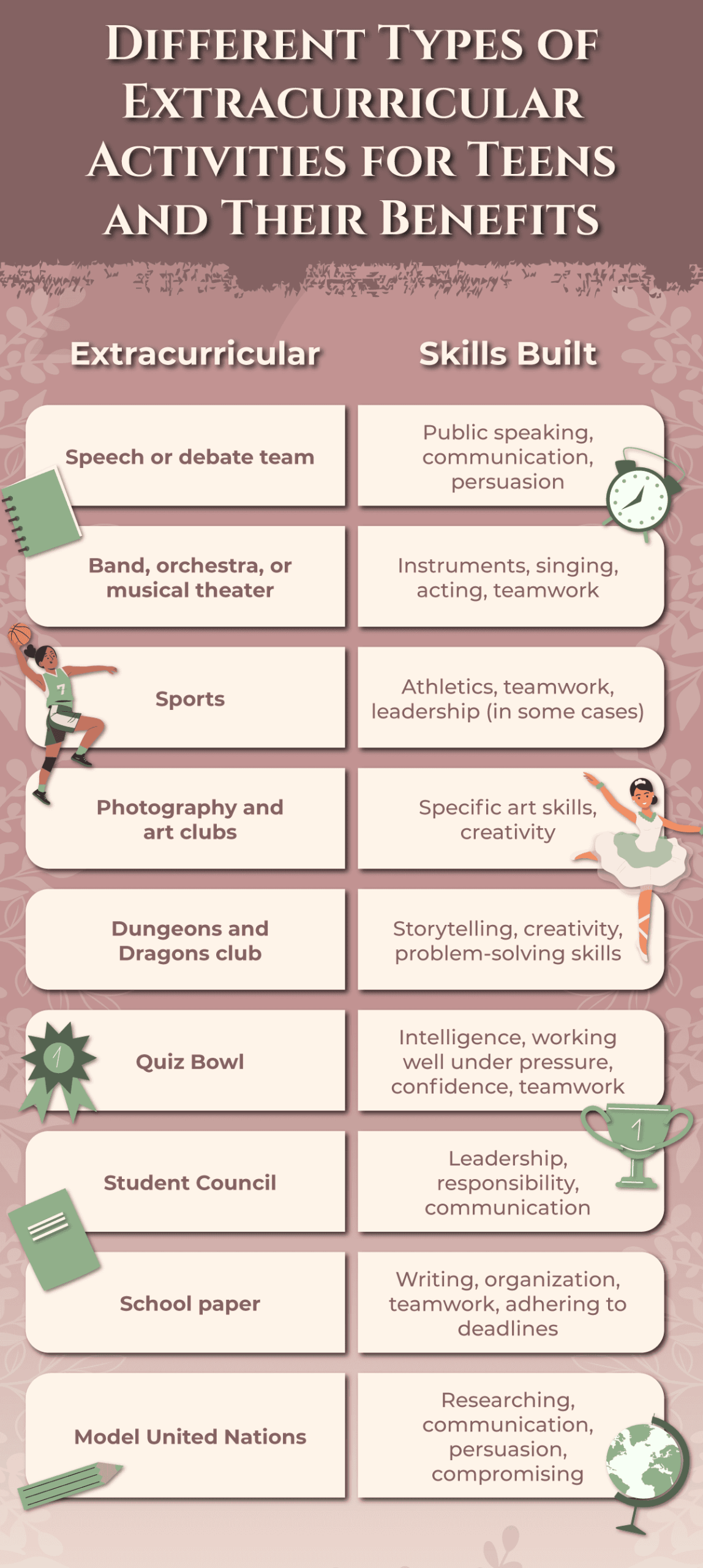
There are so many different types of activities for teens to get involved in – we couldn’t possibly cover them all in this blog. Every extracurricular has its own benefits, too, whether it’s more obviously educational, or one that’s just for fun. Take a look at the chart below for some common extracurricular activities, and how they can improve your teen’s skills and life.
| Extracurricular | Skills Built | Added Benefits |
|---|---|---|
| Speech or debate team | Public speaking, communication, persuasion | Shyer teens can overcome their fears and get more comfortable talking in front of people. |
| Band, orchestra, or musical theater | Instruments, singing, acting, teamwork | Teens become braver by performing in front of others and learn that there’s strength in numbers. |
| Sports | Athletics, teamwork, leadership (in some cases) | Teens stay physically active, must maintain grades to stay on teams, and might receive athletic scholarship opportunities. |
| Photography and art clubs | Specific art skills, creativity | Teens can develop an eye for aesthetics and appreciate the beauty of the world more. Art is also a great method for emotional expression. |
| Dungeons and Dragons club | Storytelling, creativity, problem-solving skills | It’s more than just fun! Teens also must work together with other members of the “party” to achieve their goals. Keeping track of abilities, items, stats, and more requires some organization. |
| Quiz Bowl | Intelligence, working well under pressure, confidence, teamwork | Teens learn a wealth of information about several different topics, and have to “think fast” while listening to and collaborating with their team to come up with the right answer. |
| Student Council | Leadership, responsibility, communication | Teens will have the opportunity to improve their school for their peers. This also looks great on college applications! |
| School paper | Writing, organization, teamwork, adhering to deadlines | Teens will stay up to date on what’s going on in their school, and learn more about what makes written media work. |
| Model United Nations | Researching, communication, persuasion, compromising | Teens will learn more about a country and the United Nations as a whole. They’ll develop a deeper understanding of the world at large and important current events. |
It’s also important to know that there may be added, and sometimes surprising, benefits to extracurriculars that aren’t included in the chart. Your teen could make a great friend that helps them get better at math, or introduces them to their passion. They could meet someone with a significantly different cultural background than them, and learn more about it, and more about the beauty in our differences. You never know what you might get out of an activity, which is another reason why participating in them is such a great idea!
Getting Involved: How to Help Your Teen Start Extracurriculars
For the most part, it’ll be your teen who does the work to get involved in extracurriculars. Sports will likely have tryouts, and opportunities like school plays and musicals might have auditions. Clubs, on the other hand, might just allow anyone to show up in a certain classroom to participate.
Your teen’s school will probably have extracurriculars listed somewhere on its website. Have your teen check it out, and take note of anything that interests them. A lot of clubs and after-school activities advertise on posters around the school, too, so they can keep an eye out. If they aren’t sure where to start, encourage them to ask their friends what they’re involved in. They might want to tag along and try it out for themselves. Having support can make new experiences feel a lot less scary, and more fun!
Your teen can also focus their extracurricular search on areas that align with their major or ideal future occupation. If they focus on their area of study even outside of required school hours, it shows additional passion and dedication. That will look great on college applications, especially if they earn a leadership role in whatever they choose to pursue.
Finding the Right Balance of Extracurriculars: The Key to Not Overdoing It
Have you heard the phrase, “Too much of a good thing?” That can definitely apply when it comes to extracurricular activities. For all of their benefits, if your teen participates in too many, it can become stressful, and actually hurt their mental health.
How much is “too much” will depend on each teen and their schedule. Take into account how much time the extracurricular(s) will need, and when they meet. You’ll also want to consider how much homework your teen usually has, and leave plenty of time for them to wind down and sleep at the end of the day.
Think about how your teen feels about each extracurricular, too. Is it fun for them? Does it feel like a lot of work? Does it energize them, or wear them out? If it’s an extracurricular they enjoy, you might be able to count it as leisure time – which is really important to take time for in a teen’s schedule! If it’s an activity your teen has more trouble with, make sure they have time outside of school and extracurriculars to relax.
It’s also vital to talk with your teen about all of this. Remind them that finding a balance is important, and spreading themselves too thin isn’t worth it. Encourage them to participate in things that bring them joy, and consider dropping after-school activities that cause too much stress, especially if your teen already has a busy schedule.
Ultimately, what the teen does should be their choice. Share your thoughts and advice, but it’s most important that they take part in what they think is valuable to them. If your teen wants to pack their schedule, there can be a valuable lesson in letting them face the consequences of that overzealousness for a semester, too.
Mental Health Help for Girls in the Dallas-Fort Worth Area
Sometimes, a teen may overload their schedule and suffer for it. Prolonged stress can lead to mental health conditions like depression and anxiety.
Other times, your teen might not want to participate in extracurricular activities at all, no matter how much you encourage them. They might be fatigued and low energy, and want to spend most of their time in their room and away from people.
The only way to know if your teen has a mental health condition is to see a mental health professional. If you find out that they do, treatment is available to provide relief and help them heal.
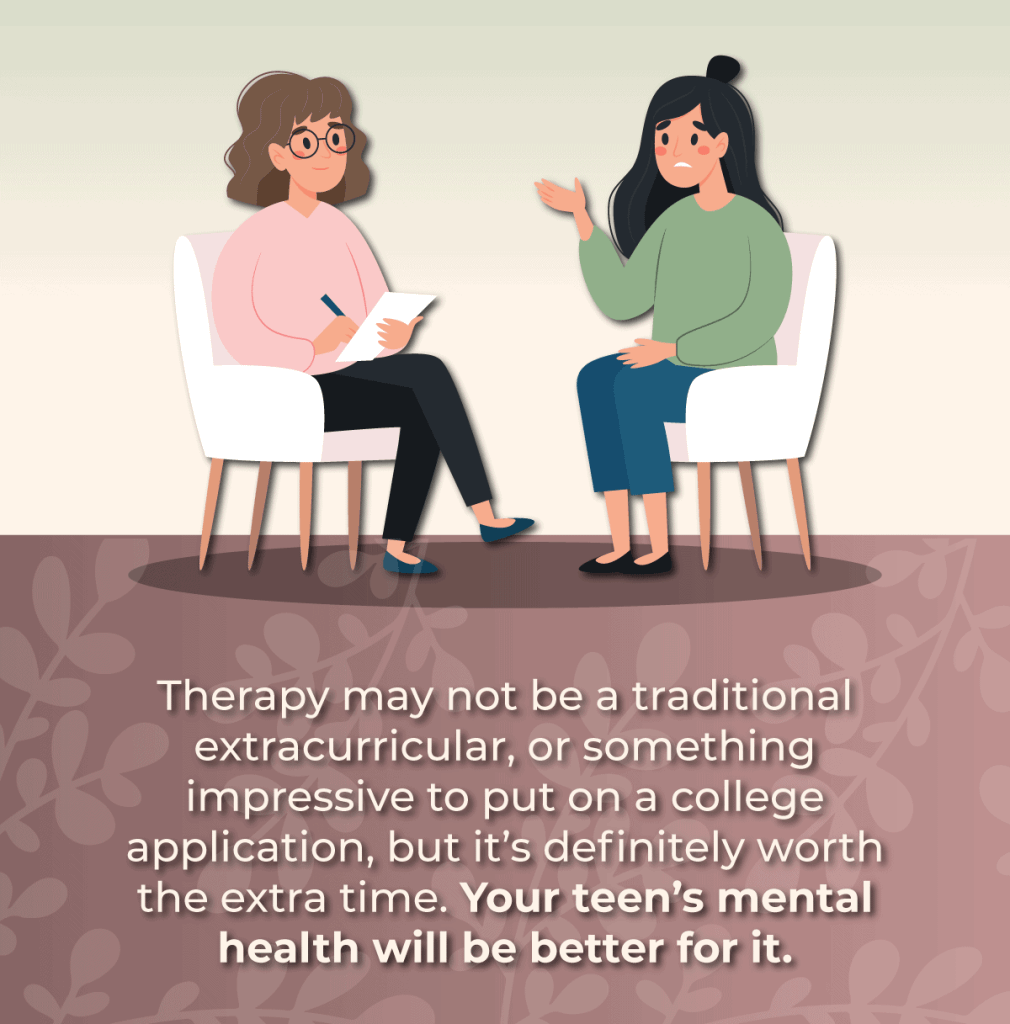
If the state of your teen’s mental health is unclear, therapy for teen girls might still be a worthwhile option. A therapist can talk through concerns with your daughter, and help her form a schedule and routine that works for her and supports her mental health. They can provide a valuable listening ear, and be a great resource as she grows up. Therapy may not be a traditional extracurricular, or something impressive to put on a college application, but it’s definitely worth the extra time. Your teen’s mental health will be better for it.

Roots Renewal Ranch is a mental health center for girls ages 13-17. We offer a variety of therapy options, from traditional cognitive behavioral therapy (CBT) to occupational therapy and animal therapy. We have several animals on our ranch for girls to take care of and relax with. They provide both comfort and a sense of responsibility. Your daughter is strong, she is loved, and she is enough. Call us at 888-399-0489 for more on how we can help.

