For teenage girls, connection isn’t a luxury.
It’s a lifeline.
During adolescence, friendship becomes one of the most powerful forces shaping a young woman’s sense of identity, safety, and self-worth. But not all friendships are created equal. Some relationships build girls up, helping them feel seen and supported. Others can deepen self-doubt or reinforce unhealthy patterns.
In a world that often pushes perfection and competition, finding authentic, affirming friendship can feel rare. Sometimes even impossible. This is especially true for girls who are already navigating anxiety, trauma, or emotional overwhelm. According to the CDC’s latest Youth Risk Behavior Survey, more than 50% of high school girls reported persistent feelings of sadness or hopelessness in the past year.
When a teen feels alone in her pain, even the idea of connection can feel out of reach, let alone the trust it takes to form a meaningful bond. But when it’s safe, supportive, and rooted in mutual respect, female friendship can be life-changing. It can offer a mirror, a safety net, and a space to breathe. True friendship gives teen girls the chance to be real and to be loved exactly as they are.
Friendships as Mirrors and Anchors
Female friendships aren’t just about shared interests or inside jokes.
They’re reflections.
When a teen girl sees herself through the eyes of someone who gets her, it validates who she is and how she feels. In moments of insecurity or self-doubt, a good friend becomes a mirror, gently reminding your teen: you’re not too much, you’re not alone, and your feelings are real.
Healthy peer connections provide a kind of emotional anchoring that parents or professionals can’t always replicate. These friends are the ones who sit beside her in silence when she can’t find the words. Who laugh until they cry on good days, and hold space on the hard ones. That kind of support doesn’t just feel safe – it is safe. And it plays a key role in regulating emotions, reducing anxiety, and building confidence.
Friendships also give girls the freedom to experiment with who they are becoming. In safe peer environments, they try on beliefs, values, and roles; not to be fake, but to figure out what fits. It’s through these interactions that they begin to shape a more authentic sense of self.
And let’s not forget the everyday kind of support that’s just as powerful. Someone to text when everything feels too heavy. Someone to sit with at lunch. Someone who knows what kind of music to play when she needs to cry. These small moments add up – and in a teen’s world, they matter more than most people realize.
The Science of Connection: How Female Friendships Shape the Teenage Brain
The need for connection isn’t just emotional.
It’s biological. During adolescence, the brain is developing rapidly, especially in the areas responsible for emotion, identity, and social bonding. For teen girls, friendship isn’t a luxury. It’s a core part of how they make sense of themselves and the world around them.
During adolescence, the brain undergoes massive restructuring, especially in areas tied to emotional regulation, self-image, and interpersonal bonding. For girls, hormones like oxytocin (the “bonding hormone”) and dopamine (linked to reward and motivation) surge during social interaction, making meaningful friendships feel not just comforting, but necessary for emotional stability.
When a girl has a friend who listens without judgment, celebrates her wins, and holds space for her troubles, it helps regulate her nervous system and reinforces her developing sense of identity.
These connections don’t just feel good. They’re laying down the emotional and neurological foundation for resilience and healing.
When Friendships Turn Toxic
As powerful as friendship can be, not every connection is a safe or healthy one. Sometimes, the people a girl trusts most can also be the source of her greatest stress. From subtle put-downs to outright exclusion, toxic friendships can leave deep emotional marks, especially during adolescence, when peer acceptance feels like everything.
Supportive friendships lift a girl up.
Toxic ones chip away at her confidence.
In a healthy dynamic, there’s mutual respect, encouragement, and space to be authentic. In an unhealthy one, the bond may feel one-sided, filled with pressure to conform, or rooted in fear of rejection. These relationships can become emotionally draining, especially when they’re fueled by comparison, jealousy, or performative loyalty that disappears in moments of need.
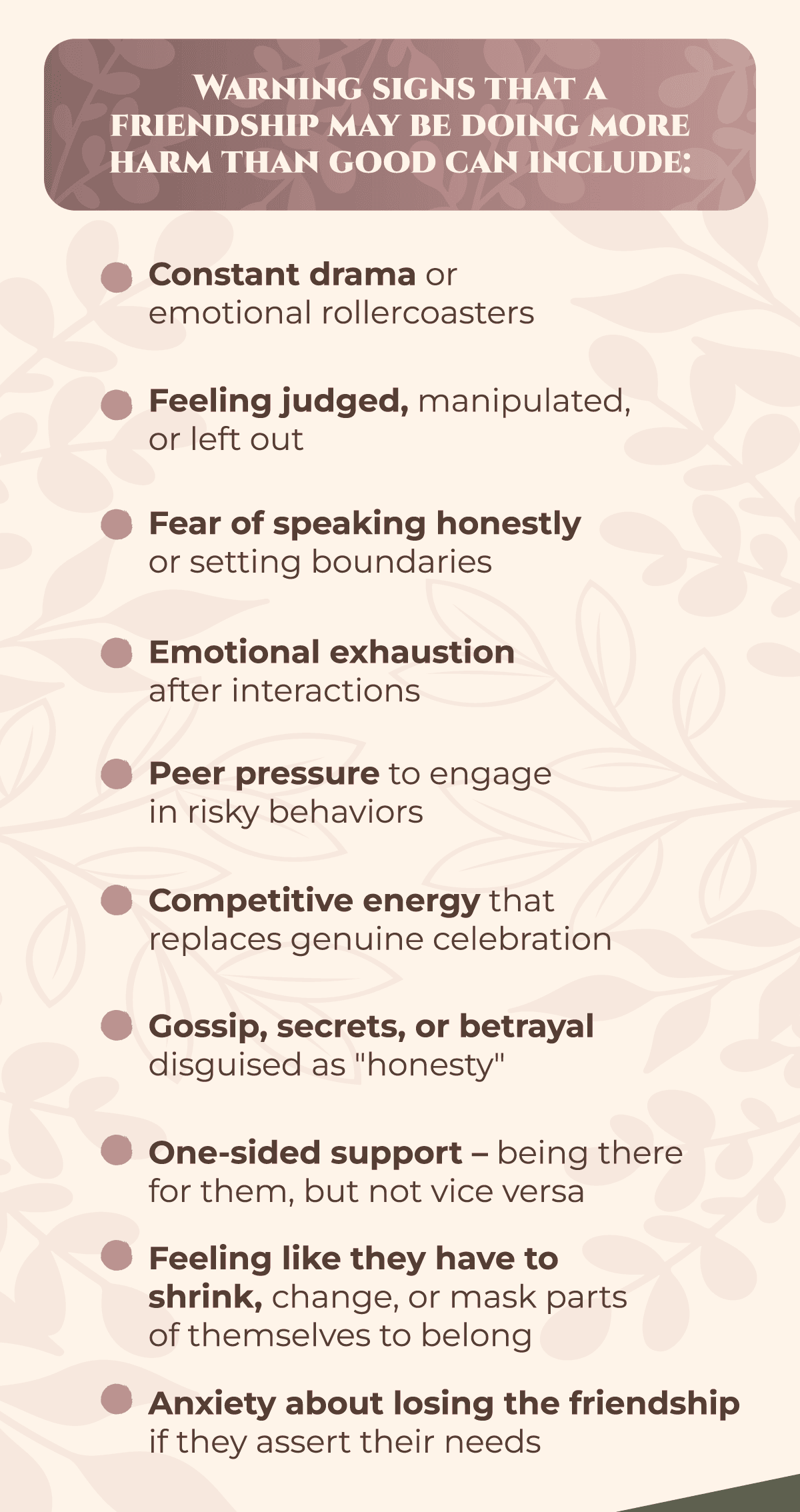
Warning signs that a friendship may be doing more harm than good can include:
- Constant drama or emotional rollercoasters
- Feeling judged, manipulated, or left out
- Fear of speaking honestly or setting boundaries
- Emotional exhaustion after interactions
- Peer pressure to engage in risky behaviors
- Competitive energy that replaces genuine celebration
- Gossip, secrets, or betrayal disguised as “honesty”
- One-sided support – being there for them, but not vice versa
- Feeling like they have to shrink, change, or mask parts of themselves to belong
- Anxiety about losing the friendship if they assert their needs
At Roots Renewal Ranch, we help teen girls untangle these patterns, rebuild trust in themselves, and learn what it means to choose relationships that feel safe, supportive, and real. Because friendship should never hurt, and knowing the difference is a skill that can last a lifetime.
Supporting Your Daughter’s Social World: A Parent’s Role
But navigating friendships isn’t always black and white, especially for teen girls still learning how to read emotional cues, set boundaries, and figure out where they belong. That’s where parents and caregivers come in. While you can’t choose your daughter’s friends, you can influence how she understands, builds, and maintains relationships – starting with how you show up at home.
Here’s how to become a steady guide as she figures out what connection should feel like:
- Be curious, not controlling: Instead of interrogating or overanalyzing every friend she mentions, ask gentle, open-ended questions that invite honest reflection. Try things like, “What do you like most about spending time with her?” or “How did you feel after the hangout?” Let her lead the conversation. Showing that you’re interested without judging builds trust and makes her more likely to open up again later.
- Talk about emotional safety: Teach her that healthy friendships aren’t always perfect, but they should feel safe. If a relationship is full of emotional highs and lows, passive aggression, or control, it’s worth examining. Frame safety as something internal – a feeling of being calm, accepted, and able to be yourself, rather than just about avoiding conflict or drama.
- Encourage quality over quantity: In a world where social currency often looks like follower counts and party invites, remind her that closeness matters more than popularity. Help her notice which friendships make her feel energized vs. drained or seen vs. small. A single friend who truly understands her is worth more than dozens who don’t.
- Name and normalize changing relationships: Friendships evolve. And that’s okay. Outgrowing a connection doesn’t mean either person did something wrong. Talk about how shifts in closeness can be a natural part of growing up, especially when someone is healing or discovering more about who they are. Let her know it’s okay to move on from friendships that no longer align with her values or well-being.
- Be the safe place she can return to: Even if she doesn’t tell you everything (and she won’t), make sure she knows she can. If a friendship breaks down, or she makes a mistake socially, remind her that your love is never conditional. Whether she’s hurting, unsure, or embarrassed, your role is to offer steadiness, not shame.
At the end of the day, your presence matters more than any advice. When you model compassion, normalize imperfection, and stay open – even when things get messy – you give her something solid to anchor to. Supporting her social world isn’t about managing every detail. It’s about walking alongside her as she learns to choose connection that’s safe, mutual, and rooted in self-respect.
Raising Besties – Real-World Tips to Spark Strong Connections in Your Teen
Building strong, healthy friendships doesn’t happen by accident. It’s a skill that grows with intention and guidance. As a parent, you play a powerful role in helping your teen navigate social connections and develop meaningful bonds that can support her through life’s ups and downs.
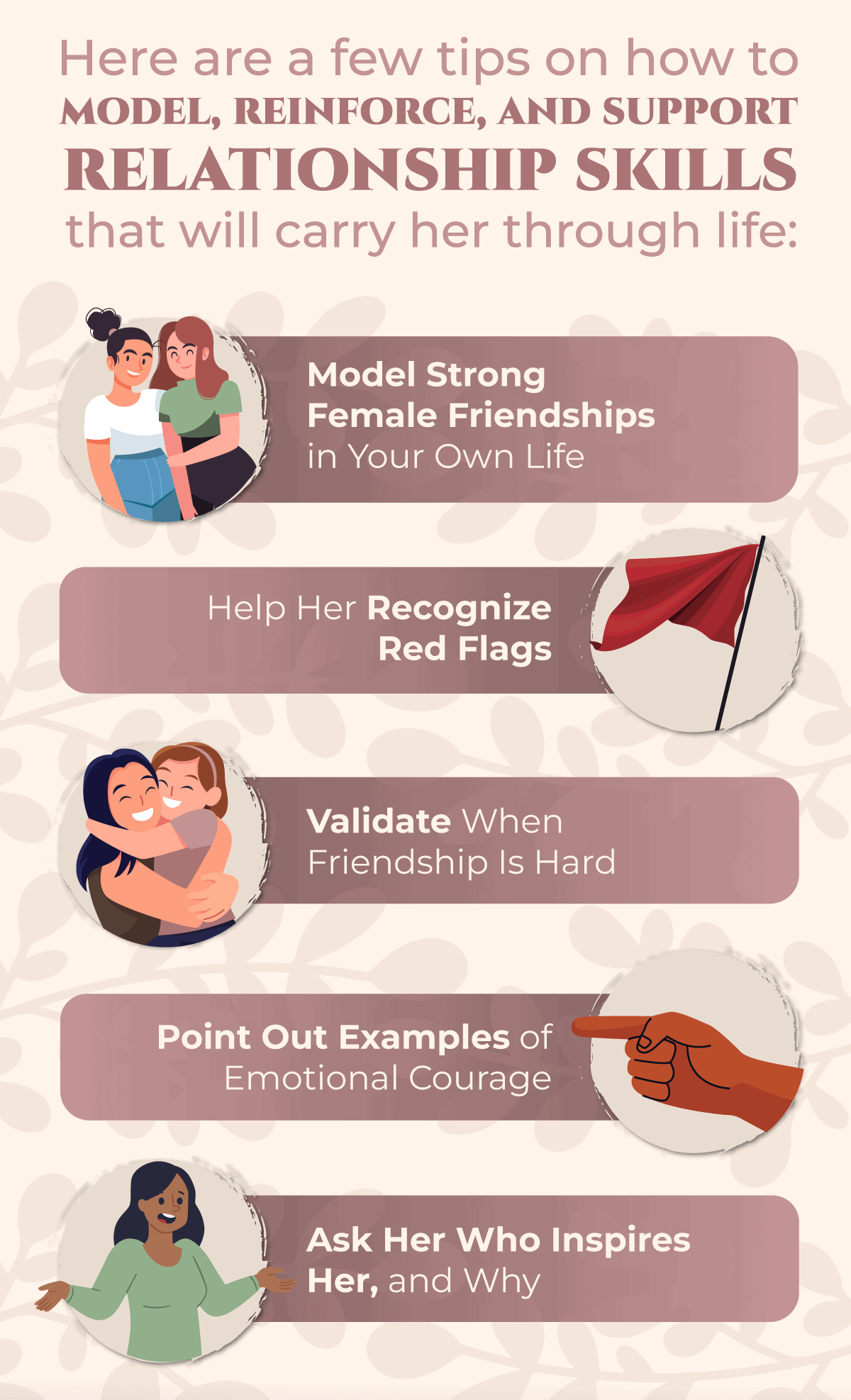
Here are a few tips on how to model, reinforce, and support relationship skills that will carry her through life:
Model Strong Female Friendships in Your Own Life
Let her see you investing time and energy in women who uplift and challenge you. Share stories about how you work through disagreements, support each other during tough times, and celebrate successes together. When she witnesses healthy friendships firsthand – full of honesty, compassion, and resilience – it becomes a powerful example she can emulate in her own relationships.
Help Her Recognize Red Flags
Not all friendship challenges are obvious. Subtle signs like peer pressure masked as “fun,” one-sided loyalty, or the silent treatment disguised as “boundaries” can quietly undermine her well-being. Encourage her to notice when something feels off, and rather than jumping to conclusions, ask open-ended questions that invite her to explore her feelings and thoughts about those situations.
Validate When Friendship Is Hard
Friendship conflicts and breakups can be as painful as romantic ones, and they deserve the same compassion. Avoid minimizing her feelings as “drama” or “overreacting.” Instead, acknowledge the hurt and offer your presence – whether she needs to talk, cry, or just have quiet company. Saying something simple like, “That sounds really painful, and I’m here for you,” can make a world of difference.
Point Out Examples of Emotional Courage
Help her identify women in public life or your community who navigate stress, challenges, and conflict with grace and strength. Discuss what she notices about their behavior – how they set boundaries, face criticism, or stay true to their values. These real-world role models show her that emotional courage isn’t about perfection but about authenticity and resilience.
Ask Her Who Inspires Her, and Why
Invite her to share the people she looks up to, whether they’re friends, family members, celebrities, or mentors. This conversation reveals the qualities and values she admires, helping her clarify what matters most in friendships. It also gives you a chance to encourage her own growth as a friend by reflecting on how she wants to show up for others.
Healing in Relationship and Rebuilding Trust Through Community Near Dallas-Fort Worth, Texas
For girls who’ve been hurt, excluded, or let down, friendship can feel like a risk they’re not willing to take. The walls go up. And even when they want connection, fear and shame can keep them stuck in isolation. At Roots Renewal Ranch, we understand that healing starts with safety, and safety starts with relationships built on compassion, not perfection.
Here, connection isn’t just encouraged. It’s woven into everything we do. Whether it’s a shared laugh on the trail, a breakthrough in group therapy, or a quiet moment of understanding with a peer – these small moments become the foundation for something much bigger: trust.

Healing doesn’t happen in isolation. It happens in community. Where girls feel safe enough to show up as they are, brave enough to try again, and supported enough to keep going. If your daughter is having trouble making connections, we’re here to help her remember that real friendship exists and that she’s worthy of it. Reach out today, or call (888) 399-0489 to help your daughter begin her mental health healing journey.
She is strong, she is loved, and she is enough.

