Don’t Just Survive; Thrive: Strengthening Support Systems for Teen Girls
- Teen girls need support from family, peers, mentors, and the wider community to thrive.
- A strong support system provides consistent, compassionate guidance, encourages autonomy, and celebrates progress.
- Withdrawal, mood changes, disengagement, and difficulties with daily responsibilities can signal a teen needs more support.
- At home, routines, active listening, celebrating effort, and modeling healthy coping help build a supportive environment.
- Consistent support helps teens develop confidence, resilience, coping skills, and lasting social connections.
Why Connection, Care, and Understanding Matter Most
Recovery is challenging for anyone, but for teen girls, it can feel especially isolating. In a stage of life where identity, independence, and social belonging are everything, mental health or substance use challenges can make a girl feel like she’s standing alone.
But the truth is, she isn’t.
Healing happens in connection with family, peers, mentors, and supportive adults who create an environment of trust and understanding.
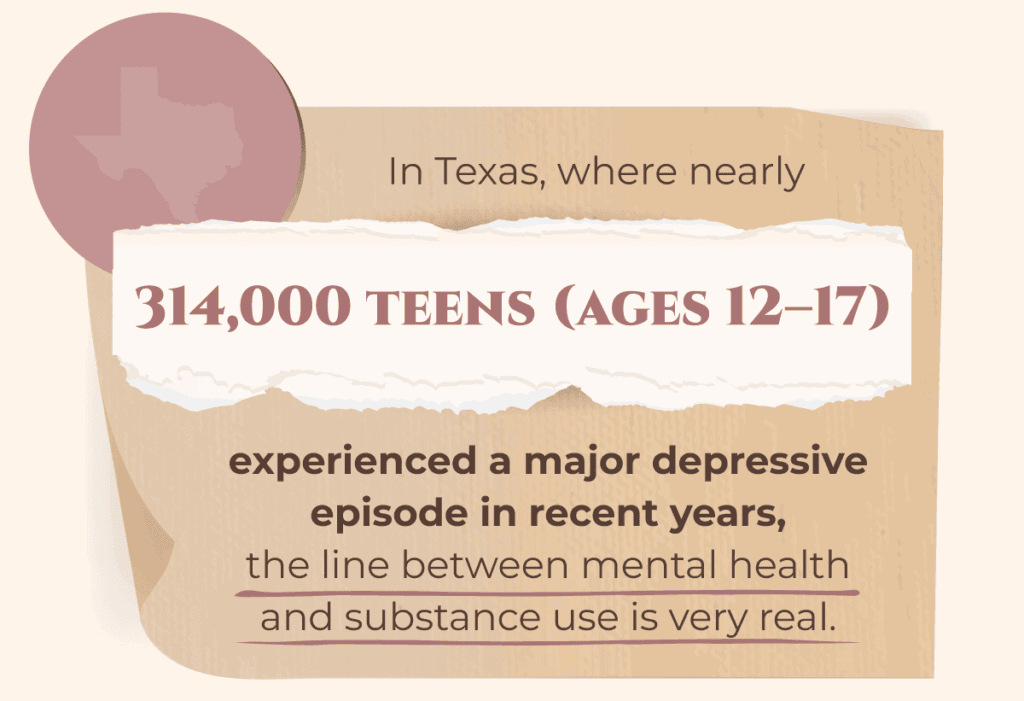
In Texas, where nearly 314,000 teens (ages 12–17) experienced a major depressive episode in recent years, the line between mental health and substance use is very real. When mental health difficulties combine with substance use, having a stable web of support isn’t just helpful. It can make all the difference.
At Roots Renewal Ranch, we understand that recovery and understanding happen over time, not in a single moment. Through consistent connection, genuine compassion, and a safe space to be vulnerable, trust grows. Girls learn to believe that it’s not just possible to ask for help — it’s brave.
Why Support Systems Are Critical for Teen Girls
A teen girl who feels supported can express her emotions without fear. But, without a support system in place, even small setbacks can feel overwhelming, triggering isolation, self-doubt, and heightened anxiety.
Signs Your Teen May Need More Support
Even before she says the words out loud, there are often quiet signals that something feels heavier than it should. Parents, caregivers, and mentors who stay tuned in can catch these early, so small troubles don’t become overwhelming crises.
Here are some warning signs to watch for:
- Withdrawal or secrecy: She avoids talking about school, friends, or her feelings – even simple questions feel too risky.
- Shifts in mood or peer group: She may suddenly become irritable, sad, or start spending time with new people without explaining why.
- Changes in sleep or appetite: Look out for signs like anxiety, tiredness, or explosive emotions that weren’t there before.
- Loss of interest in hobbies: Activities she once loved – art, music, sports – become chores or go by the wayside.
- Difficulties with responsibilities: Homework, chores, or self-care start slipping. What used to feel manageable now feels like too much.
Listening for these signs isn’t about assuming the worst … it’s about opening a door.
When you notice something’s shifted, it gives you a chance to gently reconnect, offer safety, and say, “I see you, even when I don’t fully understand.”
Recognizing these early signals is a first step – but being supportive isn’t about just noticing problems … it’s about actively creating a foundation that helps her thrive.
What a Strong Support System Looks Like
Support isn’t just a nice-to-have.
It’s the foundation on which recovery is built.
A teen girl’s path is influenced by the people she can rely on and the guidance she receives, as well as the consistency of the care around her – and different types of support play unique roles.
Understanding how family, peers, mentors, and the broader community each contribute can help you see where your teen might need more reinforcement, and where she’s already thriving.
| Type of Support | What it Looks Like | Why it Matters |
|---|---|---|
| Family | Open conversations, consistent boundaries, and presence at therapy sessions | Builds trust, reinforces safety, models healthy communication |
| Peers | Encouragement from friends or group therapy participants | Reduces isolation, normalizes experiences, strengthens resilience |
| Staff & Mentors | Trauma-informed therapy, structured guidance, gentle accountability | Provides expertise, reassurance, and tools for managing triggers |
| Community | Extracurricular programs, alumni groups, volunteer opportunities | Creates belonging, purpose, and ongoing connection beyond treatment |
Even small gestures (like celebrating her trying over being perfect, asking how her day went, or simply listening to her stories without judgment) can strengthen her confidence and reinforce the fact that she belongs in her own life story.
Practical Ways to Build a Supportive Environment at Home
Creating a supportive space at home is not about doing everything perfectly or removing every challenge. It’s about intentionally shaping an environment where your teen feels safe, understood, and empowered to grow.
The small, consistent actions you take each day send a powerful message: she is seen, she is valued, and she does not have to navigate recovery alone.
Here’s how you can do that:
- Consistent routines: Keep schedules predictable – meals, homework, sleep, and leisure – to create a sense of safety.
- Active listening: Ask open-ended questions – like, “What feels hardest today?” or “What’s been on your mind?” – without judgment.
- Celebrate small victories: Progress is rarely linear. Recognize effort, even if the outcome isn’t perfect.
- Encourage peer connection: Support friendships or group participation that promote positive influences.
- Model healthy coping: Show teens how to manage stress, frustration, and conflict in productive ways.
By practicing these steps regularly, your home will soon transform into more than just the physical place where your teen sleeps at night. It will become her foundation for healing. A place where mistakes are learning opportunities, where emotions can be expressed safely, and where your teen can begin to rebuild trust in herself and others.
Over time, these efforts cultivate resilience, connection, and confidence that last far beyond adolescence.
Signs of a Healthy vs. Unhealthy Support System
But not all support is equal.
What looks like help on the surface can sometimes feel controlling, distant, and conditional.
A parent who says “I’m here for you” but only attends therapy sessions sporadically, a friend who pressures her to hide problems, or a mentor who focuses solely on outcomes rather than effort — all of these can unintentionally undermine growth.
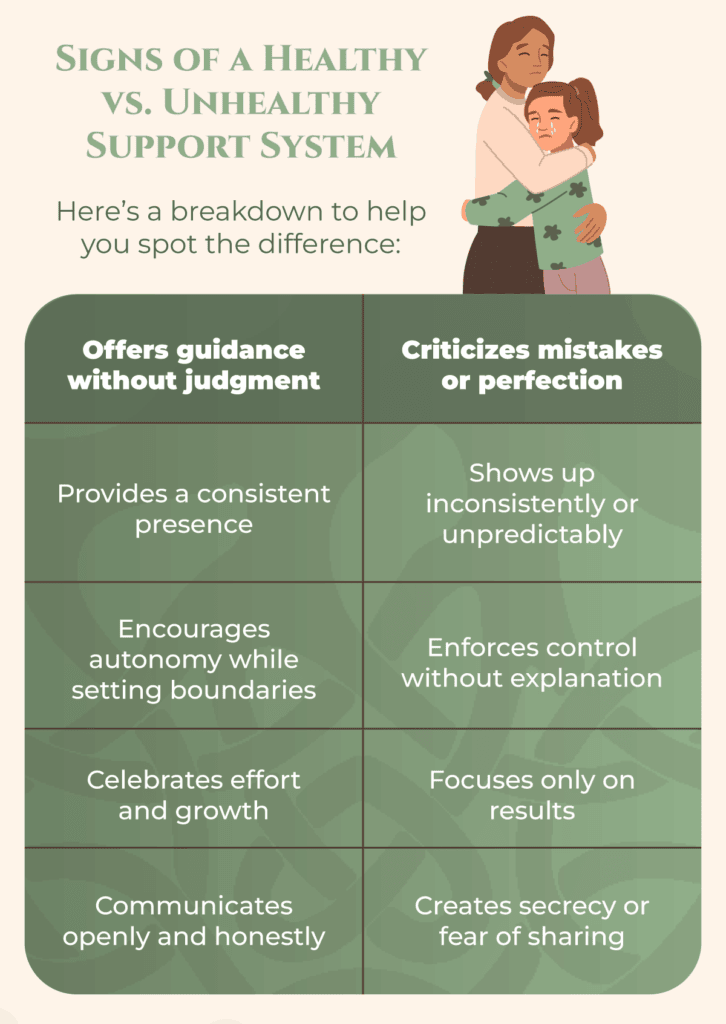
Here’s a breakdown to help you spot the difference:
| Healthy Support | Unhealthy Support |
|---|---|
| Offers guidance without judgment | Criticizes mistakes or perfection |
| Provides a consistent presence | Shows up inconsistently or unpredictably |
| Encourages autonomy while setting boundaries | Enforces control without explanation |
| Celebrates effort and growth | Focuses only on results |
| Communicates openly and honestly | Creates secrecy or fear of sharing |
Recognizing these differences is powerful. When you can distinguish between support that lifts your teen up and support that constrains or pressures her, you can consciously strengthen the healthy elements.
Doing so transforms your family relationships and the broader recovery environment into a place where she feels genuinely safe, seen, and valued; not just watched or managed.
Beyond the Home: Building Community Connections
Healing is not confined to our ranch or your living room.
A broad, caring community plays an essential role in recovery by giving teens safe places to belong, find purpose, and explore growth.
Some community-based supports that matter:
- Mentorship programs: Trusted adults – such as recovered peers, coaches, or counselors – offer guidance, encouragement, and a grounded example of resilience.
- Peer support groups or group therapy: Sharing stories in a group can reduce isolation and help teens understand that they are not alone in what they’re going through.
- Extracurricular engagement: Whether it’s art, sports, volunteering, or creative clubs, these activities help teens build identities and foster meaningful relationships.
By connecting beyond the walls of treatment, teens start to see themselves as part of a larger, caring network — not just someone “in recovery.” They begin to anchor their growth in purpose, belonging, and shared experience.
How Roots Renewal Ranch Supports Strong Systems
At Roots, building a support system isn’t a side benefit. It’s part of the core of our program.
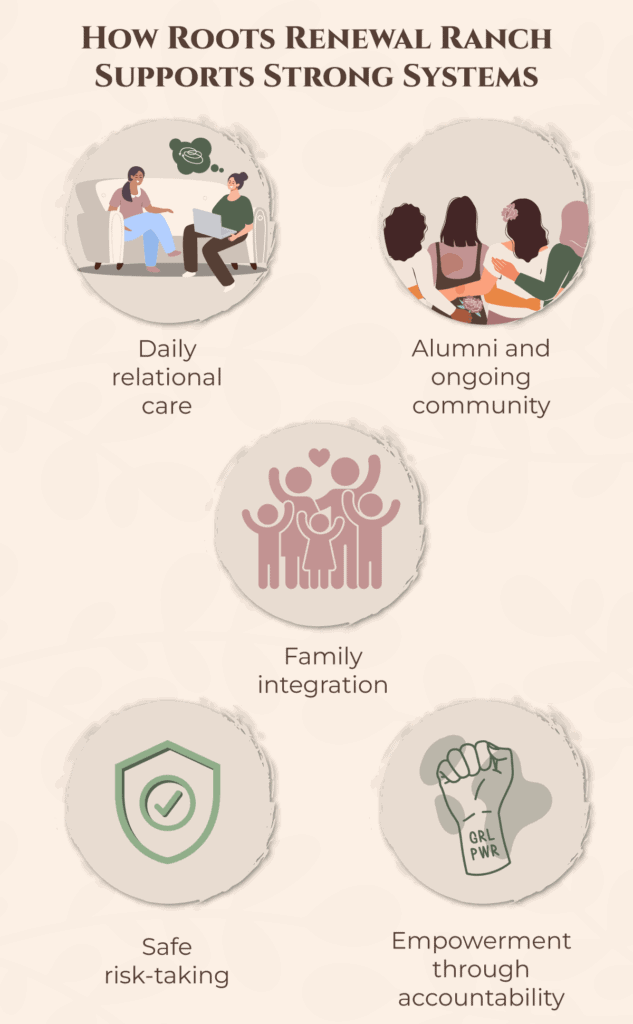
Here’s how we do it:
- Daily relational care: Each day at Roots blends trauma-informed therapy, equine-assisted work, and peer connection so that healing happens in a real, relational way.
- Alumni and ongoing community: After a girl graduates from our program, she can connect with alumni groups to maintain relationships and continue healing with people who understand her journey.
- Family integration: Parents and caregivers are invited into the process — through family therapy, education, and guidance — so they don’t just support recovery, they become part of it.
- Safe risk-taking: We encourage girls to lean into vulnerability, practice asking for help, and develop trust through structured, intentional experiences.
- Empowerment through accountability: Our team models how to set and maintain healthy boundaries, offer compassionate feedback, and celebrate progress — even when things get messy.
Together, these practices reinforce that recovery is never a solo journey. At Roots, she learns that asking for help is courageous. That trust grows slowly. And that forging connections is a key part of healing.
Tips for Families: Helping Your Teen Feel Supported
Creating a stable and consistent environment where she can feel safe to grow, to make mistakes, and rebuild her self-confidence is the best way to support your teen through recovery is about.
Here’s how you can help in meaningful ways:
- Be patient: Recovery is rarely linear. Some days will feel like leaps forward, others like setbacks. Patience allows her to move at her own pace without added pressure.
- Show empathy: Listen and validate feelings, even when they seem confusing or intense. Understanding emotions, rather than dismissing them, fosters trust and connection.
- Encourage open communication: Let your teen know it is safe to share her thoughts without fear of punishment or judgment. Honest conversations build clarity and reinforce that she is heard.
- Maintain realistic expectations: Celebrate effort and progress, not perfection. This reinforces the idea that growth is a process and that setbacks are part of learning.
- Include her in decisions: Collaboration over control empowers her to take ownership of her recovery and feel respected in her choices.
By consistently practicing these strategies, families do more than provide support — they create a home base your teen can rely on when life feels uncertain. This steady foundation encourages resilience, strengthens trust, and reminds her that recovery is a journey she doesn’t have to face alone.
Lifelong Benefits of a Strong Support System
The support a teen girl receives during recovery doesn’t just help her get through the day-to-day challenges — it can reshape the trajectory of her entire life.
Reliable, compassionate guidance teaches her that she is valued, capable, and never truly alone, even when obstacles arise. A strong support system provides her with a safe space to make mistakes, celebrate progress, and build resilience, laying the groundwork for emotional, social, and personal growth that lasts far beyond adolescence.
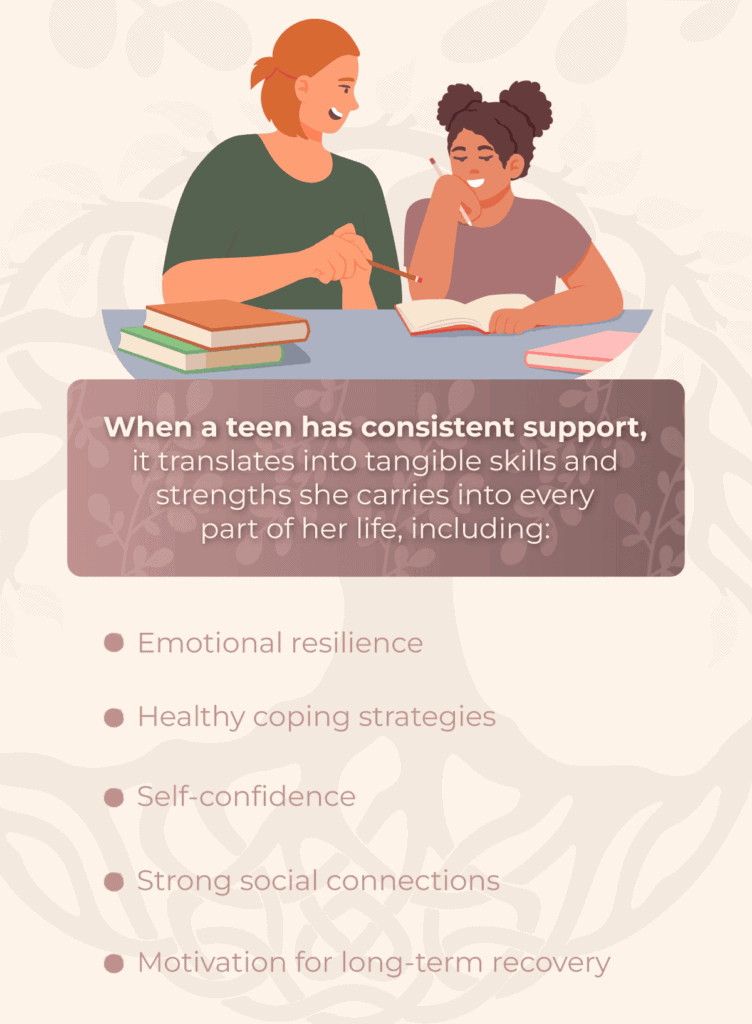
When a teen has consistent support, it translates into tangible skills and strengths she carries into every part of her life, including:
- Emotional resilience: She learns to bounce back even when things aren’t easy.
- Healthy coping strategies: She gains tools to manage stress, triggers, and tough emotions.
- Self-confidence: When people believe in her, she begins to believe in herself.
- Strong social connections: She builds relationships grounded in respect, care, and understanding.
- Motivation for long-term recovery: Support helps her envision a future where wellness is not just possible — it’s sustainable.
These benefits don’t stop when treatment ends. The foundation she builds now helps her navigate challenges, deepen her relationships, and grow into the person she wants to become — not just someone who survived, but someone who thrives.
Helping Your Teen Thrive at Roots: Support in Texas That Makes a Difference
At Roots Renewal Ranch, we build support systems that work. Teens learn to ask for help without shame, see mistakes as part of their growth, and develop skills to navigate challenges beyond treatment. Families are included every step of the way — learning to guide, celebrate progress, and stay connected while respecting their teen’s independence.
Animal therapy, trauma-informed care, family involvement, and SAMA training are not just program features — they are tools that ensure your teen has a multi-layered, deeply supportive environment. Every conversation, every shared laugh, and every guided challenge reinforces that she is strong, capable, and enough.

If you are looking for a teen girl’s mental health treatment, call us today at 888‑399‑0489 to see how Roots Renewal Ranch builds support systems that help teens thrive — not just survive.
She is strong, she is loved, and she is enough.
