Do you remember your teen years? Tests, homework, school, sports, clubs, friendship stress, and the general woes of growing up – it’s a lot. Throw in the relatively new challenges of technology and growing pressures in our achievement-based society, and present-day teens are managing uniquely chaotic circumstances.
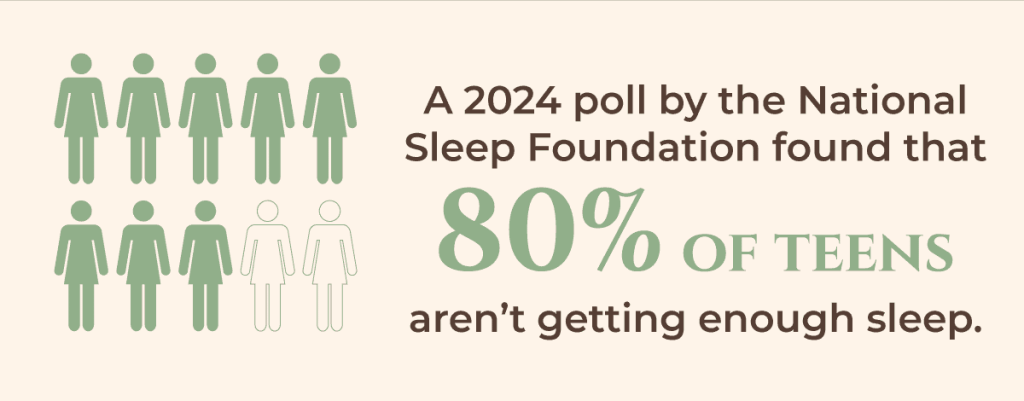
None of this is conducive to getting quality sleep. A 2024 poll by the National Sleep Foundation found that 80% of teens aren’t getting enough sleep, and this has a serious impact on their mental health and overall well-being. It’s cause for concern – but how do you know if your teen is sleep-deprived? What impact does sleep really have on teens, and how can we help them?
By working so closely with teen girls, all of us at Roots Renewal Ranch are familiar with their sleep challenges. We also know how beneficial getting enough sleep is from them firsthand. If you’ve ever wondered, “Is my teen sleep-deprived?” we’ll answer that question for you, and more.
The Importance of Sleep for Teens, and the Consequences of Sleep Deprivation
When faced with a busy schedule, sleep is one of the first things people sacrifice – teens and adults alike. It’s hard to give up dwindling free time, but losing a couple of hours of sleep isn’t a big deal, right?
Evidence shows that isn’t true. Sleep has a huge impact on cognitive function and health. Teens need more of it than most, because sleep is even more important to fuel their growing minds and bodies.
Physical Health and Development: Sleep Enables Growth
Sleep impacts every area of the body. Teens who sleep less will have weaker immune systems. The body does a lot of repair work during sleep, whether it be illnesses or injuries. One study showed that teens who sleep more have healthier cardiovascular systems.
Another meta-analysis found that children with shorter sleep cycles were 76% more likely to be overweight than those with longer sleep cycles. It’s uncertain whether this is directly related to sleep or an extension of feeling too tired to exercise as much as teens who get more sleep might, but sleep is definitely an influence either way.
There’s also a correlation between teens sleeping less and being more inclined to smoke or drink. Tired teens are also clumsier and more likely to injure themselves, which is a physical risk in itself!
Thinking and Academic Achievement: Sleepy in School
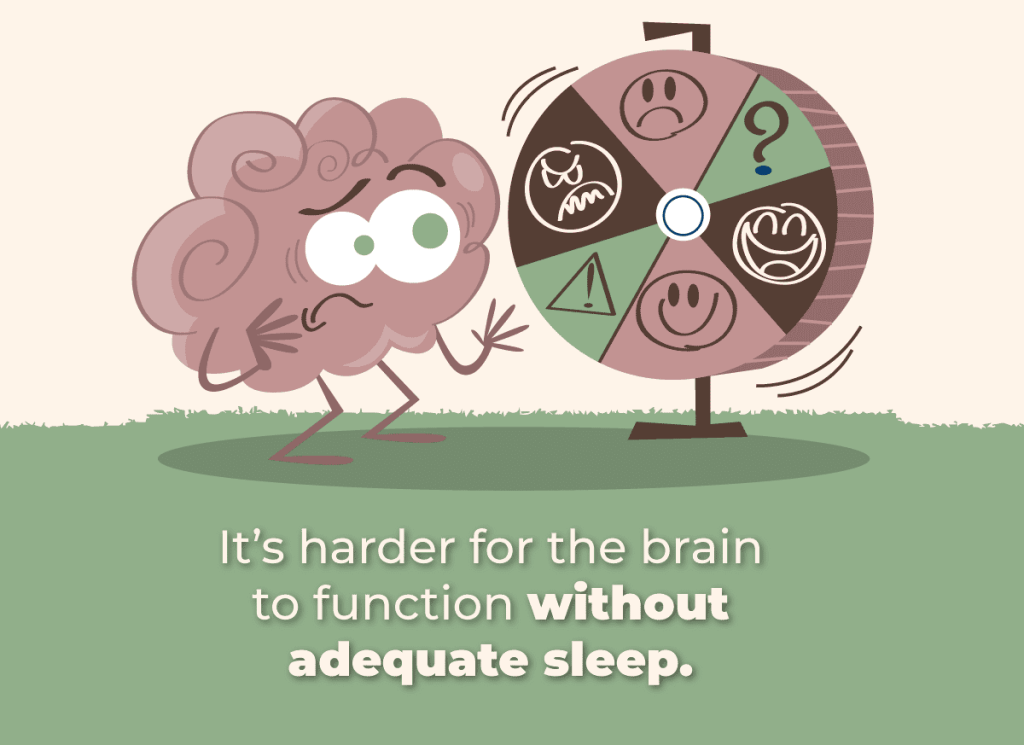
It’s harder for the brain to function without adequate sleep. You don’t have to be a teen to experience that. You probably know what it’s like to be tired at work. There’s no doubt fatigue makes completing just about any task harder.
One of the school’s primary purposes is to teach teens how to think critically. Thinking at all is hard when you haven’t slept enough! Having to think through complex math problems and retain information to perform well on a final exam is even harder. Naturally, teens who sleep less don’t perform as well academically.
Causes of Sleep Deprivation in Teens: It’s More Than Electronics
There’s a common stereotype of stubborn teens staying up late to rebel against the bedtime they upheld as children, asserting their independence from their “cruel” parents imposing rules upon them. While there are certainly teens this characterization applies to, the reason for sleep deprivation is usually more complicated than that.
When Busy Schedules Bite Back: Time Demands
Teens are busy. They’re under pressure to participate in clubs and afterschool activities for the sake of their college applications, and are pushed to achieve the highest grades in their class because it feels like their success in life depends on it. Some teens have part-time jobs on top of their classes and homework, further packing their schedules.
There’s a lot of stress that comes with being a teen, too, and relaxing and decompressing from that is important. When their hours are filled to the brim with responsibilities, it’s overwhelming and leaves minimal room for them to breathe. That can contribute to them staying up later, too. They’re willing to sacrifice a little sleep to have time to relax and participate in their hobbies that they might lack otherwise due to their schedules.
Even teens who want to get the recommended 8-10 hours of sleep sometimes don’t have the choice. They have hours of homework, multiple exams to study for, and a school day that starts at 7:30 AM. Teens’ hormonal changes also make their bodies naturally inclined to stay up and sleep later, too.
In many ways, the odds – and time – are stacked against them.
Electronic Devices: Blue Light Makes for Bad Nights
It seems like most teens are looking at screens during any downtime. Late-night screen time impacts teens’ sleep, but most people know that by now. Why is that the case?
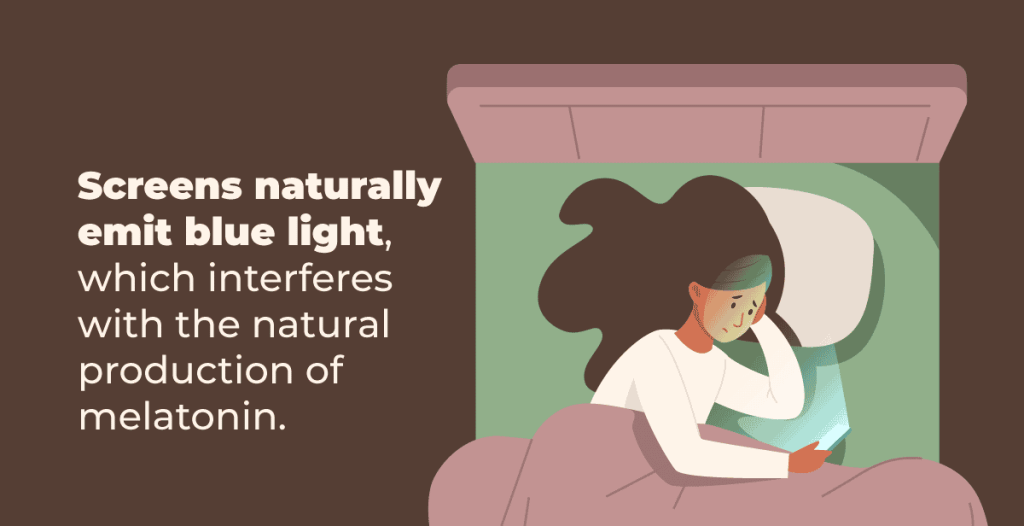
It’s about more than teens wanting to watch YouTube or TikTok videos until they fall asleep, though that’s a contributing factor. Screens naturally emit blue light, which interferes with the natural production of melatonin. Teens already produce melatonin differently biologically, so this added blue light delays melatonin release more and makes it even harder for them to sleep early.
Even teens who try to put their electronics away early are stuck writing a paper on the computer or studying from their online textbooks right before bed sometimes. Our technology-based society doesn’t help our sleeping patterns.
A Deeper Difficulty: Neurodivergence and Sleep Disorders
Evidence shows that sleep difficulties are more common in children with autism spectrum disorders (ASD). There’s a cycle here, too, because sleep benefits people with ASD the same as anyone else – lacking it just makes the challenges they already face even more significant.
Teens can also have sleep disorders, such as sleep apnea, narcolepsy, circadian rhythm disorders, and more. They aren’t as common in teens as they are in adults, but they’re definitely still a possibility.
Teens, Sleep, and Mental Health
There’s a lot of research that indicates mental health and sleep have a cyclical relationship. One study in particular found that people with sleep difficulties in early adolescence were more likely to be diagnosed with anxiety and depression.
People in general are also more likely to react emotionally to stress after a bad night’s sleep. If that’s true in adults, it’s certainly true in teens who are already volatile due to the stresses and hormones of adolescence.
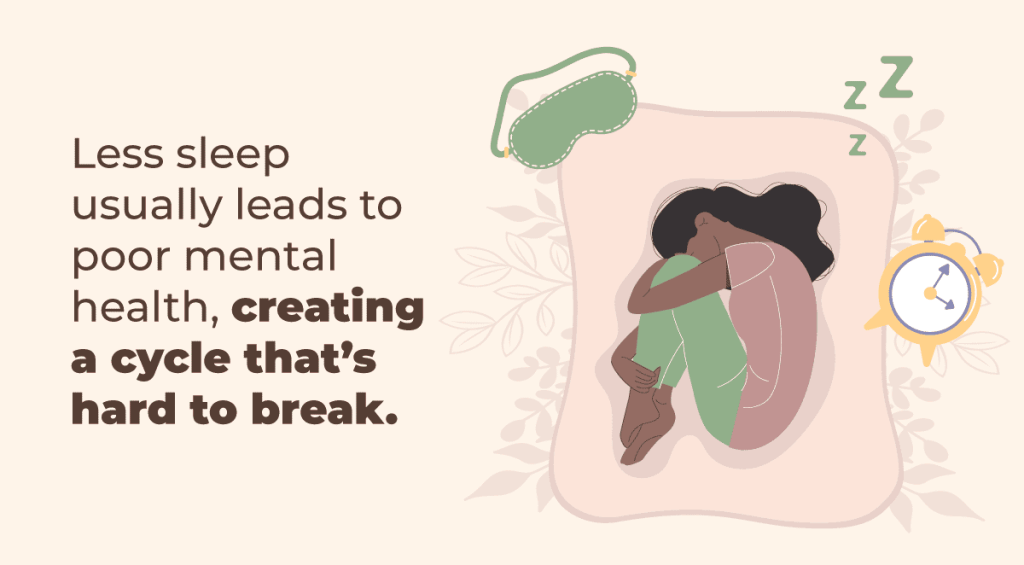
Depression can cause fatigue, and make teens want to sleep more, but it also disrupts sleep patterns and makes getting restful sleep hard. Teens with anxiety might experience more insomnia than the average teen, which takes away from the hours they could be sleeping, often despite their best efforts. Less sleep usually leads to poor mental health, creating a cycle that’s hard to break.
Signs Your Teen Is Sleep-Deprived
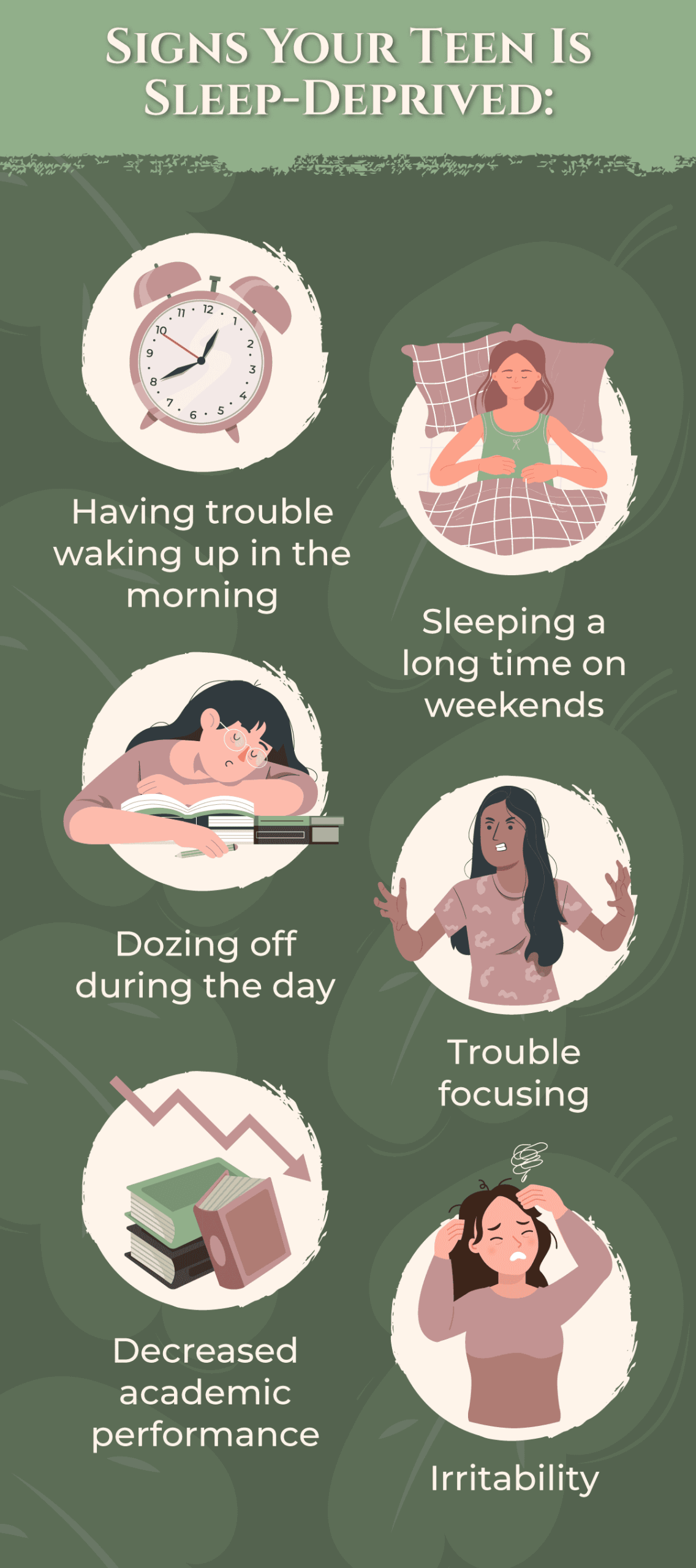
The signs of sleep deprivation are pretty straightforward, but there are more indicators than you might think. If any of these signs sound like your teen, they might be sleep-deprived:
- Having trouble waking up in the morning
- Sleeping a long time on weekends
- Dozing off during the day
- Trouble focusing
- Decreased academic performance
- Irritability
Tips on Helping Your Sleep-Deprived Teen
Don’t try to force your teen to go to sleep earlier. This needs to be a collaborative effort, and respecting their growing autonomy is important.
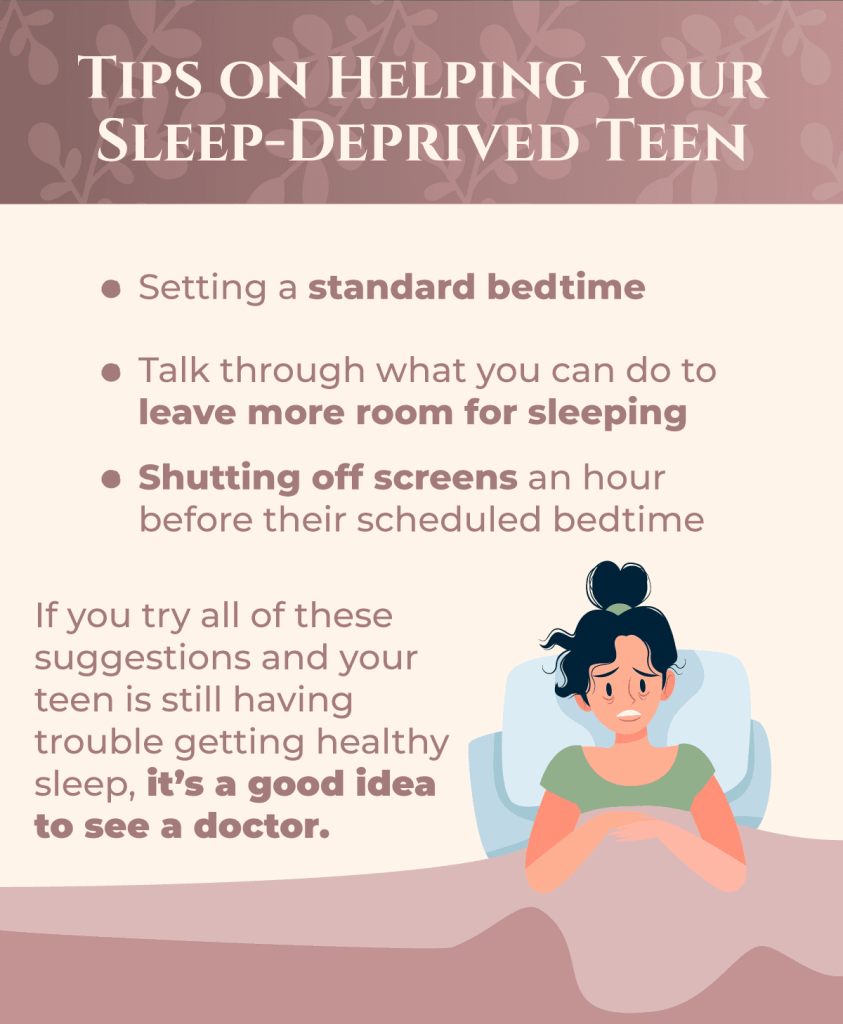
Setting a standard bedtime and sticking to it as much as you can is helpful. Try maintaining the bedtime, even on weekends. Letting your teen sleep in late when possible can also be beneficial, so consider letting them sleep as long as they want when they don’t have morning obligations.
It’s also vital to take a close look at your teen’s schedule, and talk through what you can do to leave more room for sleeping. It might mean cutting down on an after school activity or time out with friends, and it isn’t always ideal, but making time for sleep is important. Be sure to assure your teen that sleeping more is going to help them more than keeping their busy schedule in tact.
Shutting off screens an hour before their scheduled bedtime is also a good idea. Encourage your teen to do non-stimulating activities at this time, like reading, journaling, or coloring, if possible. It’ll help their brain wind down, and might help them relax more after a busy day, too. If you do let your teen use their phones before bed, most phones have blue light blockers that you can activate for a certain time each day. This can at least eliminate that aspect of stimulation, which is incredibly helpful.
There are some things you can’t control easily, like how early school starts, and how much homework your teen has to do after school. You can become an advocate for later school start times, though. Many schools have meetings where they hear what parents have to say, and you can bring this important issue up.
If you try all of these suggestions and your teen is still having trouble getting healthy sleep, it’s a good idea to see a doctor. They’ll have additional advice based on your teen’s medical history, and if they suspect a potential sleep disorder, they can refer you to a specialist.
Finding Help in Texas With Roots Renewal Ranch
Sometimes, the core of poor sleep comes down to mental health conditions. Teens have a lot of concerns that are hard to manage on their own, and these can interfere with their ability to get good rest. If you think your teen’s mental health is part of the equation, mental health treatment for teens is available, and a good option to look into.

Roots Renewal Ranch is a mental health treatment center for girls ages 13-17. We work closely with them through various therapy modalities to get to the root of their concerns and find comprehensive healing. This often helps them sleep better! Our animals are here to provide love and comfort to your daughter on her journey, too. She is strong, she is loved, and she is enough. Give us a call at 888-399-0489 today.
FAQs
How long does it take for a teen to recover from sleep deprivation?
Scientists don’t exactly know the answer to this question. It likely depends on each individual, and is longer than we think. Evidence shows that even a week of quality sleep doesn’t make up for 10 days of sleep deprivation. All you can do is try to get the recommended amount of sleep daily, and your body will recover eventually.
When should I take my teen to see a sleep specialist?
If you tried all the tips in this article and your teen is still having trouble sleeping, it’s a good idea to see a doctor. They’ll determine whether your teen should go to a sleep specialist.

