One’s teenage years are often filled with a whirlwind of emotions – stress about school, uncertainty about the future, and the pressure to fit in. For many teens, these challenges are magnified by feelings of anxiety, depression, and trauma. They’re navigating a world that moves at a fast pace, and sometimes, it can feel like everything is beyond their control. In Texas alone, 2 million of the 5.2 million children/youth aged 6-17 (or 35% of the youth population) had a mental health need in 2022. As young people navigate the pressures of school, social media, and generally just growing up, it’s crucial that they have the correct tools to help manage their mental and emotional health.
Mindfulness and meditation offer teens a lifeline: a chance to slow down, to breathe, and to reconnect with themselves in a world that often feels chaotic. These practices help teens manage their stress, find peace within themselves, and learn to build emotional resilience that will carry them through life’s ups and downs.
At Roots Renewal Ranch, mindfulness and meditation are more than just calming practices, they are integral components of a holistic, trauma-informed approach to healing. By fostering a deeper connection to the present moment, teens can learn to manage stress, reduce anxiety, and develop healthier coping mechanisms. These practices empower them to navigate their emotions and find balance in the midst of chaos, giving them the tools they need to truly thrive.
Mental Health Benefits of Mindfulness and Meditation
Mindfulness and meditation offer a multitude of benefits for teens, especially in today’s world where the pressures of life often feel intense and overwhelming. These practices are proven to help young people navigate their emotions with greater ease and clarity, which is crucial when dealing with mental health challenges like anxiety, depression, and stress.
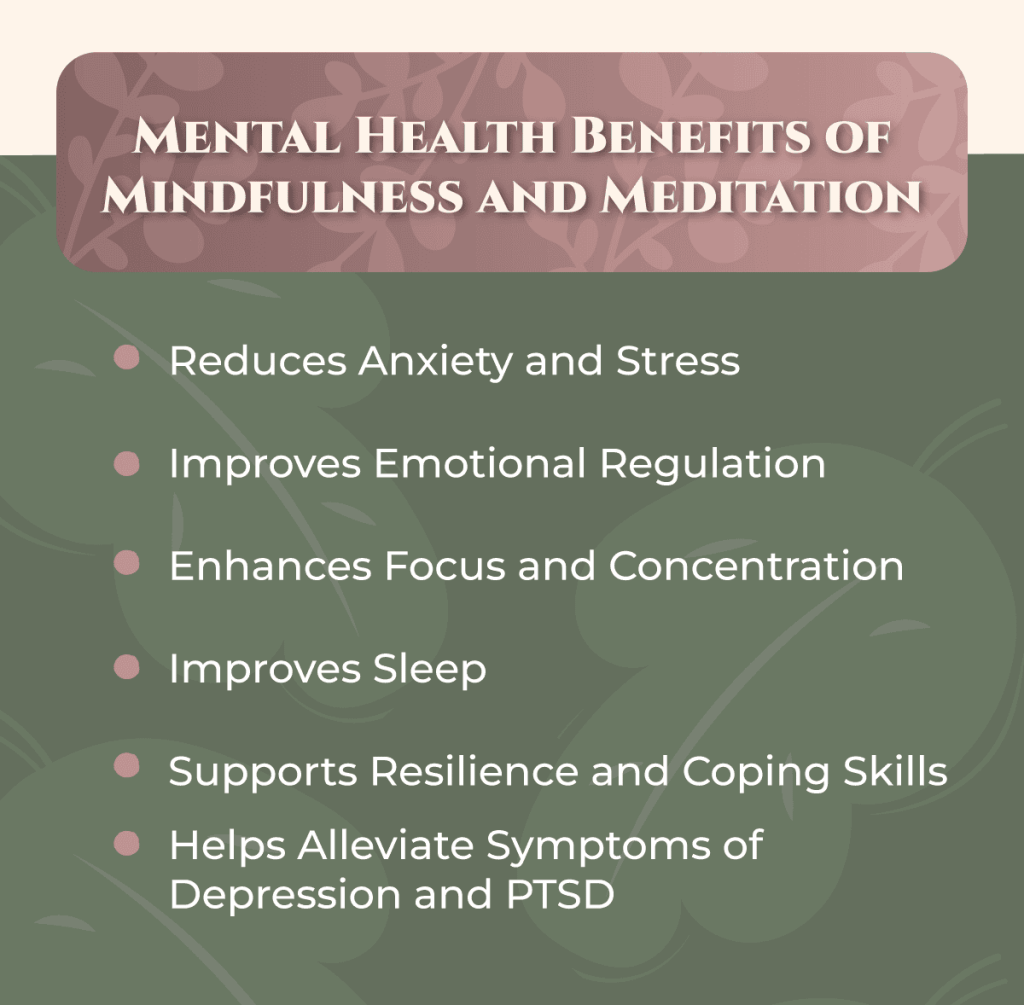
- Reduces Anxiety and Stress: Regular mindfulness practices help teens slow down their racing thoughts and develop healthier ways to cope with stress. Techniques like deep breathing and focused attention reduce the body’s fight-or-flight response, helping teens to manage their anxiety in real-time.
- Improves Emotional Regulation: Adolescence is a time of heightened emotional intensity, and mindfulness can help teens to better understand and manage these emotions. By practicing mindfulness, teens learn to observe their feelings without judgment, allowing them to respond thoughtfully instead of reacting impulsively. This leads to better decision-making and fewer emotional outbursts.
- Enhances Focus and Concentration: Mindfulness and meditation train the brain to stay present, which directly benefits teens’ ability to concentrate. Whether it’s in the classroom or during extracurricular activities, the ability to focus without distractions helps improve academic performance and overall productivity.
- Improves Sleep: Mindfulness meditation helps to calm the mind, making it easier for teens to relax and fall asleep. Regular practice has been shown to reduce insomnia and improve the quality of sleep, which is crucial for a teen’s overall well-being, growth, and mental health.
- Supports Resilience and Coping Skills: Life is full of challenges, but mindfulness gives teens the tools to face adversity with calm and confidence. By building emotional resilience through regular practice, teens can bounce back from setbacks and learn to manage difficult situations with a clearer and more balanced perspective.
- Helps Alleviate Symptoms of Depression and PTSD: Mindfulness and meditation have been shown to reduce symptoms of depression by increasing feelings of self-worth and emotional stability. For teens with a history of trauma, mindfulness practices can help them to process their emotions in a safe and controlled way, making it a powerful tool for healing.
The benefits of mindfulness and meditation are undeniable, but what’s happening beneath the surface to make these practices so effective? Understanding the science behind mindfulness helps explain why it’s such a powerful tool for teens, especially during these critical years of brain development. Let’s dive into how mindfulness actually impacts the teenage brain and why it can be so transformative for mental health.
The Science Behind Mindfulness and Meditation
The teenage brain is still developing, especially in areas that control emotions, decision-making, and impulse control. Mindfulness practices can play a crucial role in shaping these areas, helping teens to build better emotional regulation and resilience.
When teens practice mindfulness, they are training their brain to focus on the present moment, which helps strengthen the prefrontal cortex – the part of the brain responsible for thinking, planning, and controlling impulses. By exercising this area of the brain, mindfulness helps teens become more thoughtful in their decision-making, rather than reacting impulsively to their emotions.
On the flip side of this, mindfulness has also been shown to reduce the size of the amygdala, which is the brain’s “fear center.” This means that teens who regularly practice mindfulness are less likely to be overwhelmed by stress and anxiety. With a smaller and less reactive amygdala, they can approach stressful situations with greater calm and clarity.
Furthermore, mindfulness promotes neuroplasticity (or the brain’s ability to reorganize itself by forming new neural connections). This means that teens who practice mindfulness are not only improving their current emotional regulation, but they are also building a stronger foundation for mental resilience in the future.
In short, mindfulness doesn’t just help teens feel better in the moment, it actually helps to rewire their brains for long-term mental health and emotional well-being.
Techniques and Strategies for Practicing Meditation
Meditation doesn’t have to be complicated, and it’s something your teen can practice anytime and anywhere. The key is to find which techniques resonate with them and make these techniques a regular part of their routine. Here are some simple yet effective meditation strategies to help your teen get started:
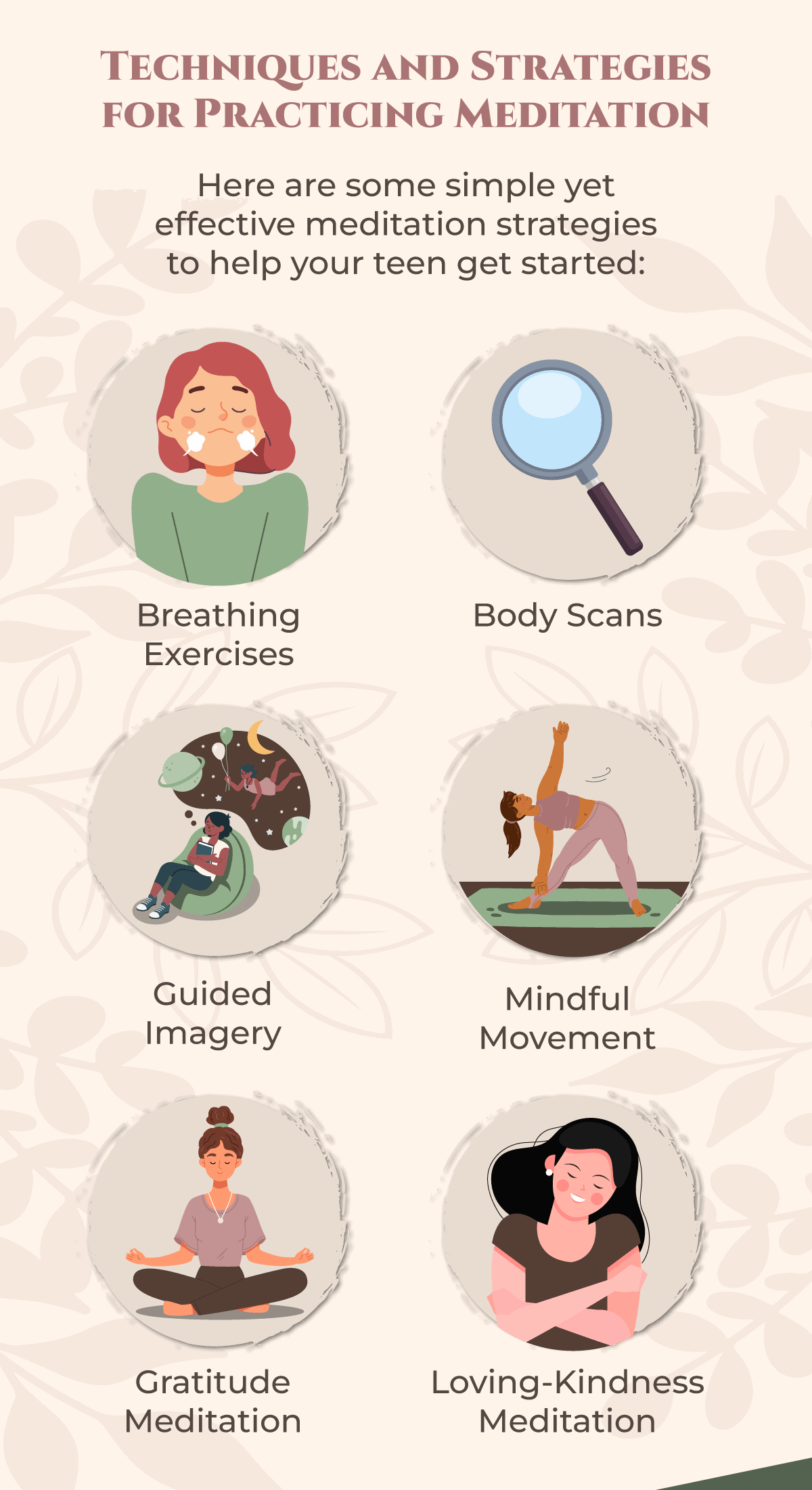
- Breathing Exercises: One of the easiest and most effective mindfulness techniques is focusing on the breath. Simple breathing exercises, like deep breathing or box breathing, can calm the nervous system and bring immediate relief from stress.
- Deep Breathing: Inhale for a count of four, hold for four, exhale for four. Repeat for a few minutes to help clear the mind and calm the body.
- Box Breathing: Inhale for four counts, hold for four, exhale for four, hold for four. This rhythmic breathing can help reset the body’s stress response.
- Body Scans: A body scan is a powerful technique that involves mentally scanning the body from head to toe, paying special attention to any areas of tension and discomfort. This practice helps encourage awareness of physical sensations and can provide a release from tension. It’s a great exercise for relaxation and improving the mind-body connection.
- Guided Imagery: Guided meditation through imagery involves closing one’s eyes and visualizing calming and peaceful scenarios, such as walking on the beach or lying in a field of flowers. Guided imagery helps teens to relax by providing a mental escape from their stress and allowing them to focus on a peaceful scene.
- Mindful Movement: Meditation doesn’t always have to be still. Mindful movement, such as yoga, tai chi, or simply stretching, can be an excellent way for teens to practice mindfulness while still engaging their bodies. Focusing on each movement and breath during these activities can be a great way to release stress and promote body awareness.
- Gratitude Meditation: Gratitude meditation helps teens shift their focus from what’s wrong to what’s right in their lives. By spending a few minutes each day reflecting on things they are grateful for, teens can cultivate a positive mindset and reduce feelings of anxiety and sadness. This practice can boost self-esteem and improve a teen’s overall emotional well-being.
- Loving-Kindness Meditation: This technique focuses on sending love and well wishes to oneself and others. Teens can repeat phrases like “I am happy, I am healthy, I live with ease,” and extend these wishes to others. It promotes feelings of compassion, empathy, and connection, and can be especially helpful for teens working through difficult emotions.
Ways to Incorporate Mindfulness Into Your Teen’s Life
Incorporating mindfulness into your teen’s routine doesn’t have to feel like an overwhelming task. The goal is to find moments during the day where they can naturally stop to pause, breathe, and connect with the present.
One simple approach is to start small by making it accessible, fun, and engaging. Mindfulness doesn’t need to be a long practice right away; just a few minutes a day can have a noticeable impact. Whether it’s in the morning when they wake up or just before bed, setting aside a brief window for a mindful moment can help teens ease into the practice. You can encourage them to begin with just 5 to 10 minutes a day and gradually build up from there.
In addition to formal practice times, mindful moments throughout the day can be a great way for teens to stay grounded in the present. These could be moments of pause during a busy day, like taking a deep breath before an exam or simply noticing their surroundings while they are eating lunch. These small but consistent practices can really add up and help teens stay centered as they navigate their day.Mindfulness apps and videos can be another fun way to engage your teen. With platforms like Headspace, Calm, and Insight Timer, teens are able to find guided meditations, breathing exercises, and reminders to practice mindfulness. Apps can make mindfulness feel less like a task and more like a fun and interactive experience, especially for those who enjoy tech-based tools.
Mindfulness can also be naturally integrated into everyday activities that your teen already enjoys. Whether it’s drawing, journaling, cooking, or even taking a walk, these activities become opportunities for mindfulness when approached with full presence and focus. You could even turn mindfulness into a creative activity, like mindful journaling, where they reflect on their feelings, gratitude, or intentions in a calming way.
Lastly, as with anything, teens often learn best by example. Being a mindful role model in your own life can be one of the most effective ways to help your teen embrace mindfulness. By demonstrating how you manage stress and focus on the present, you can show them how valuable mindfulness can be. Making it fun and shared will help both you and your teen experience its rewards together.
Teen Therapy at Roots Renewal Ranch Near Dallas, Texas
At Roots Renewal Ranch, we understand that the journey to mental well-being isn’t just about individual techniques. It’s about providing a compassionate space where teens can heal, grow, and learn the tools they need to thrive. Mindfulness is an essential part of this journey, helping teens connect with themselves and build emotional resilience. But it’s just one piece of the puzzle.
Our 90-day inpatient program is built specifically for adolescent girls, offering a level of depth and continuity rarely found in shorter or less structured stays. We include accredited academics to keep teens on track in school, immersive family programming during and after treatment, and individualized mental health therapy designed to create real, lasting change.

This is not a boot camp. It’s not a juvenile program. It’s a safe, empowering space where teens are seen, heard, and supported every step of the way. If your teen is coping with emotional challenges, our therapy programs offer a holistic approach to support them through their journey. To learn more about how we can help, explore our teen therapy options and start your teen’s path to healing today.
“She is strong, she is loved, and she is enough.”

