Most parents don’t miss the big things.
The obvious tears, the sudden crisis, or the clear breakdowns.
What’s harder are the small shifts.The quiet changes.The moments where something feels off, but you can’t quite explain why.
Teen mental health concerns rarely announce themselves clearly. Instead, they tend to show up in the shadows of her mood, behavior, sleep patterns, or withdrawal — leaving parents caught in a painful space between worry and uncertainty, wondering whether to step in … or to wait just a little longer.
And the reality is that these concerns are not rare.
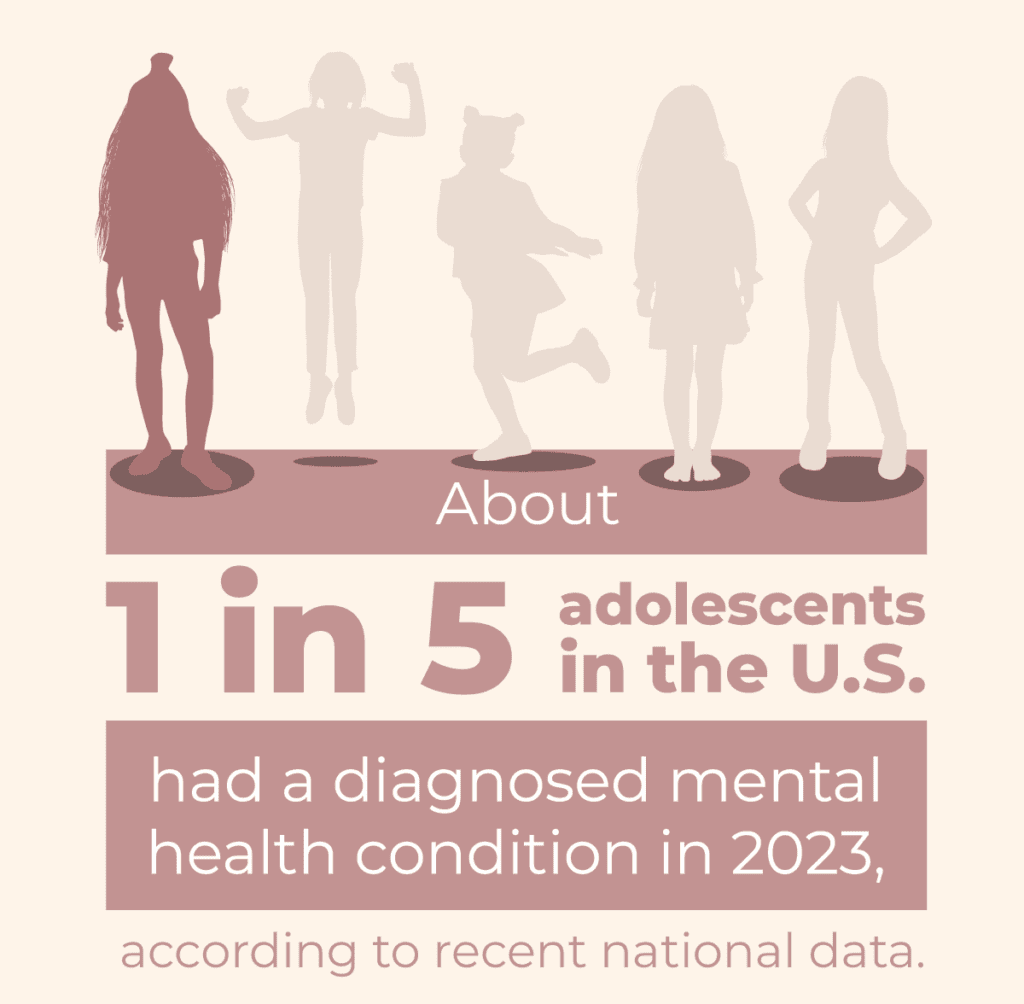
About 1 in 5 adolescents in the U.S. had a diagnosed mental health condition in 2023, according to recent national data. This data shows that anxiety and depression are the most common ailments – and importantly, that anxiety and depression diagnoses are consistently higher in girls as compared to boys. This reflects an emotional burden that many girls carry daily.
When change arrives softly instead of loudly, it is easy to doubt your own perception. But those early moments, the ones that don’t yet have a clear label, are often where awareness can begin.
Why Red Flags Are Easy to Second-Guess
Many signs of emotional distress look a lot like normal adolescence, which is what makes them so easy to question.
Teens sleep more.They want privacy.They pull away.They test limits.
So when something feels concerning, parents often pause … not out of denial, but out of care. There’s a constant internal negotiation between respecting independence and stepping in too soon.
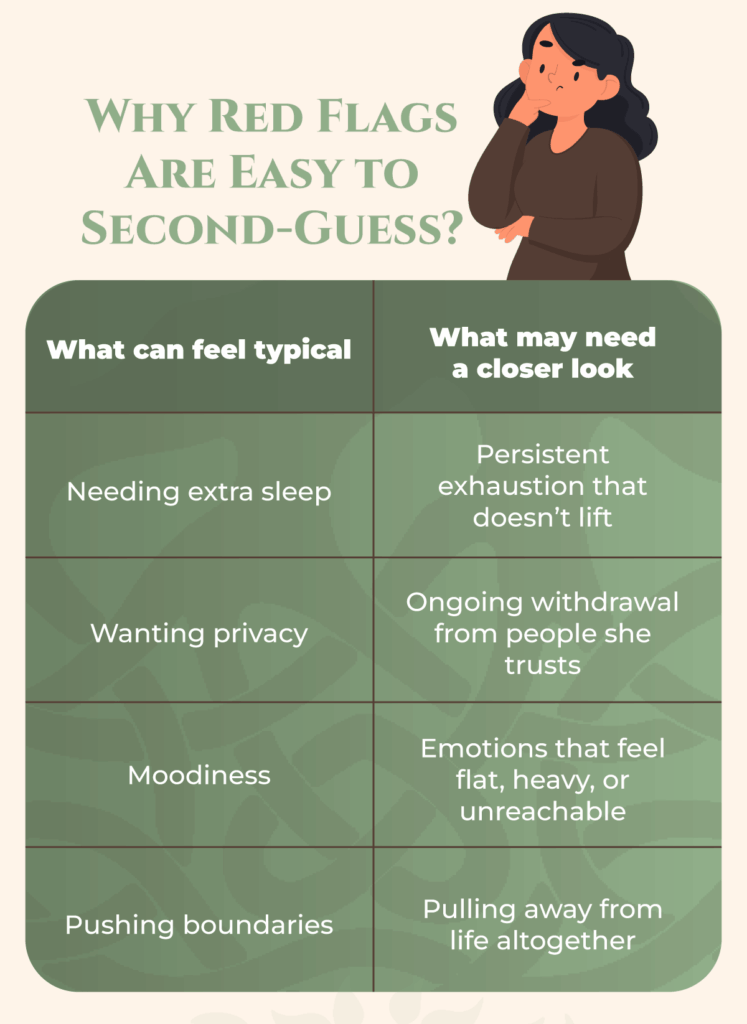
One helpful way to think about this hesitation is the difference between what’s typical and what starts to linger:
| What can feel typical | What may need a closer look |
|---|---|
| Needing extra sleep | Persistent exhaustion that doesn’t lift |
| Wanting privacy | Ongoing withdrawal from people she trusts |
| Moodiness | Emotions that feel flat, heavy, or unreachable |
| Pushing boundaries | Pulling away from life altogether |
This is where parents often second-guess themselves.
They don’t want to overreact, thinking she may just need time.
That hesitation usually comes from love … but when your concerns keep returning, it may be time to listen. Red flags are not about labeling your daughter, they are about noticing when something deserves a little more attention than you are offering.
Patterns Matter More Than Any One Moment
No single behavior tells the whole story.What matters is change, and whether it lingers long enough to reshape daily life.
A bad day happens.A hard week can pass.
But when certain shifts start repeating, or quietly settling in, they deserve closer attention.
Some patterns that often signal more than stress include:
- Gradually pulling away from family or friends, especially those she once felt close to
- Noticeable changes in mood that don’t seem to lift — irritability, sadness, or emotional flatness
- Losing interest in activities that used to bring joy or comfort
- Ongoing changes in sleep, appetite, or energy that affect her ability to function
-
- Increased secrecy, avoidance, or shutting down emotionally
- Talking about feeling like a burden, worthless, or hopeless — even in passing
Seen individually, these moments can be easy to explain away. But seen together, or noticed continually over time, they often tell a clearer story.They are communication … even when the message is hard to hear, and even when your daughter doesn’t yet have the words to explain what she is carrying.
What Teens Often Can’t Say Out Loud
Many teen girls don’t yet have a clear language for what they’re experiencing.
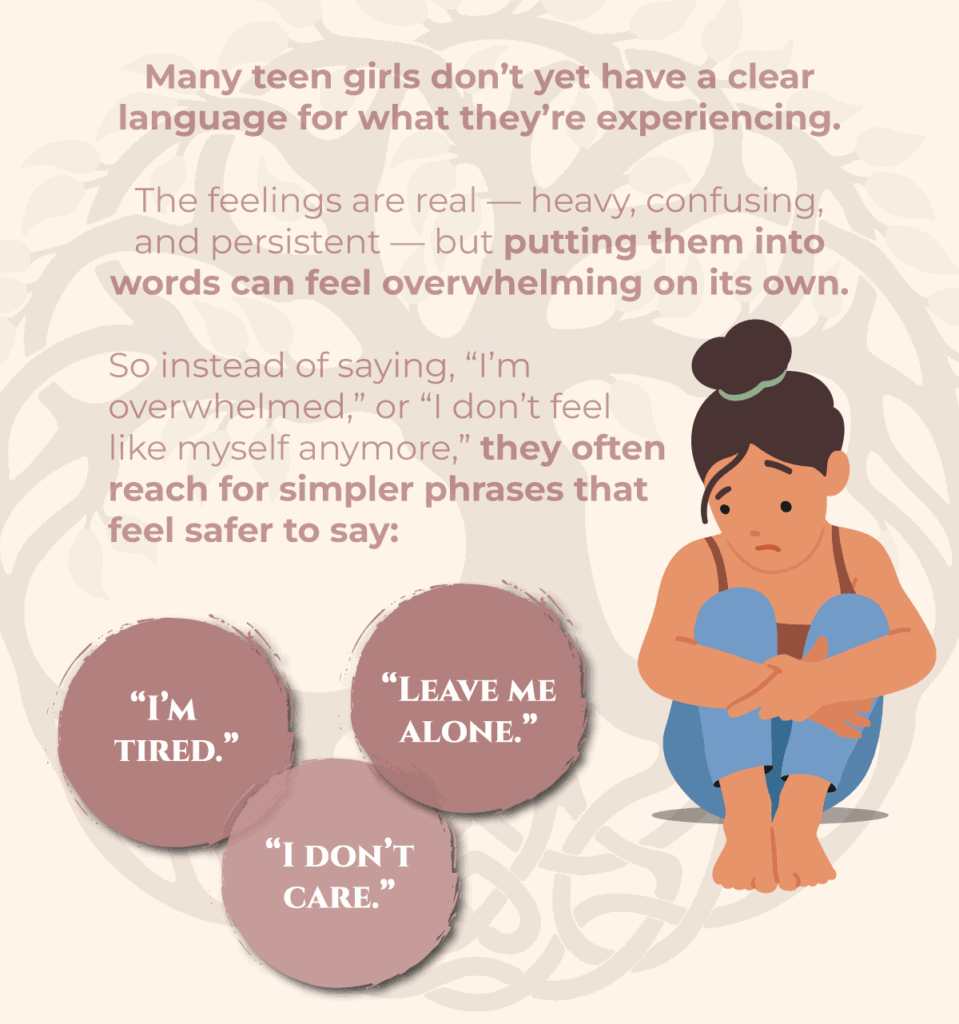
The feelings are real — heavy, confusing, and persistent — but putting them into words can feel overwhelming on its own. So instead of saying, “I’m overwhelmed,” or “I don’t feel like myself anymore,” they often reach for simpler phrases that feel safer to say:
- “I’m tired.”
- “I don’t care.”
- “Leave me alone.”
What can sound like indifference or dismissal on the surface is actually a form of self-protection most of the time.
For many teens, asking for help can feel risky, because they worry too.
About burdening their family, disappointing people they love, or even confirming fears they already have about themselves.
Retreat can feel easier than explaining something they do not fully understand yet.
Silence, in these moments, is rarely apathy … more often, it’s fear. Fear of being misunderstood, fear of making things worse, or fear of admitting how much they’re really hurting.
Silence Is Still a Form of Communication
Even when your teen isn’t speaking, she’s still sending messages. The quiet moments, the withdrawn gestures, the “I’m fine” … these are all ways she is trying to process what’s happening inside.
As a parent, it can feel frustrating and alarming.
You might wonder if you’re missing something or if you should push for answers. But pressing too hard often shuts the door rather than opens it.
Sometimes listening does not mean to just what she is saying to you. Listening is also:
- Being present: even in silence
- Noticing the subtle changes in her mood or behavior
- Offering reassurance without forcing a conversation
Your steady attention and empathy creates a bridge for connection. She may not yet have the language to explain her feelings, but when she’s ready, she’ll know that you are there and ready to talk. And that makes all the difference.
Staying Connected Without Becoming a Watchdog
When you notice small changes in your teen, your instinct might be to watch more closely, and that instinct comes from love.
You want to protect her.
You want to make sure she is safe.
But there is a fine balance between being present and being controlling, and your teen can feel it in an instant. Too much pressure, too many questions, too many rules can shut her down, even when your intentions are good.
Here’s a way to think about it — small shifts in how you respond can make a big difference:
| Gentle, Supportive Approaches | Approaches That Can Backfire | How Teens Feel |
|---|---|---|
| “I’ve noticed some changes, and I wanted to check in.” | Constant monitoring or repeated questioning | Seen, not policed. She knows you care without feeling trapped. |
| “You don’t have to have answers right now. We can figure this out together.” | Immediate consequences for small withdrawals or mood shifts | Allowed to breathe, to process, without fear of punishment. |
| “I’m here, even if you don’t feel like talking.” | Minimizing feelings: “It’s not that big of a deal” | Emotions feel valid. She can trust that what she feels matters. |
These moments are about more than just what is happening right now. They’re about sending the message that you’re on her team. That she’s safe, understood, and never alone — even when things feel hard or confusing.
Being present this way is not passive — it is active care.
It’s about noticing, listening, and responding without adding extra weight. It is about holding more space for her to open up when she’s ready: not trying to force her before she wants to.
When Extra Support Can Make a Difference for Your Daughter
Even when you are showing up with patience and understanding, there are still moments when professional guidance can make a difference for your child. Extra support helps her feel safe and heard, and better equipped to manage any overwhelming emotions — and it can give you confidence in your response.
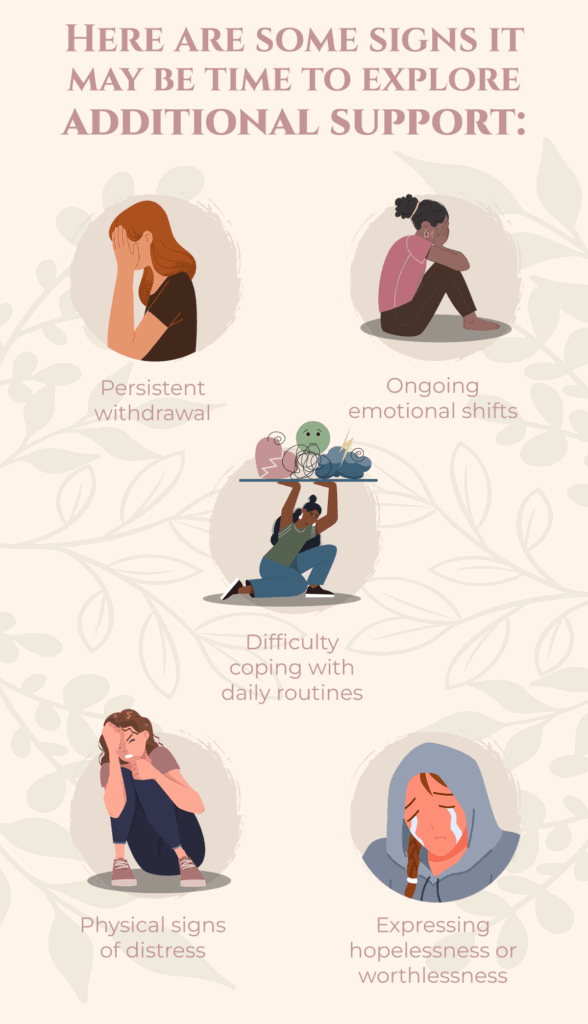
Here are some signs it may be time to explore additional support:
- Persistent withdrawal – She continues pulling away from family, friends, or activities she used to enjoy, even after check-ins.
- Ongoing emotional shifts – Mood changes like irritability, sadness, or flatness that linger for weeks without relief.
- Difficulty coping with daily routines – Getting out of bed, attending school, or completing daily tasks feels too hard to want to try.
- Physical signs of distress – Frequent headaches, stomachaches, or other stress-related symptoms start to interfere with everyday life.
Expressing hopelessness or worthlessness – Even just occasional statements about feeling like a burden, lacking hope, or wanting to disappear deserve real attention.
Noticing these moments doesn’t mean something is “wrong” with your daughter – it just means something wants a little more attention. Extra support from Roots can give her a place to unload what she has been carrying, and give you the reassurance that you are responding in the best way you can.
Sometimes, the most loving step you can take is making sure she never has to figure it on her own.
How Roots Supports Girls and the Families Who Love Them
Getting help early isn’t an overreaction. It’s an act of protection.
Professional support can clarify what is actually happening beneath your daughter’s surface, providing her with tools she hasn’t developed on her own yet, and helping your family communicate more openly and effectively.
At Roots Renewal Ranch, we work with girls and families who are navigating questions exactly like these. Our residential program uses experiential therapy (like animal-assisted work, emotional skill-building, and meaningful family involvement) combined with trauma-informed therapy to not just stabilize her — but to help her feel safe enough to reconnect with herself and the world around her.
Red flags are not labels. They are invitations to understand more deeply; and with the right support, they can become turning points.
For parents who are looking for more information about our programs and how Roots can support your teen, reach out today at 888‑399‑0489. Every step toward support matters, and help is just a call away.
She is strong. She is loved. And she is enough.
