School avoidance, often referred to as “school refusal,” is largely misunderstood. It’s more than a child wanting to stay home and play video games.
It’s a teen having a panic attack in the car while their parents drive them to school because they couldn’t bring themselves to get on the bus in the morning. It’s unexplained headaches, stomach aches, and nausea. It’s soul-crushing fear – a daily sense of impending doom.
If you have a teen going through this, you know firsthand how exhausting and desperate the situation can feel as a parent.
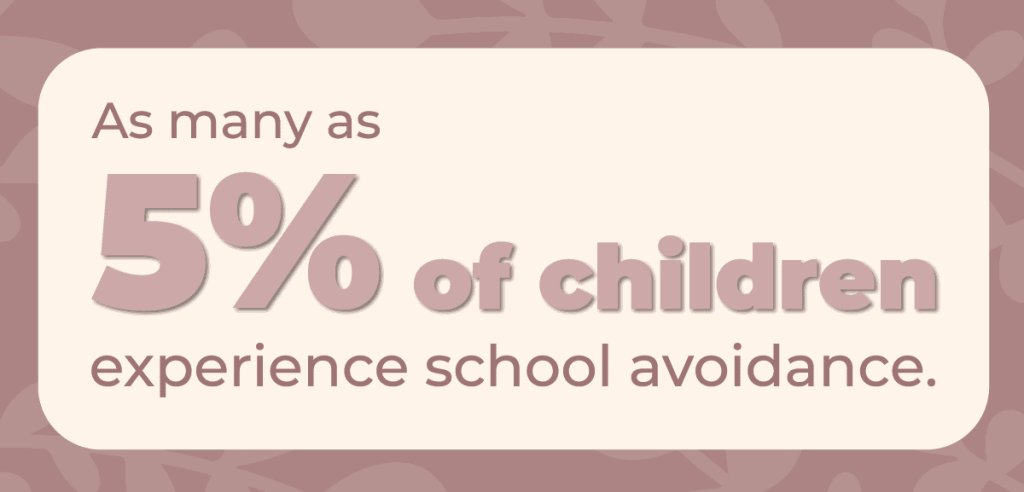
As many as 5% of children experience school avoidance. The term “school refusal” isn’t entirely inaccurate, because the adolescent will refuse to go to school, but it’s incorrect in assuming the young person has control over their desire to avoid it. While most children don’t feel like going to school sometimes, school avoidance has a deeper origin and impact. We’ve seen this in the teens we work with at Roots Renewal Ranch. You’re not alone if you have a teen who is managing this. Today, we’ll cover everything you need to know about school avoidance so you can get some much-needed answers.
Potential Reasons for School Avoidance: It’s Not Laziness
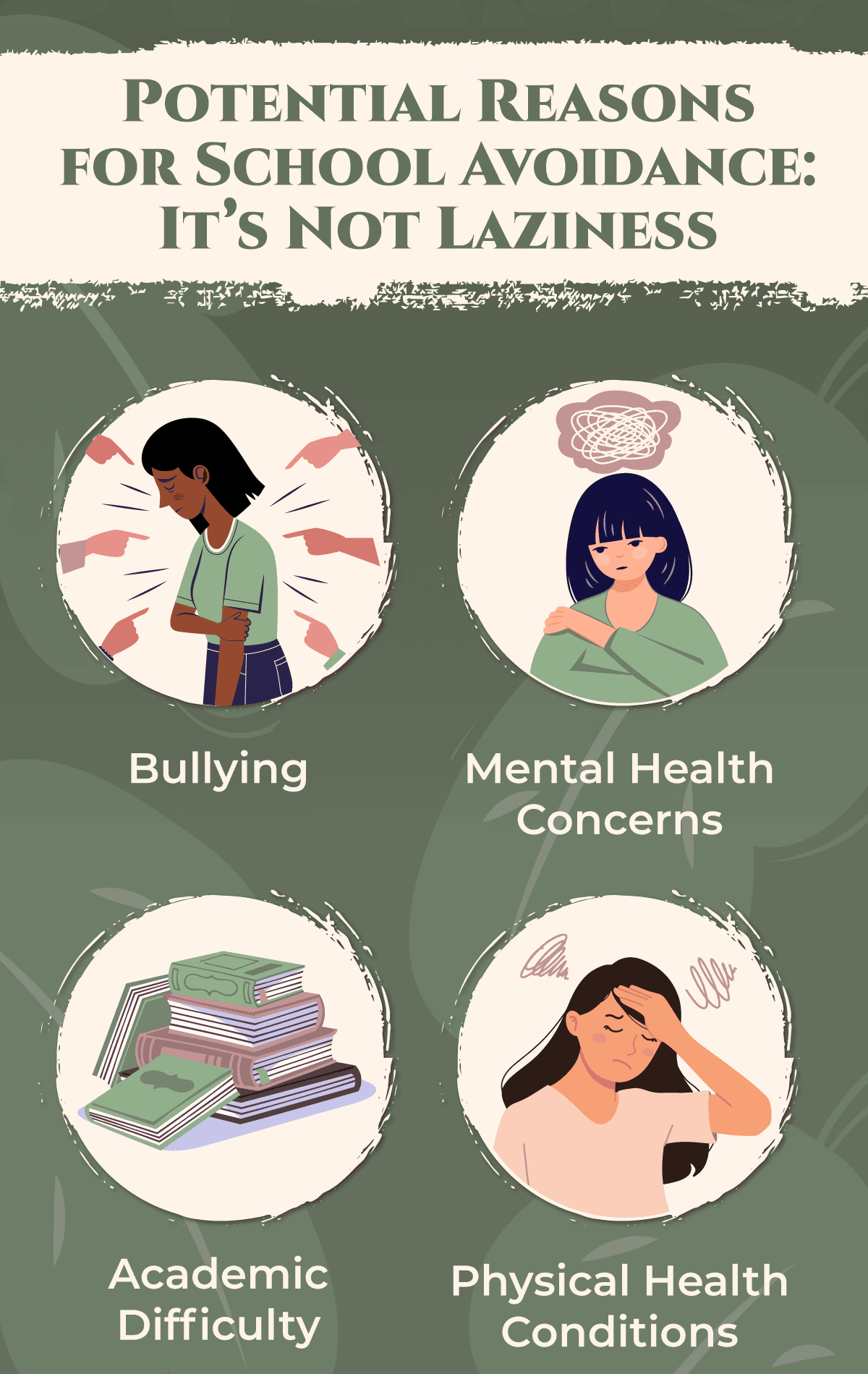
There are many reasons why a teen might have trouble going to school, and often, they don’t understand the reason themselves. School avoidance manifests as a deep feeling of being unable to go to school, and isn’t just “not feeling like it.” Its most common causes are bullying, mental health concerns, and academic difficulty, but there are many potential reasons behind it.
Bullying
An adolescent being bullied and not wanting to go to school makes sense. They want to avoid being subjected to harsh words, mocking, and in some cases, violence. For them, school isn’t a safe environment, and is a large source of pain instead. They might want to avoid that pain in any way possible, prompting them to want to stay home from school.
Mental Health Concerns
This is probably the number one reason for school avoidance, and also one of the hardest to get to the bottom of. Mental health conditions are difficult enough for adults who already know a lot about themselves and the world. For teens, mental health complications can greatly interfere with their lives and cause confusion and frustration.
Anxiety disorders are a huge culprit of being unable to go to school, and in many cases, that anxiety isn’t something that’s easy for them to communicate or explain. Other times, anxiety has a clear source, such as an upcoming exam, a teacher treating them unkindly, conflict in friendships, or even trauma at home. These things lead to teens feeling like, if they go to school, something horrible will happen. It’s difficult for parents, too, because they may feel like their teen is shutting them out.
Depression can also make going to school difficult for teens, because it may feel like it takes up way more energy than they have. They might feel exhausted, and if their mood is low, it can be difficult to make it through the day. This can cause anxiety, too, because the teen may not want others to see that they’re going through a tough time.
Academic Difficulty
Teens struggling in their classes might not want to go to school, either. Whether it’s because they don’t understand what they’re learning and are afraid of judgment from their peers or teachers, or they’re going through something like dyslexia or memory problems, it can be discouraging enough to prompt them to avoid school.
Physical Health Conditions
Sometimes, school-avoidant teens will report physical symptoms like headaches, stomach aches, and nausea. Occasionally, they won’t experience these symptoms and make them up as a reason to stay home. More often (and more likely), they’re very real physical manifestations of stress and anxiety.
It’s important to take your teen’s symptoms seriously, especially if they’re a large part of the reason why your teen avoids going to school. Make sure they see a doctor. Even if there’s nothing physical going on, it’s good to rule it out, and the doctor may have some additional recommendations on how to help your child.
The Cycle of School Avoidance
For teens experiencing anxiety, staying home from school makes the idea of eventually returning even more stressful than it was to begin with. They have to deal with questions from peers about where they were, and might worry about judgment from classmates and teachers alike. It can be incredibly scary to try and explain why they were at home, and in some cases, teens may not even fully know the answer. Saying “I was too anxious to come to school,” might not be an acceptable excuse for everyone, and no one is more aware of that than school-avoidant kids themselves. It could be helpful to practice explanations with your teen so they’re prepared to answer questions other curious students will inevitably ask.
Make-up work can also be a concern, depending on how long the teen has been absent and if they could work on any at home. Regardless, it’s a big adjustment. Even if they keep up with schoolwork at home, returning to class and following lessons can be a challenge, especially for young people avoiding school due to learning difficulties.
Chronic vs. Acute School Avoidance
An acute condition is something that comes on suddenly and severely, and typically only lasts a short amount of time. A chronic condition, on the other hand, exists long-term.
School avoidance is considered chronic if it lasts for a year or more, and acute school avoidance accounts for any time less than that. Chronic school avoidance doesn’t require your child to have to stay home for a whole year. It just requires consistent school-avoidant symptoms, such as intense anxiety, tantrums, and unexplained physical symptoms related to school.
Acute school avoidance is more likely due to a specific event, while chronic school avoidance is often evidence of a mental health condition such as depression or an anxiety disorder.
The Link Between School and Mental Health
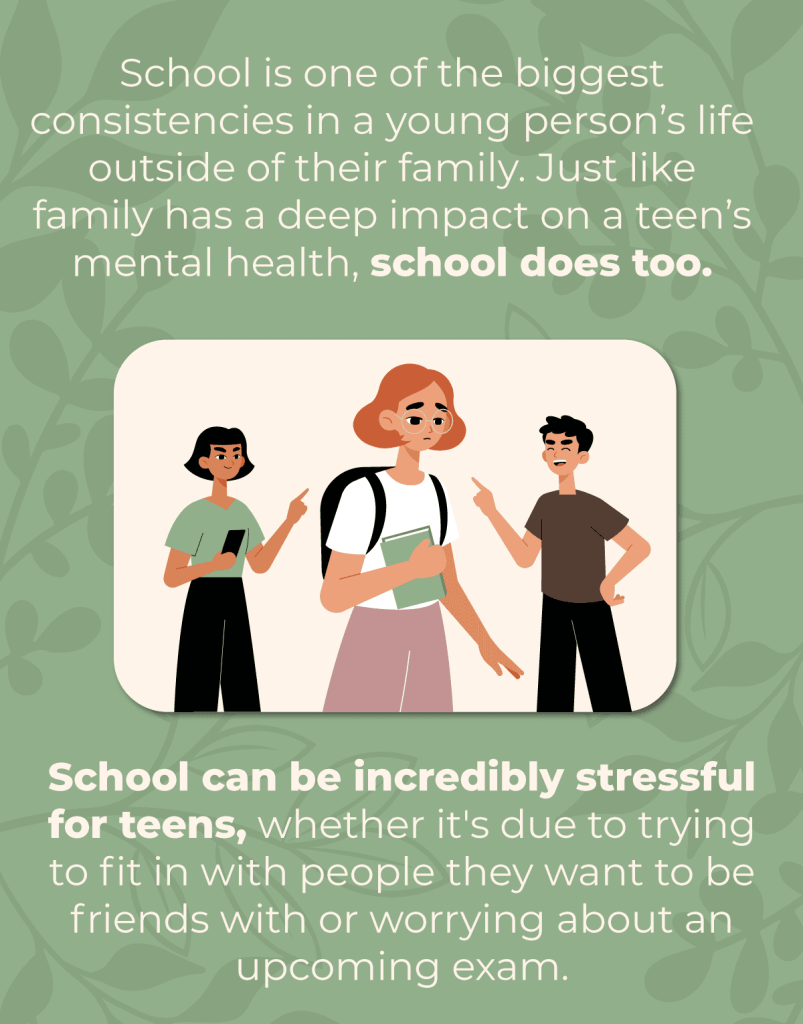
School is one of the biggest consistencies in a young person’s life outside of their family. Just like family has a deep impact on a teen’s mental health, school does too. School can be incredibly stressful for teens, whether it’s due to trying to fit in with people they want to be friends with or worrying about an upcoming exam. Chronic stress can lead to more serious mental health concerns, too.
If a teen is under an overwhelming amount of pressure, it makes sense that they would want to eliminate a major stressor: school. It might even feel like self-preservation for adolescents with mental health concerns. This is even more true for school-avoidant students who are being bullied.
School Avoidance Intervention: Empathy is Key

Understanding school avoidance is an important first step to helping your child return to school. You’ll need to use your new knowledge as a foundation for empathizing with your teen.
You’ll see countless other pages across the web telling you that you must get your teen back to school no matter what, even if it means forcing them. We recommend against that. In the vast majority of cases, your teen isn’t avoiding school just to be “lazy” or because they don’t feel like going. There’s something deeper at play, and making them go to school without addressing the underlying issue will only take a greater toll on your teen’s health and well-being.
Work with your teen to get to the bottom of why they don’t want to go to school. They may not understand themselves, let alone know how to explain it to you, so a simple, “What’s wrong?” probably won’t be enough. You might find it more effective to have teens make a list of everything bothering them about school. That should provide clarity for everyone involved, and once you know some of the issues, you can start working on fixing them.
You’ll want to work closely with your teen’s school during this time, too, and getting your teen help from a mental health professional is vital. A physician can provide the school with documentation and proof that you’re addressing your teen’s challenges with school. There are special accommodations the school can provide for your teen when they return, such as a hall pass and safe, quiet space for your teen to go if they feel overwhelmed. They can also allow your teen to start school late without getting in trouble, or go to school for half days until they’re ready to return to school full-time. Ask your teen what they think would help. The solution needs to be about them and what will benefit them most – not what the adults in the situation want most.
A traditional approach to education isn’t for everyone, either. Online classes are available if they might work better. Sometimes, in the case of bullying or a traumatic school-related event, changing schools could be your best option, even if it isn’t ideal.
All of this will inevitably be stressful, but remember: your child’s well-being is the most important. School is so valuable, but they’re more valuable.
Treating School Avoidance and Its Causes in the Dallas Fort Worth Area
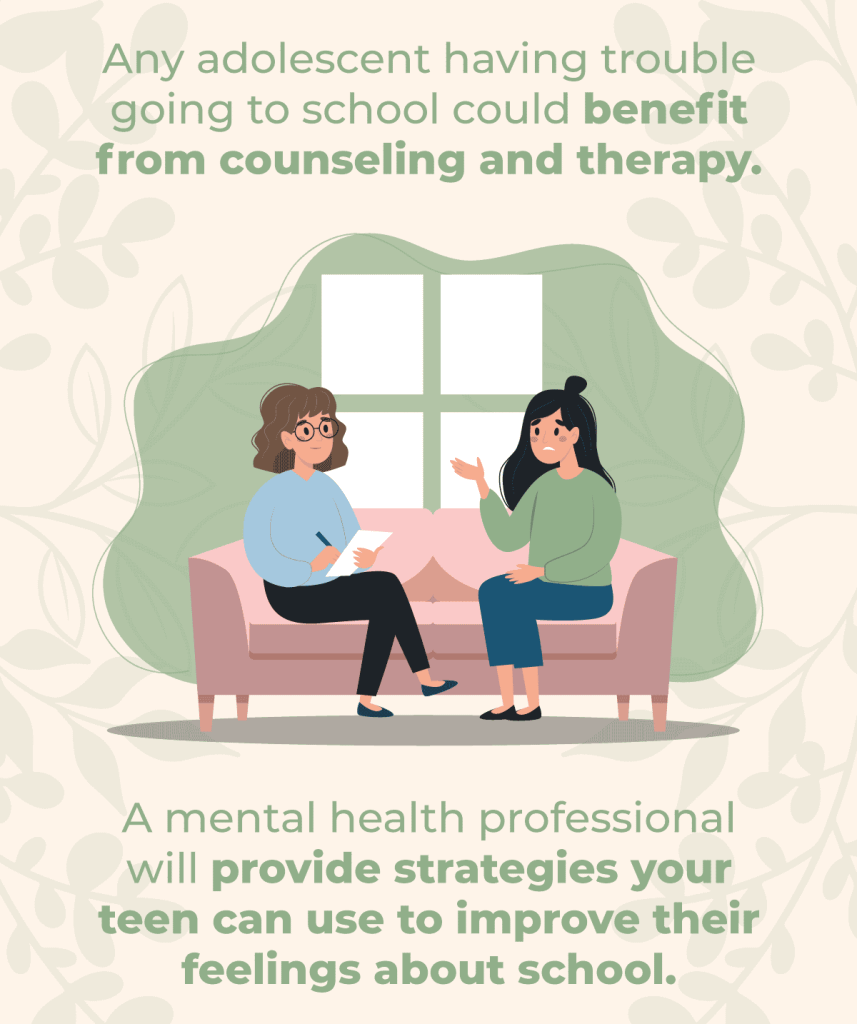
Any adolescent having trouble going to school could benefit from counseling and therapy. A mental health professional will provide strategies your teen can use to improve their feelings about school. They may utilize exposure therapy to help them conquer their fears slowly, cognitive behavioral therapy to help them challenge negative thought patterns, and dialectical behavioral therapy to help them manage strong emotions, among other options.
When you have a child who dreads going to school, it takes a toll on you as a parent, too. That’s another reason why it’s important to get help. It’s unfair to expect yourself to have all of the solutions. You aren’t alone, and there are plenty of teen mental health treatment options available that will enable your teen to return to school and live happily.

Roots Renewal Ranch is a mental health treatment center for girls ages 13-17. We’ll provide a safe, peaceful environment where your daughter can work through her concerns preventing her from going to school. We’ll keep you involved too, and together, we’ll address the root cause of her school avoidance. Call us at 888-399-0489 today. She is strong, she is loved, and she is enough.

