Your daughter was always shy, never really wanting to meet anyone new. Every year, starting school was always a challenge as seeing new teachers and different classmates than the year before would cause your daughter to shut down. You had to contact the school and request her only friend be in the same class each year, which seemed to help. But as she got older, she still would not put herself out there. You tried suggesting she join a band, as she was a very talented piano player. But you were met with anger and almost panic at the thought. How can you help her? Surely this isn’t good for her mental health.
Here at Roots Renewal Ranch, we understand how difficult it can be to see your teenage daughter lose who she once was. Social anxiety is a devastating mental health condition that affects teens all around the country, and 11.2% of females aged 13-18 have been diagnosed with social anxiety disorder. Our dedicated team at Roots is ready to help, as many have been through their own mental health treatments. What are the signs of social anxiety disorder in teens? Let’s explore this further.
What Is Social Anxiety in Teens?
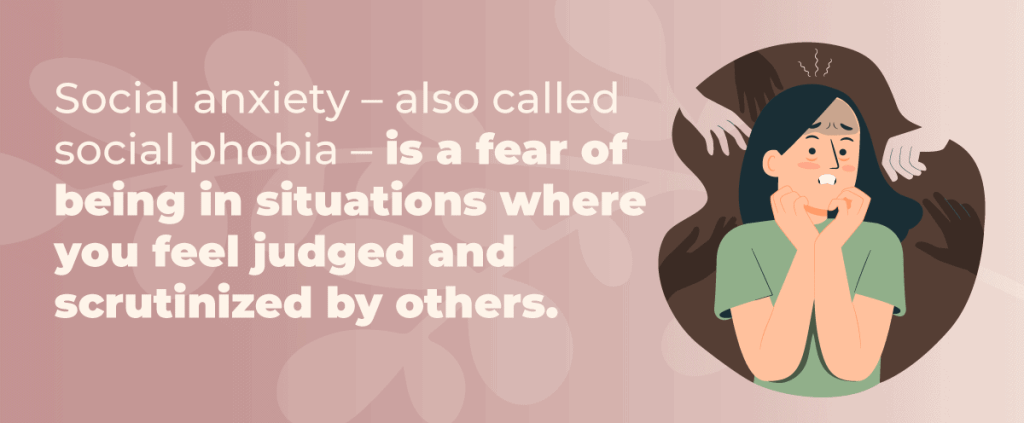
Social anxiety – also called social phobia – is a fear of being in situations where you feel judged and scrutinized by others. This can happen with people you know or strangers in public. Experiencing some nervousness before a public situation is normal, such as a first date or a school presentation. But when it becomes physically debilitating to be in these situations, it’s time to talk to a doctor about social anxiety.
When teens experience social anxiety, it can be difficult to understand what is going on. When around family and close friends, they seem to have an easy-going personality and can communicate openly. But if put in a scenario where they have to talk to new people or have attention on themselves, they shut down.
Being in a school setting day in and day out is especially difficult for teens with social anxiety. They’re constantly tested and triggered throughout the day. Parents get confused thinking their teen is depressed, when typically it’s the opposite. The teen wants to have friends and be able to be in social situations, but their mind believes only negative outcomes will happen, so they withdraw. This comes from an automatic psychological response to perceived stress or fright.
How Social Anxiety Affects Teens
While nervousness and avoidance may seem harmless, over time they can cause detrimental effects for your teen. Your teen doesn’t want to miss out on social events and parties, but in their mind, they can’t overcome the fear of being judged negatively. In the age of social media, they are left seeing pictures of fun gatherings that they missed out on. The close friends they have may talk about how much fun a party was while your teen is left out. This leads to depression, low self-esteem, and worsening anxiety symptoms.
When depression and anxiety are not being treated, it can lead to substance use in teens. They don’t have an outlet for their mental health and choose alcohol or substances to ease their symptoms. Substance use at a young age can lead to addiction as teens reach adulthood.
Not only does social anxiety worsen your teen’s mental health, it also prevents them from reaching their full potential. They may not be as engaged in school as having to speak in class or even interactions with teachers become fearful situations. Performance-type social anxiety is the fear of having to present to a crowd. Speeches, acting, singing, or playing an instrument in front of people are all examples of where performance-type social anxiety can come in. Your teen may be very talented in any of these areas, but their social anxiety is holding them back from ever sharing that talent.
Signs & Symptoms of Teen Social Anxiety
Your teen may be showing signs of social anxiety early, but they may seem similar to other mental health conditions. Changes in eating habits, especially when in public can happen. They may seem more withdrawn and stay in their room more often. The mention of a social event may cause them to feel ill and nauseous. Not all of these signs are necessarily red flags, but seeing them should warrant a conversation.
Physical Symptoms of Teen Social Anxiety
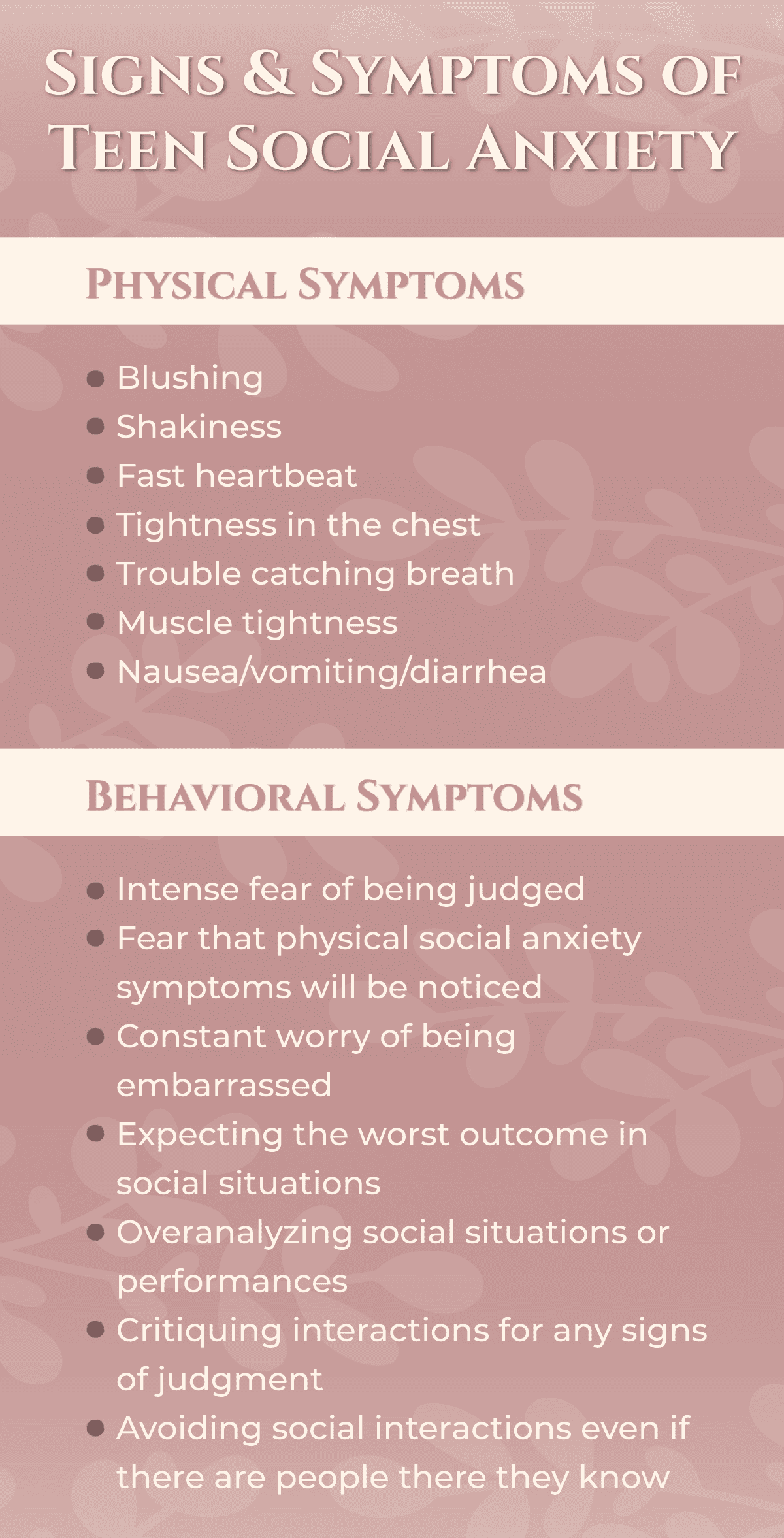
There are many physical symptoms of social anxiety. Some will experience one or two while others may experience all of them at once. Symptoms include:
- Blushing
- Shakiness
- Fast heartbeat
- Tightness in the chest
- Trouble catching breath
- Muscle tightness
- Nausea/vomiting/diarrhea
Behavioral Symptoms of Teen Social Anxiety
Behavioral symptoms may not always appear when the teen expects. Some interactions with friends may not cause as many symptoms, while talking with a stranger causes fear and panic. Some common behavioral symptoms of teen social anxiety include:
- Intense fear of being judged
- Fear that physical social anxiety symptoms will be noticed
- Constant worry of being embarrassed
- Expecting the worst outcome in social situations
- Overanalyzing social situations or performances
- Critiquing interactions for any signs of judgment
- Avoiding social interactions even if there are people there they know
- Drinking alcohol or using substances to handle social situations
What Causes Social Anxiety in Teens?
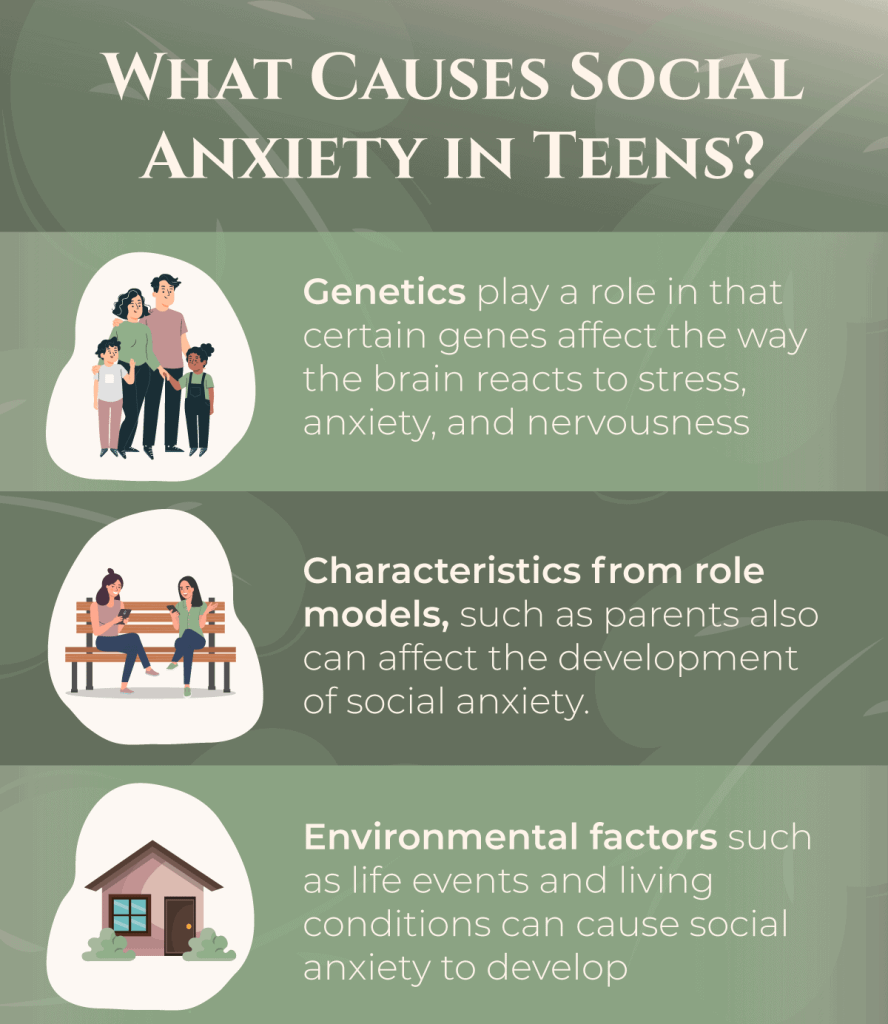
There is no specific cause for teens developing social anxiety, but certain factors can affect being diagnosed. Genetics play a role in that certain genes affect the way the brain reacts to stress, anxiety, and nervousness. Characteristics from role models, such as parents also can affect the development of social anxiety. Being overprotective of a shy child can cause the child to be unable to interpret their feelings and why they happen. Their shyness will build into social anxiety. Lastly, environmental factors such as life events and living conditions can cause social anxiety to develop. Being forced into social situations that are uncomfortable or even dangerous can cause social anxiety to develop or worsen. Experiencing physical, mental, emotional, or sexual abuse can also affect the development of teen social anxiety.
When Is Social Anxiety Diagnosed?
Typically, social anxiety begins in childhood and adolescence. While some adults do seek treatment for social anxiety later into their 20s, the condition is more common in young teens. Some children note a specific event where their social anxiety began, while others report it is more gradual, stemming from shyness.
Only a medical professional such as a doctor or psychiatrist can diagnose social anxiety. It is better to seek help early before severe symptoms develop. Treating social anxiety often involves therapy and relearning behaviors in social situations. The goal is to use coping skills to be able to experience social situations with little to no symptoms.
How to Help Your Teen With Social Anxiety
Parents can help their teen with social anxiety through different methods. Addressing the symptoms early and getting help can improve treatment outcomes. Encourage your teen to keep a journal and track when their symptoms appear, how long they last, and what triggered them. Talk with them about substance use and how drinking alcohol or taking substances may make them feel better now, but in the long run will make their social anxiety worse. Keep the conversation going with them, and let them know they can always come to you to talk about anything. Having a strong support system in place will help your teen while they are getting treatment and the recovery process after.
Treatment for Teen Social Anxiety in Argyle, TX
Seeing your daughter try to manage social anxiety is not what any parent wants to see. Fortunately, there are treatment options to help her understand her anxiety and how to handle it. Social anxiety doesn’t have to be permanent, and a comprehensive social anxiety treatment program can make a difference for her to find her potential. With therapy, medication, and the development of coping skills, your daughter will be able to face her social anxiety and blossom into the girl you always knew she could be.

Seeing your teen girl face social anxiety can be heartbreaking. At Roots Renewal Ranch, we understand how these conditions can shape your daughter’s future negatively. Our program is specific for girls aged 13-17 for this reason, so we can help early and allow them to grow into the people they were meant to be. Call us today at 888-399-0489 to learn more about our program.

