The confusing part about suicidal ideation, or suicidal thoughts, is that often it is not readily obvious to a caregiver that their loved one is struggling with suicidal thoughts.
Parents or caregivers of teens would gladly intervene if it were obvious. Parents are skilled at providing a bandage for a boo-boo or a kiss for an ouchie.
With teens, it becomes more complicated to know how best to help. Teens seem to be little adults at times, but they still need our support and guidance. It’s hard to walk that tightrope perfectly.
Often, teens do not have the skillset, self-awareness, or willingness to use clear, direct language to express their mental health needs. It takes a great deal of maturity and vulnerability to identify and express our needs, especially our mental health needs. Even as adults, this can be a real challenge.
Thoughts are stored away in a teen’s brain unless they make the decision to express their thoughts. Often, teen behaviors can give us important clues into the thoughts they may be having. In this blog post, we will learn more about the outward warning signs or behaviors that could indicate a young person is struggling with suicidal thoughts.
How Common Is Suicide Among Youth and Young Adults in Texas?
According to the 2019 National Survey on Drug Use and Health and the National Survey of Substance Abuse Treatment Services, in Texas, the yearly average percentage of youth ages 12 to 17 with a major depressive episode in the past year increased from 2004 to 2007 and 2016 to 2019.
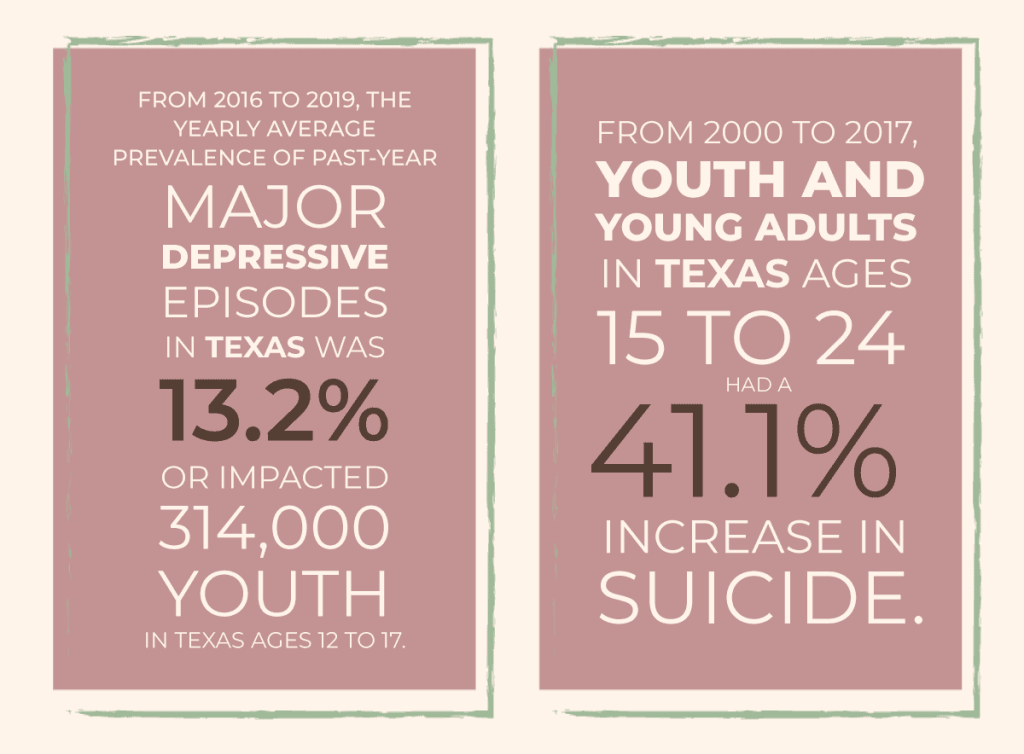
From 2016 to 2019, the yearly average prevalence of past-year major depressive episodes in Texas was 13.2%, or impacted 314,000 youth in Texas ages 12 to 17.
According to a May 2020 Report on Suicide and Suicide Prevention in Texas, from 2000 to 2017, youth and young adults in Texas ages 15 to 24 had a 41.1% increase in suicide. The rates rose from 10.7 deaths per 100,000 population in 2000 to 15.1 deaths per 100,000 population in 2017.
In the study “Suicide Risk in Emerging Adulthood: Associations with Screen Time Over 10 Years,” published in 2021, the researchers found that various patterns of social media, television, and video game use were predictive of suicide risk 10 years later. For social media, early and high levels of social media use that increased over time was linked to higher levels of suicide risk in emerging adulthood.
Start Watching for Possible Signs
As caregivers of young people, we often have to be good observers to learn when mental health and/or addiction treatment may be helpful to our teen.
Your teen girl that is struggling with suicidal thoughts may act out by slamming doors, staying locked away in her room for hours on end, showing a reduced interest in activities she used to love (soccer, swimming, dance, etc.), beginning to or continuing to use alcohol and/or drugs, and spending too much or too little time eating or sleeping.
Your teen girl may turn down invitations to hang out with family and friends. She may seem overly sad, worried, or upset more days than not. Her body language may express things that she can’t or won’t.
A helpful approach to starting a conversation about mental health concerns with a teen can be to use “I” statements. For example, “I have noticed that you seem more sad lately. I may not be the person you want to talk to about what is making you feel sad or ways to feel better. I have found that talking to a therapist can be helpful. A therapist helps people work through hard feelings. Is therapy something we could explore more together?”
In this example, there were many “I” statements. The focus was on what the parent has observed, and the parent is expressing a desire to work together with the teen.
As we know, communicating with teens can be tricky. Let’s continue to discuss the various ways to approach the topic of mental health and suicide with a teen.
Read on to learn more about suicidal ideation, the warning signs that a person may be having suicidal thoughts, helpful tips on how to communicate with teens about important topics like suicide and mental health, how common suicide is among youth and young adults in Texas, and female adolescent mental health and substance use treatment available at Roots Renewal Ranch in Texas.
What Is Suicidal Ideation, or Suicidal Thoughts?
According to the National Library of Medicine, suicidal ideation includes suicidal thoughts or ideas. Suicidal ideation is a broad term used to describe a range of contemplations (thoughts), wishes, and preoccupations (concerns) with death and suicide.
What Are the Warning Signs of Suicidal Ideation?
To gain immediate help for suicidal thoughts or urges to attempt suicide, call 911 or your local emergency number immediately. Calling 911 is best for situations when self-harm is occurring or is about to occur.
Another option is to call a suicide hotline. In the U.S., call the National Suicide Prevention Lifeline at 1-800-273-TALK or 1-800-273-8255 any time of day. Text the Crisis Text Line by texting “TALK” to 741741 to speak or text with a trained counselor who can provide guidance on the most appropriate next steps and resources.
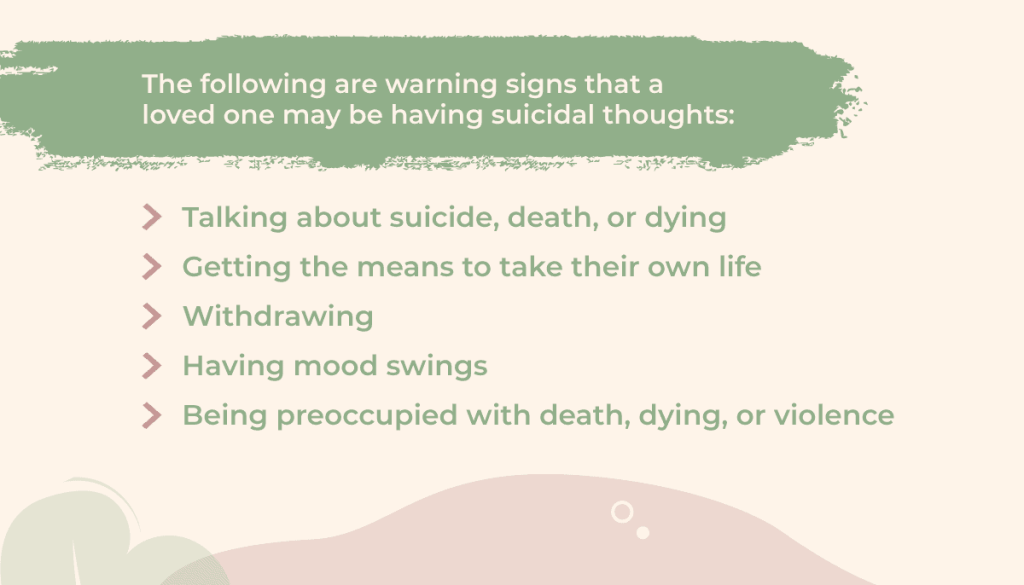
According to the Mayo Clinic, the following are warning signs that a loved one may be having suicidal thoughts:
- Talking about suicide, death, or dying
-
- For example, your teen is making statements such as “I’m going to kill myself,” “I wish I were dead,” or “I wish I hadn’t been born.”
- Getting the means to take their own life, such as buying a gun or stockpiling pills.
- Keep any weapons (guns, hunting equipment, etc.), kitchen knives, medications, alcohol, and toxic cleaning supplies stored away in a locked, secure, and remote location that is inaccessible to children and teens.
- Children and teens that are suicidal may look for common household items like vitamins or Tylenol. Keep anything that could be potentially dangerous if ingested or misused out of reach.
- Withdrawing from social contact and wanting to be left alone
- For teens, this could look like spending excess time alone in their rooms and avoiding social interactions with family and friends.
- Having mood swings, such as being emotionally high one day and deeply discouraged the next
- Being preoccupied with death, dying, or violence
- Feeling trapped or hopeless about a situation
- Increasing use of alcohol or drugs
- For a teen, this could be starting or continuing to use alcohol or drugs.
- Changing their normal routine, including eating or sleeping patterns
- Eating too much or too little
- Sleeping too much or too little
- Doing risky or self-destructive things, such as using drugs or driving recklessly
- Self-destructive behaviors could also include self-harming behaviors such as cutting, burning, or bruising oneself intentionally.
- Giving away belongings or getting affairs in order when there’s no other logical explanation for doing this
- Saying goodbye to people as if they won’t be seen again
- Saying goodbye could be communicated in a variety of formats, such as via letter, text message, phone call, or in person.
- Developing personality changes or being severely anxious or agitated, particularly when having some of the warning signs listed above
How to Talk to Teens About Suicide and Mental Health
According to the American Foundation for Suicide Prevention, parents or other caregivers do not need to feel afraid to have a conversation with their teen about the topic of mental health and suicide. Keep in mind, it is important to have this conversation to check in on their well-being.
A simple first step could be to ask your teen how they’re doing, what’s happening in their world these days, and what their concerns are. Simple open-ended questions could be: “Are you OK?” or “How are you feeling?”
When they respond, listen intently and without judgment. To continue the conversation, ask more open-ended questions, or questions that cannot be answered with a simple yes or no response.
Resist the urge to offer quick fixes or solutions to their challenges, which tends to shut teens down from engaging in further dialogue with you. Validate and support their feelings, even if they differ from your own.
Follow their cues, and say things like, “Tell me more about that,” or “I’d love to understand more about what that’s like for you. When (s)he said that/did that to you, how did that make you feel?”
Female Adolescent Mental Health and Substance Use Treatment at Roots Renewal Ranch in Texas
At Roots Renewal Ranch, we offer suicide prevention services.
We help adolescent girls ages 13 to 17 overcome their mental health and/or substance use problems. Roots Renewal Ranch is a beautiful, multi-acre facility located in Argyle, Texas, in the Dallas-Fort Worth area.
At Roots, we empower young females by providing emotional support and teaching valuable life skills. We use a harm reduction philosophy to encourage improvement over perfection as your teen strives toward achieving their addiction and mental health treatment goals.
We use evidence-based therapy approaches, such as dialectical behavior therapy (DBT), cognitive behavioral therapy (CBT), and eye movement desensitization and reprocessing (EMDR).
We understand that these young women can gain valuable support and encouragement from their family members. Thus, we offer both individual and family therapy to help these young women meet their treatment goals.
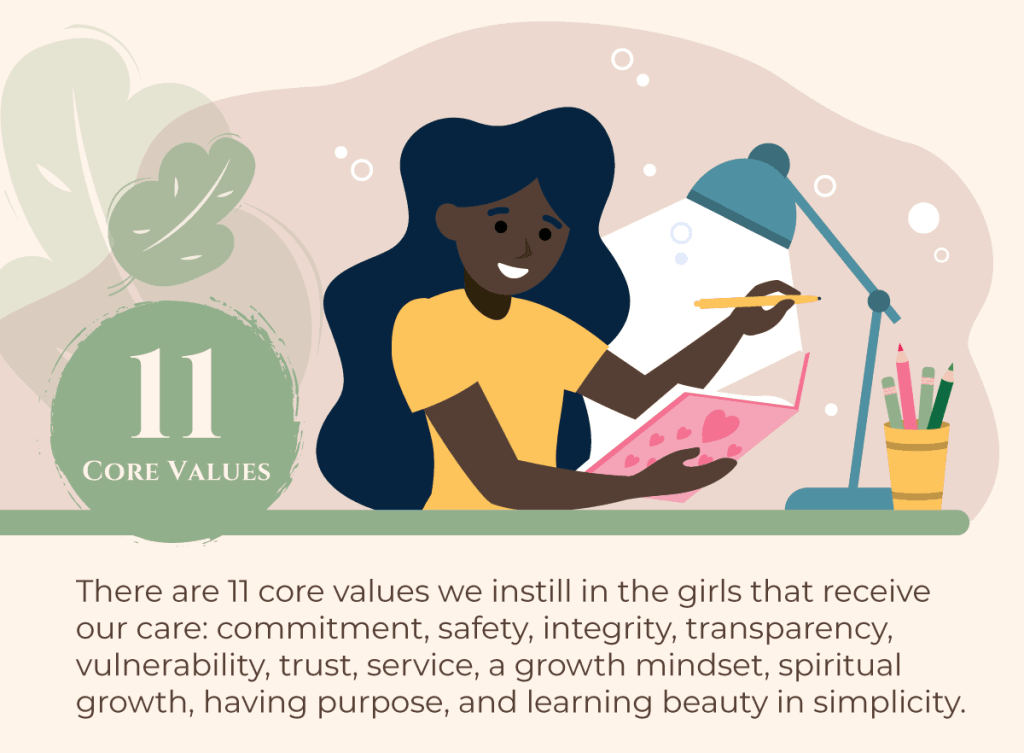
There are 11 core values we instill in the girls that receive our care: commitment, safety, integrity, transparency, vulnerability, trust, service, a growth mindset, spiritual growth, having purpose, and learning the beauty in simplicity.
We teach the value of simplicity through the healing power of animal therapy. As part of your child’s stay at Roots, they will help care for the many animals living on the ranch, which include alpacas, dogs, and chickens.
At Roots, your child will have the opportunity to participate in many healing outdoor activities on the ranch, such as ropes courses, fishing, archery, gardening, hiking/walking, camping, and more.

Contact Roots Renewal Ranch Today
Suicidal ideation is a terrifying topic to have to explore for a concerned parent or caregiver of a teenage girl. It is terrifying, yet necessary, to learn more about the topic of suicide when we have a loved one that is struggling.
By reading this blog, you have made a great first step toward increasing your understanding of suicide and getting more familiar with how to help your loved one get the mental health and/or addiction treatment they both need and deserve.
Please know that you and your loved one are not alone. Roots Renewal Ranch is here to provide supportive, compassionate care and meaningful assistance to your loved one and the entire family unit. Contact us today at (888) 399-0489.