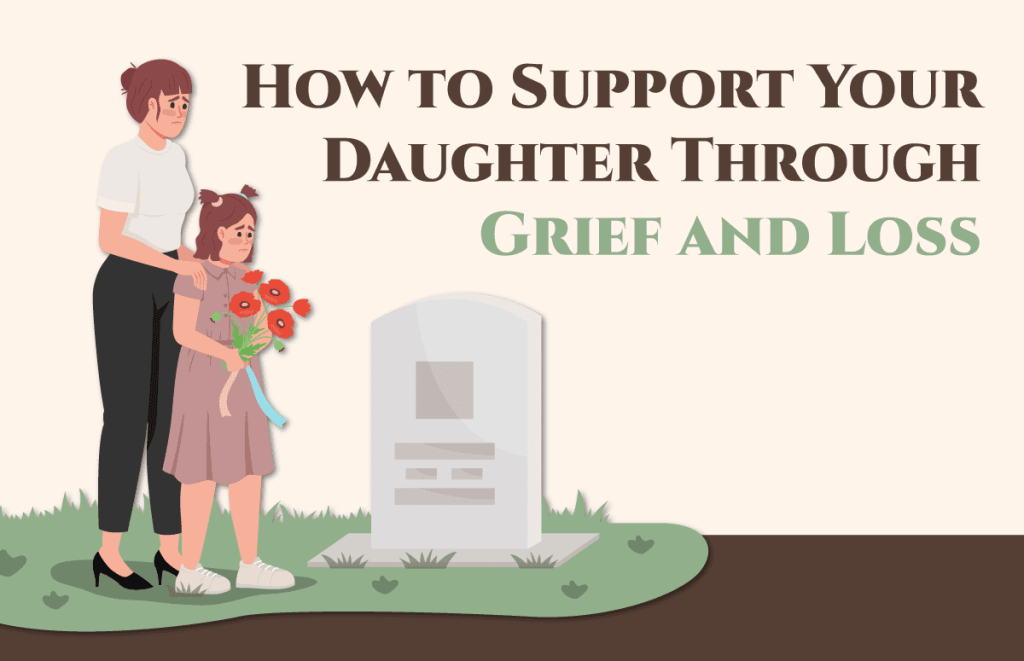
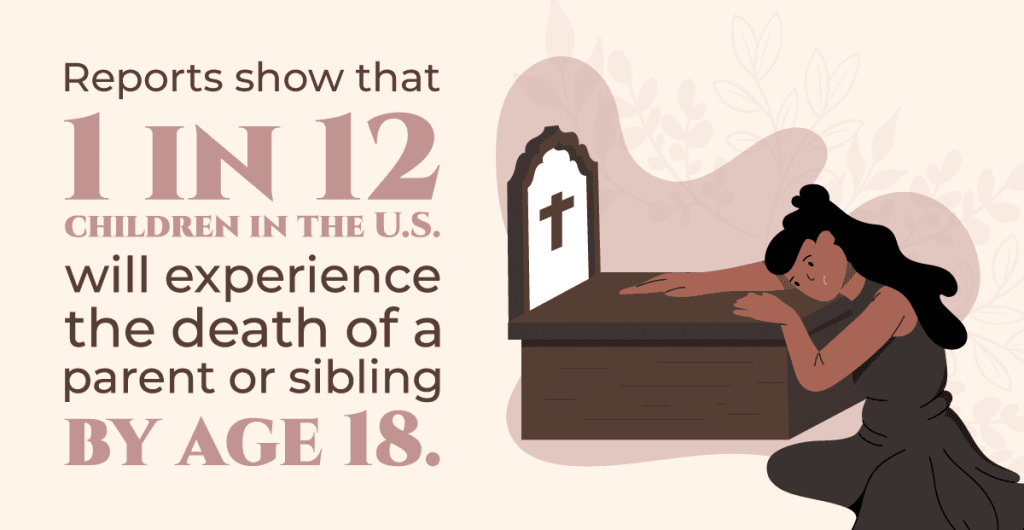
As a parent, it can be hard knowing how to support your teen daughter through grief. Grief and loss are inevitable experiences that we will all face at some point in our lives. As adults, navigating this complex issue is challenging, and it’s even more difficult for adolescents who are still developing. Reports show that 1 in 12 children in the U.S. will experience the death of a parent or sibling by age 18.
Oftentimes, people believe that grief only presents itself when we lose someone to death; however, there are other losses your child may experience. These include loss of a friendship, separation of parents, relocation or changing schools, a life-changing injury or health issue, and loss of a romantic relationship.
Regardless of what the loss is, it’s important to understand that your daughter is in pain and may not know how to ask for help. At Roots Renewal Ranch, we’re all too familiar with the grieving journey. If you’re currently seeking help to support your daughter through grief and loss, we have some practical strategies to assist you.
How Grief and Loss Can Affect Your Teen Daughter
When your daughter is grieving, she may go through a wide range of emotional and physical effects. Emotionally, she may experience mood swings, guilt and regret, denial, confusion, social withdrawal, and difficulty expressing emotions.
Physically, grief can manifest as sleep disturbances, changes in appetite, stomachaches, headaches, and tightness in the chest.
Grief is different for everyone, and your daughter will need your support and understanding more than ever during this time.
Stages of Grief in Teen Girls: What to Watch Out For
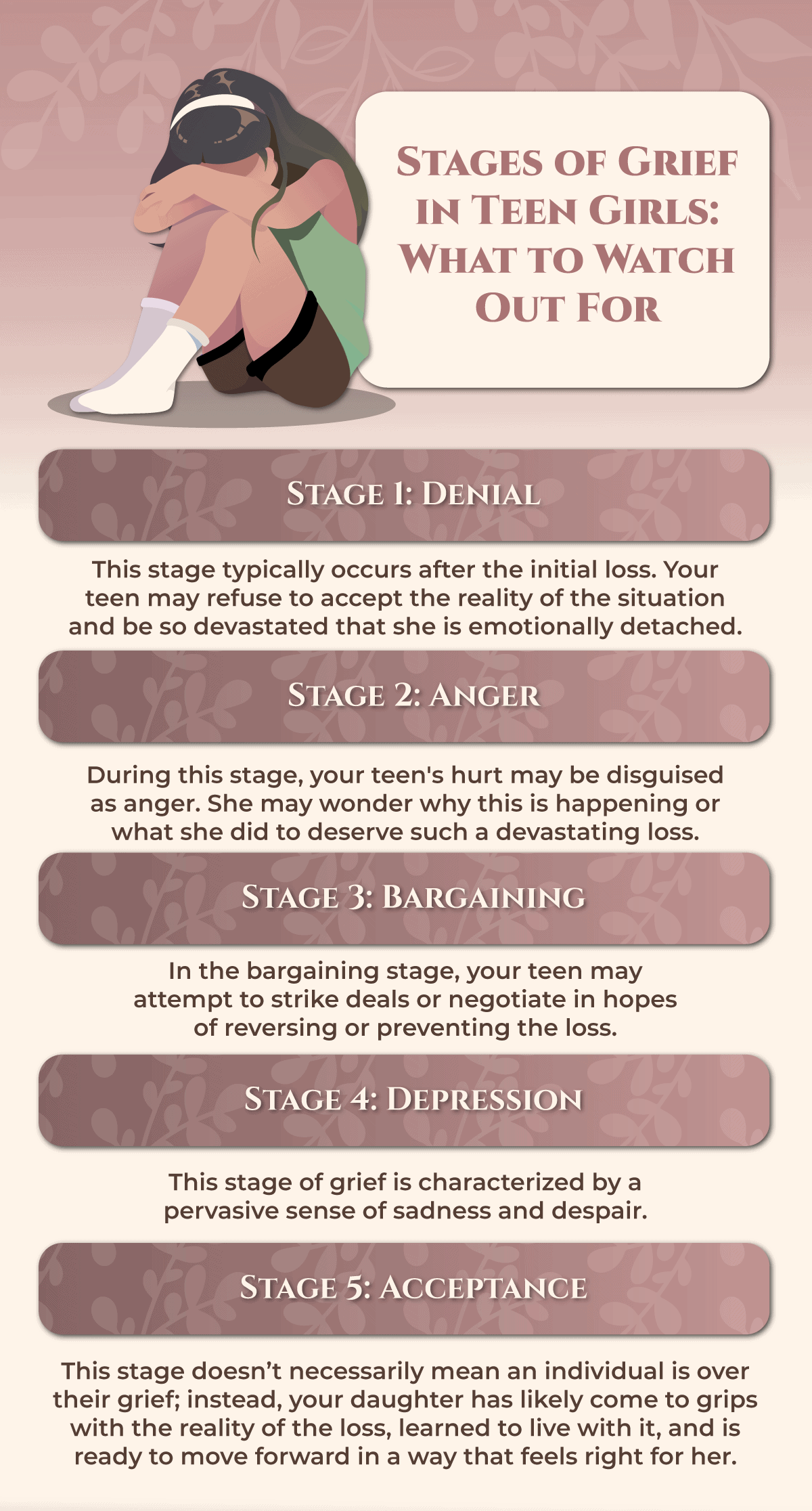
To understand how to best support your daughter, it’s essential to know the stages of grief. These five stages are denial, anger, bargaining, depression, and acceptance. While these stages provide a framework for recognizing the process of grief, they are not linear, and it’s common for teens to experience them in different orders or sometimes, not at all. Grief is a personal experience, and there is no correct or incorrect way to grieve. Let’s explore each stage a little closer.
Stage 1: Denial
This stage typically occurs after the initial loss. Your teen may refuse to accept the reality of the situation and be so devastated that she is emotionally detached. She may also avoid talking about the situation. Denial is often a defense mechanism used to protect her from overwhelming emotions and allow her to adjust to the new reality.
Stage 2: Anger
During this stage, your teen’s hurt may be disguised as anger. She may wonder why this is happening or what she did to deserve such a devastating loss. Your daughter’s anger may be directed towards herself or others. Some aspects of her anger may include blame, resentment, helplessness, outbursts or irritability, and physical symptoms such as headaches.
Stage 3: Bargaining
In the bargaining stage, your teen may attempt to strike deals or negotiate in hopes of reversing or preventing the loss. This often manifests as “if only” or “what if” thoughts because they’re hoping to regain a sense of control over the situation.
Stage 4: Depression
This stage of grief is characterized by a pervasive sense of sadness and despair. During this time, your daughter may feel deep emotional pain and find it difficult to experience joy or engage in any activities she previously enjoyed. She may also withdraw and attempt to isolate herself if the depression is persistent. While everyone’s grieving process is different, depression is common after loss.
Stage 5: Acceptance
The final stage of the grieving process is acceptance. This stage doesn’t necessarily mean an individual is over their grief; instead, your daughter has likely come to grips with the reality of the loss, learned to live with it, and is ready to move forward in a way that feels right for her. You may notice that she is calmer as her intense emotions begin to subside, is reintegrating into her everyday life, and has made peace with the loss.
Navigating Grief Together: Talking to Your Teen About Loss
Grief is overwhelming at any age, but for teens who are already undergoing significant developmental changes, it can be especially difficult. As a parent, it’s crucial that you’re willing to initiate an open conversation with your daughter about loss, as this can provide a sense of safety during such a devastating time. Encourage her to share her thoughts and feelings, regardless of how uncomfortable hearing about them may be. Foster a supportive, non-judgmental environment, and be honest about your own grief, too. This level of vulnerability can make her feel less alone. While conversations like this are challenging, they’re an important step to supporting your daughter through grief.
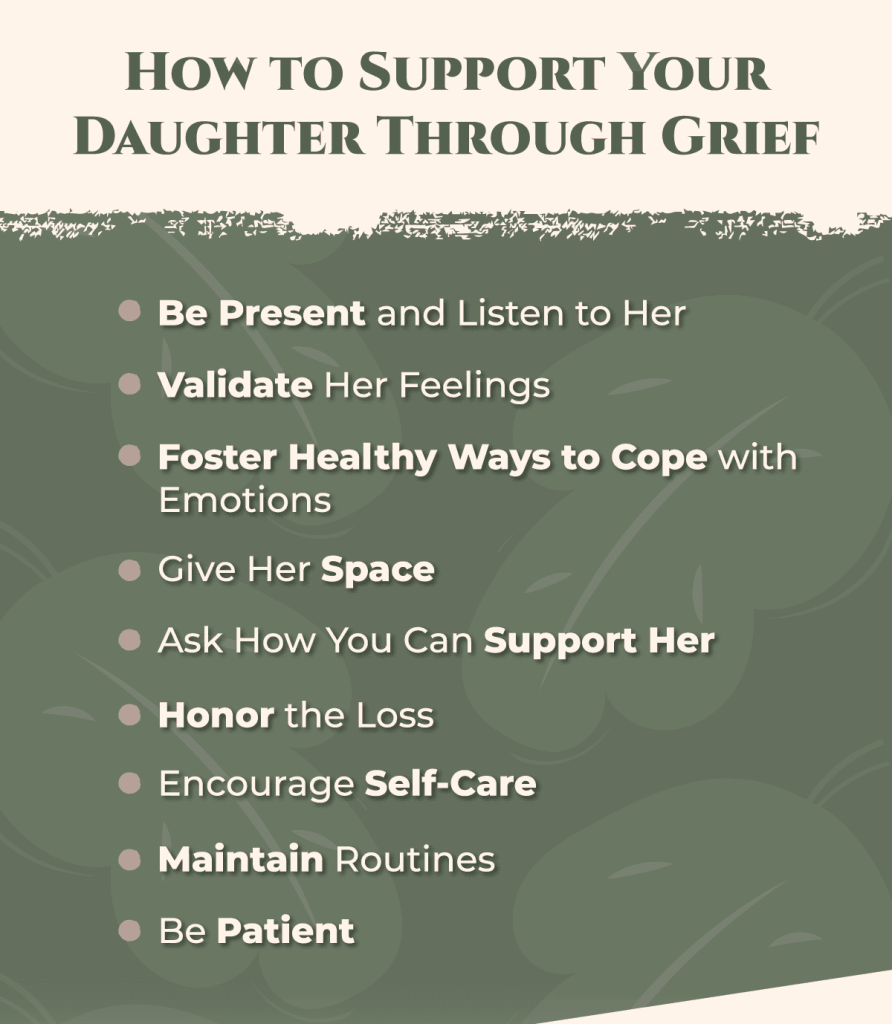
How to Support Your Daughter Through Grief
Knowing how to help a teenage girl navigate loss can be tricky. While she’s in the thick of grief, she may experience various emotional responses. Understanding how to support her is crucial for helping her process her grief and heal.
- Be Present and Listen to Her
The first step to helping your daughter is simply initiating a conversation with her. Talk to her about grief and share your own feelings surrounding the loss. It’s common for parents to want to take away their child’s pain, but understand that nothing will make the pain disappear. The best thing you can do is provide a safe space for your daughter to share her thoughts and feelings and reassure her that you’re there to support her.
- Validate Her Feelings
She may share things with you that are uncomfortable to hear or feelings that differ from yours. It’s imperative that you listen without judgment and acknowledge her feelings. Let her know that it’s okay to feel sad, angry, or fearful.
- Foster Healthy Ways to Cope with Emotions
Finding healthy outlets can help her express her grief. Encourage her to write in a journal, create art such as painting or drawing, engage in physical activity like dancing or yoga, spend time outdoors, or listen to music that resonates with her feelings. Another helpful strategy could be writing a letter to the person she’s grieving. All of these outlets can be deeply healing for a teen experiencing loss.
- Give Her Space
Sometimes, offering support looks like giving her space and freedom to process her emotions. If this is the case for your daughter, avoid pressuring her to talk if she’s not ready to open up. Let her know you’re there when she’s ready to talk.
- Ask How You Can Support Her
Instead of assuming what she needs, it can be helpful to ask how you can show up for her. She may find it difficult to ask for support, and by offering this opportunity, you create room for her to express what she needs.
- Honor the Loss
Whether she’s grieving the loss of a loved one or the end of a relationship, helping her find meaningful ways to remember the person she’s grieving can allow her to feel connected to them while also showing that you support her. Some ways to honor the loss of a loved one include creating a memory box or scrapbook, celebrating milestones, and sharing stories about them.
- Encourage Self-Care
Grieving can take a toll on both an individual’s mental and physical health. Encourage your daughter to engage in healthy self-care practices that support her well-being. These habits may look like practicing mindfulness and meditation, exercising, finding time for hobbies, creating a “grief playlist”, and spending time with friends. However, avoid turning this into an obligation.
- Maintain Routines
While grief may disrupt your daily life, maintaining routines can provide a sense of stability. Encourage your daughter to keep up with routines like school, hobbies, and family time. If she expresses her need for a break, find a way to honor this by allowing her to take a break from certain commitments.
- Be Patient
Keep in mind that there’s no set timeline for grieving and that your daughter may experience ups and downs for a while. Avoid expecting her to simply “move on” or “get over it” and provide her with a space to process her feelings.
When to Seek Help for Your Daughter
While grief is a natural response to loss, if you notice that it has become overwhelming, persistent, or is interfering with her daily life, it’s important to seek help. Warning signs such as isolation, loss of interest in activities, difficulty concentrating, and shifts in eating or sleeping habits may be a sign that she needs additional support. Let her know it’s okay not to be okay and suggest professional support. Adolescent therapy for girls can offer her a safe space to work through her emotions and build positive coping skills.
Find Teen Therapy at Roots Renewal Ranch in Texas
When your daughter experiences a loss, the most important thing to do is show up for her, whether that looks like talking, wrapping her in your arms as she cries, sitting with her while she does nothing, or getting her professional help. While these strategies won’t take away the pain associated with loss, they can make the journey with grief a little lighter. Knowing when to seek help for your daughter is important, and she has a right to be included in the process. Our goal is to help both of you get through this journey together.

If your daughter recently experienced a loss, and it’s taken a toll on her mental health, it may be time to reach out for help. Roots Renewal Ranch is a behavioral health treatment center specifically for girls ages 13-17, specializing in the unique challenges that adolescent girls often face. Your daughter will receive effective treatment to help her manage her grief. As a part of her stay, she will also be involved in animal therapy, where she will help care for the animals living on the ranch. Our therapeutic approach can help your loved one return to a happy and fulfilling life. Call us at (888) 399-0489 to learn more about how we can help.
She is strong, she is loved, and she is enough.

