
The teenage years can feel like a whirlwind of emotions, identity shifts, and even invisible battles. But behind the forced smiles and social media filters, many teens are coping in silence.
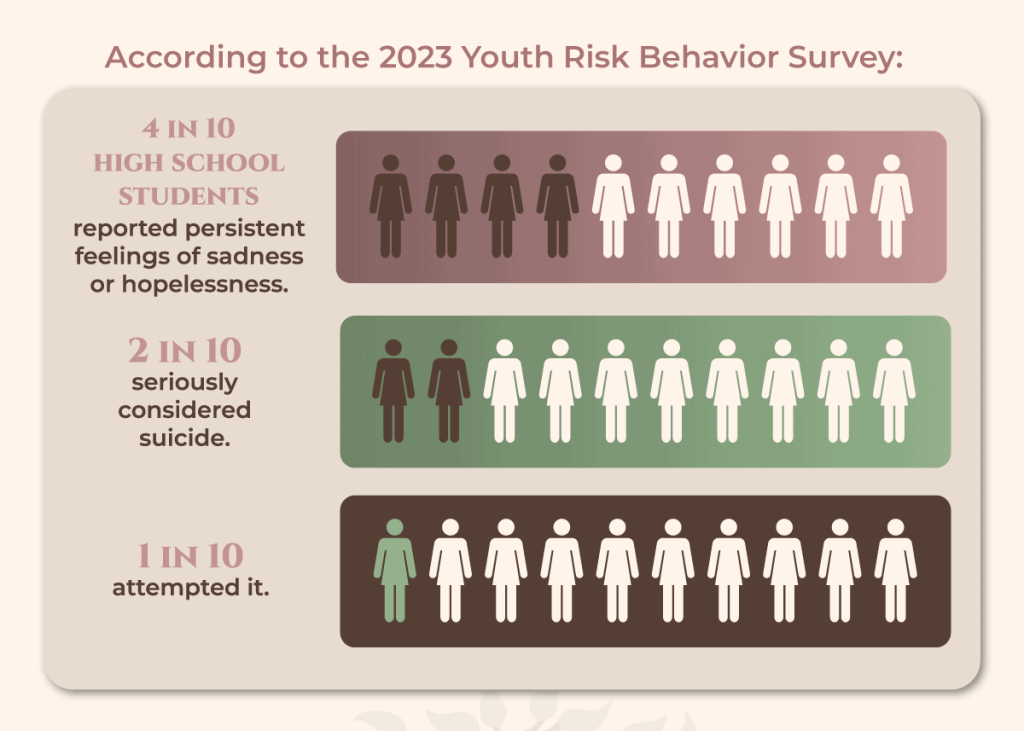
According to the 2023 Youth Risk Behavior Survey, 4 in 10 high school students reported persistent feelings of sadness or hopelessness. 2 in 10 seriously considered suicide, and 1 in 10 attempted it. The numbers are even more staggering for female and LGBTQIA+ teens, who face disproportionate emotional burdens. At Roots Renewal Ranch, we sit with these stories every day. We see the silent heartbreak, the bottled-up thoughts, and the overwhelming pressure to “just be okay.” And while no single tool can heal everything, journaling has emerged as a quiet but powerful ally.
This blog explores how something as simple as putting pen to paper can help your daughter – or really any teen – begin to process their emotions, build emotional resilience, and reconnect with a sense of inner peace.
The Psychology Behind Journaling: What Happens In the Brain
Journaling isn’t just a creative outlet: it’s a form of self-therapy that activates key areas of the brain responsible for emotion, memory, and decision-making. When a teen sits down to write about what’s going on inside their brains, they’re doing far more than just venting. They’re actually reshaping the way their brain is responding to stress.
Research shows that expressive writing can reduce activity in the amygdala, the brain’s alarm system. For teens who often feel emotionally overwhelmed, journaling can dial down the intensity of fear and anxiety. At the same time, writing engages the prefrontal cortex, the part of the brain that is responsible for reasoning, planning, and emotional regulation – areas still under development in adolescents.

In other words, journaling helps bridge the gap between raw emotion and thoughtful reflection.
This process is especially powerful for teen girls, whose emotional centers tend to be more active during adolescence. Writing gives teens space to safely explore what they’re feeling, while they begin to recognize patterns and respond to daily challenges with more clarity and calm than before.
Journaling isn’t just about expression. It’s a gentle and consistent way to help rewire the brain for emotional resilience and self-understanding.
Turning Pages and Taming Emotions: How Journaling Builds Self-Control
Emotions can feel all-consuming. Especially during adolescence, when every high is higher and every low feels like the absolute end of the world. Journaling can offer teens a safe space to slow down, take a step back, and take control of what’s happening inside of them. By putting their emotions into words, teens can begin to create distance between themselves and the feeling. Instead of reacting in the heat of the moment, they learn to pause and reflect – an essential step in building emotional self-regulation.
Over time, this practice strengthens emotional awareness and impulse control, two skills that are still developing in the teenage brain. In fact, studies have shown that regular journaling can help reduce symptoms of anxiety and depression while increasing self-discipline and emotional insight. It’s not about being perfect. It’s about being present, curious, and compassionate with what comes up on the page.
For teens who are dealing daily with mood swings, social stress, or internalized pressure, journaling can become a stabilizing ritual. A way to vent, regroup, and respond to life more calmly.
Looking Inward: How Journaling Helps Teens Make Sense of Their World
For many teens, life feels like a puzzle with no clear picture on the box.
Their thoughts race.
Emotions are regularly shifting.
Friendships change seemingly overnight.
Their identity is in a state of constant flux.
It’s a time of incredible growth…but also deep trial and confusion.
Journaling can offer a grounding practice that helps teens connect the dots between what they’re actually feeling, what they’re experiencing on a daily basis, and even the person they’re becoming.
Writing things down gives teens space to ask themselves important questions, like: Why did that upset me so much? or What do I actually want from this situation? These questions, when explored on paper, can help them gain clarity and insight that they might not reach in the heat of the moment. What usually starts as a simple journal entry about a fight with a friend or an incredibly tough day at school can quickly become a powerful exploration of their own self-worth, values, and boundaries.
This kind of reflection strengthens self-awareness, a key part of emotional intelligence and personal growth. When teens are able to reflect on their past experiences without judgment, they begin to notice patterns, identify specific triggers, and develop a stronger sense of their own identity. They learn to see their thoughts not as facts, but instead as small pieces of a much larger picture. That insight becomes the first step in making healthier choices moving forward.
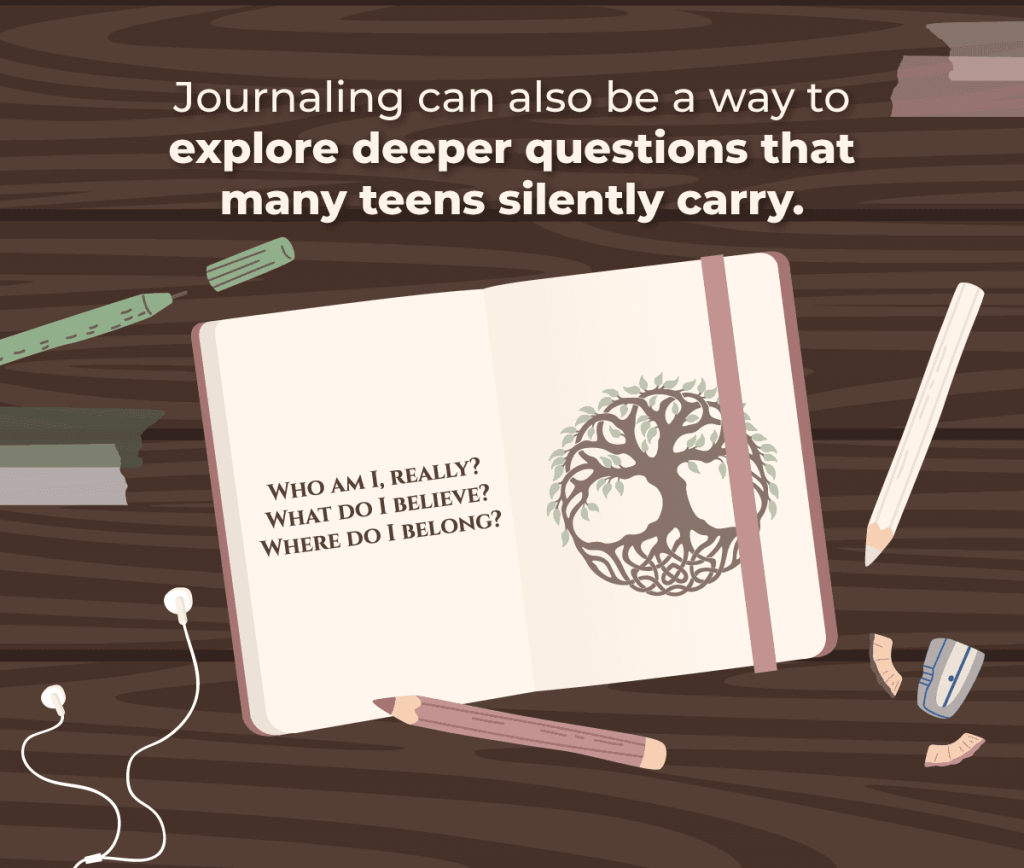
Journaling can also be a way to explore deeper questions that many teens silently carry.
Who am I, really?
What do I believe?
Where do I belong?
These questions can be hard to voice out loud, but the page listens without interrupting, without expectations, and without pressure. And when teens return to their past entries weeks or months later, they often realize just how far they’ve come from that particular moment. That’s one of the hidden gifts of journaling. It not only helps teens understand themselves in the moment, but it also helps them see their growth over time.
In a world full of noise, journaling is a rare quiet space where teens can be honest, raw, and real – and in that honesty, they can begin to truly know themselves.
Encouraging Your Teen to Start a Journaling Habit That Heals
Starting a journaling practice isn’t about forcing a habit. It’s about creating an environment where your teen can feel comfortable deeply exploring their thoughts and feelings. For teens who are new to journaling, the idea of sitting down to write every day could very much feel overwhelming at first. The key is to make it feel accessible, manageable, and even enjoyable.
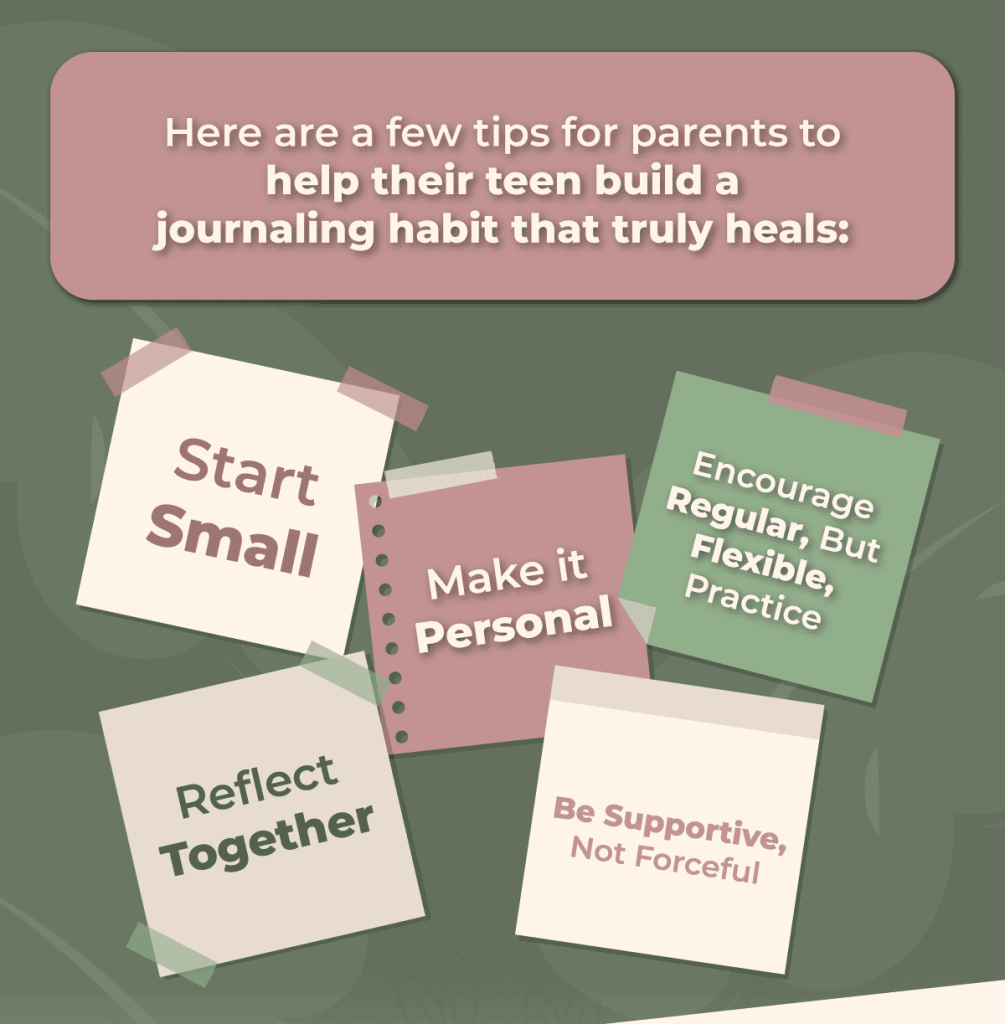
Here are a few tips for parents to help their teen build a journaling habit that truly heals:
1. Start Small: For a teen just beginning, a full-page entry can feel like a lot. Instead, encourage them to start with just a few sentences, or even just a bulleted list. Ask them to reflect on one or two things from their day – whether it’s something they felt proud of, something that made them laugh, or something that frustrated them. The goal is to lower the barrier to entry so journaling feels less daunting.
2. Make it Personal: The journal is a private space. It’s a place where their thoughts and feelings can flow without judgment or critique. Allow them to personalize the journal with stickers, quotes, drawings, or anything else that brings them joy. Some teens may prefer digital journaling over a notebook, and apps like Day One or Penzu can offer the same therapeutic benefits with the added comfort of being on their phone or tablet.
3. Encourage Regular, But Flexible, Practice: Journaling doesn’t need to be a daily requirement. Some teens may find writing every day to be helpful, while others may prefer to journal only when they’re feeling particularly overwhelmed about a specific issue. What’s important is that they understand the journal is a tool that is available to them whenever they need it. Consistency is key, but flexibility is what makes journaling sustainable.
4. Reflect Together: When your teen is ready, offer to sit down together and reflect on their journaling practice. Ask questions like, “What did you learn about yourself this week?” or “Is there anything you’d like to explore more deeply in your writing?” This can help normalize the process and be a reminder to your teen that journaling is not just a task but a lifelong tool for growth.
5. Be Supportive, Not Forceful: It’s essential to remember to be a supportive presence to them without pressuring your teen to write. Journaling is most effective and empowering when it feels voluntary and in their control. Remind them that it’s okay if some days they don’t feel like writing. Just having the journal there as a safe outlet can be enough.
By encouraging your teen to journal regularly, you’re helping them build emotional resilience and self-awareness. Over time, the journal will become a powerful tool they can rely on – whether it’s to vent, reflect, or simply find peace in the chaos of daily life.
Other Ways to Support Your Teen’s Mental Health – Beyond the Journal
While journaling can be a deeply healing practice, it’s just one piece of the puzzle when it comes to supporting your teen’s mental health. A balanced, holistic approach is key – one that includes emotional support, professional care, and nurturing positive habits.
Here are a few more ways that you can support your teen’s mental health, alongside encouraging their journaling practice:
- Foster Open Communication: For many teens, expressing their emotions can feel like a major challenge. Encouraging open and judgment-free conversations can help them feel heard and understood at home. It’s not always about having an immediate solution to their problems – sometimes, simply listening to them can make all the difference. Let them know it’s okay to feel whatever it is that they feel, and remind them that their emotions are valid.
- Encourage Healthy Coping Mechanisms: Journaling is an excellent tool for emotional regulation, but it’s important to help your teen develop a full range of healthy coping mechanisms. Encouraging activities like exercise, meditation, creative arts, or spending time with friends can help accomplish this. These outlets provide a balance to their mental health routine, creating a variety of ways for them to cope with stress and overwhelming feelings.
- Seek Professional Support When Needed: If your teen is dealing with significant emotional distress or mental health issues, it’s important to reach out for professional support. Whether it’s therapy, counseling, or a full mental health services program, there’s no shame in seeking help. A professional can guide your teen through the difficult emotions that they are facing, offering strategies that go beyond journaling. As parents, it’s crucial that you stay connected with your teen’s treatment team, ensuring that journaling complements other therapeutic approaches.
- Set a Positive Example: Teens are incredibly observant beings, and often model the behaviors they see in the adults around them. Show your teen that mental health is just as important as physical health by taking care of your own emotional well-being. Whether that’s through your own journaling practice, therapy, mindfulness, or self-care routines, demonstrate how managing emotions and asking for help is a healthy and necessary part of life.
- Create a Supportive Environment: A teen’s environment plays a huge role in their mental health, which is why creating a home atmosphere that values emotional health, safety, and stability is crucial. Be sure to encourage healthy boundaries, limit stressors, and offer a safe space for your teen to retreat when they need to unwind. A calm, supportive environment fosters mental well-being and gives your teen the foundation they need to thrive.

Combining a nurturing support system with journaling can be a game-changer for teens who are navigating the complexities of adolescence. By creating opportunities for self-expression, emotional awareness, and healing, you’re empowering your teen to take control of their mental health and build overall resilience for the future.
One Page at a Time: Helping Your Teen Heal Through Journaling
Adolescence can feel overwhelming for teens and for the people who love them. The highs are absolutely thrilling, but the lows can feel nearly impossible to navigate alone. In the midst of all the noise, journaling can offer something simple and yet powerful. It’s a quiet space to feel, reflect, and grow.
For teens, the blank page is more than just a place to vent – it’s a tool for their self-discovery, a safe container for all of their big emotions, and a stepping stone toward mental healing. And for parents of teens, it’s a reminder that even small and private practices can have a huge impact on your child’s mental well-being.
Healing doesn’t always come in grand gestures. Sometimes, it comes in ink-stained pages. In late-night reflections. And in slowly learning to name what hurts and what helps.
So, whether your teen is scribbling in a notebook, typing on their phone, or doodling through a tough day, know this: they’re doing the hard work of understanding themselves. And that’s where true transformation begins – one page at a time.

Ready to Support Your Teen’s Healing Journey Beyond the Page? Finding Mental Health Treatment in Texas
If journaling has opened a door for your child to better understand their emotions, teen therapy can help them go even deeper. At Roots Renewal Ranch, we offer a compassionate, inclusive space where teen girls can explore what’s really going on beneath the surface and find the tools they need to thrive. Our trauma-informed care, small-group setting, and focus on creative expression help each teen feel seen, heard, and truly understood. Here, healing isn’t one-size-fits-all – it’s personal, empowering, and rooted in connection.

Give us a call at 888-399-0489 to learn more about teen therapy and how it can support your daughter’s emotional growth, confidence, and connection.
“She is strong, she is loved, and she is enough.”

