If you’re active on social media, you’ve probably seen those posts that seem like a cry for help. You know the ones – someone posts a status update that says something like “the world would be better off without me” or “I’m about to have a mental breakdown” or “I just can’t take it anymore”? Seeing these posts might make you inwardly cringe because they seem desperate, sad, or attention-seeking.
These posts are known as sadfishing, and most of the time, they can damage a young woman’s self-esteem.
Sadfishing can happen with adults, but you’ll see it more in teens and tweens whose lives are intermingled with social media. They think that posting about what’s hurting or bothering them will attract attention from their friends. They post intending to receive sympathetic and genuine reactions. If they’re feeling lonely, they post in hopes that others will make them feel better. If they’re angry, they post in hopes of feeling validated. If they’re feeling suicidal, they hope others will respond with genuine worry. Unfortunately, this isn’t the kind of attention sadfishing tends to attract.
At Roots Renewal Ranch, we take sadfishing seriously when it comes to your daughters. Posting on social media about difficult, big emotions usually makes things worse. This article will discuss what sadfishing posts mean, why they’re risky, and what you can do to help
Why Do Teens Turn to Sadfishing?
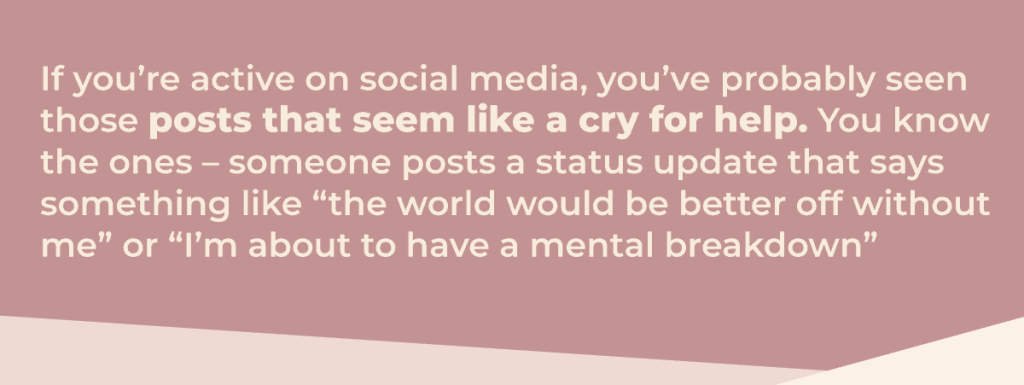
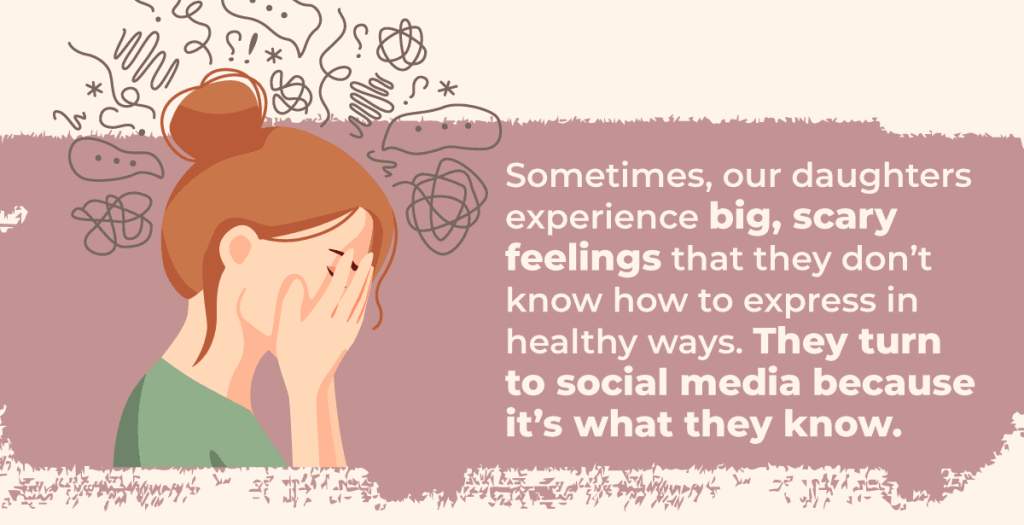
First, we need to acknowledge the teen mental health crisis in our world today. 314,000 Texas tweens and teens have depression right now. This isn’t a small number. Depression isn’t easy for adults to navigate, let alone young girls. Sometimes, our daughters experience big, scary feelings that they don’t know how to express in healthy ways. They turn to social media because it’s what they know. It’s where their friends are, where their interests lie, and where they feel connected to their age group. Your daughter might turn to social media before she turns to you, and that’s normal.
Depression can and will affect what your daughter is posting online. Sometimes, she’ll turn to sadfishing because she doesn’t think any adults will understand how she’s feeling. She could also be sadfishing because she’s not getting the attention from her peers that she wants. Maybe she’s only getting negative attention at school when she really wants her friends to reach out and assure her they’re there for her. She could also be testing loyalties, trying to find out who her “real” friends are. Adults may cringe at sadfishing posts, but for most teens, this is a typical form of communication. They’re asserting their independence and testing out their individuality. What’s more is that their friends are doing it, too.
Our girls don’t know the risks associated with sadfishing because no one ever talks about it. The term was only coined three years ago in 2019 when a celebrity, Kendall Jenner, started publicly posting about her struggles with acne. It was later discovered that she had partnered with a skincare company, Proactive. She had been posting simply to attract attention so she could eventually sell skincare products. A journalist then referred to Kendall’s behavior as “sadfishing”, and the rest is history.
Now that we have a name for it, we can begin addressing the problems it’s causing.
Why is Sadfishing so Risky?
Any time you create emotional posts online, you need to assume it’s going to extend beyond your group of friends. All it takes is an accidental click of a privacy button and your private thoughts are no longer private anymore. Have you ever posted something on Facebook only to later realize you posted it to “public” instead of “just friends”? It’s one of the easiest things to do. It’s a scroll-down menu that you can click right before posting. People accidentally click it all the time. If your daughter is posting about her personal, vulnerable thoughts on her social media feeds, chances are it will eventually be seen by others outside of her circle. Why is this so dangerous?
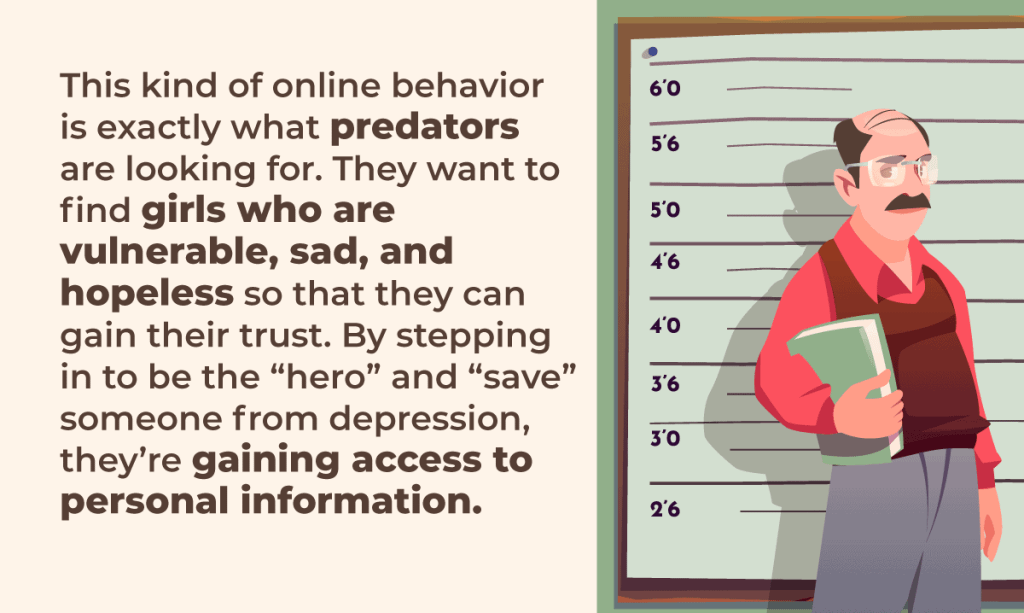
This kind of online behavior is exactly what predators are looking for. They want to find girls who are vulnerable, sad, and hopeless so that they can gain their trust. By stepping in to be the “hero” and “save” someone from depression, they’re gaining access to personal information. When your daughter posts about her hopelessness on social media, it opens doors for people with less-than-honorable intentions. Predators can use this kind of behavior to obtain photos, phone numbers, and even the home addresses of their victims.
The threat of predators isn’t even the most common sadfishing threat. People who post about depression, anxiety, or suicidality are also vulnerable to bullying. Think back to when you were 16 years old. If everyone in school got copies of your journal, would they all be kind? Probably not.
A sadfishing post is the equivalent of an online journal entry. Your daughter is posting her deepest, darkest thoughts for everyone in school to see. Not everyone is as kind as she’d expect. This is something she might not understand. After all, she might respond kindly to others who post about their difficulties. She isn’t quite old enough to understand that not everyone is like her. Not everyone will be compassionate.
Children are like adults in that not all of them are equipped with empathy. Some teens see sadfishing posts and use them as an opportunity to ridicule, harass, and question their peers. If your daughter is battling depression, anxiety, or even just the normal ebbs and flows of puberty, this kind of feedback can be devastating to her self-esteem. She needs safe places to discuss what’s bothering her.
Your daughter needs to be able to express her fears and worries in a judgment-free zone. Social media isn’t the place for that.
These kinds of negative peer reactions can also cause your daughter to think no one cares about her. If someone accuses her of sadfishing, she may feel that no one is taking her pain seriously. Her pain is valid, real, and important. We know that, but she’ll question it if others question it. Especially at her age.
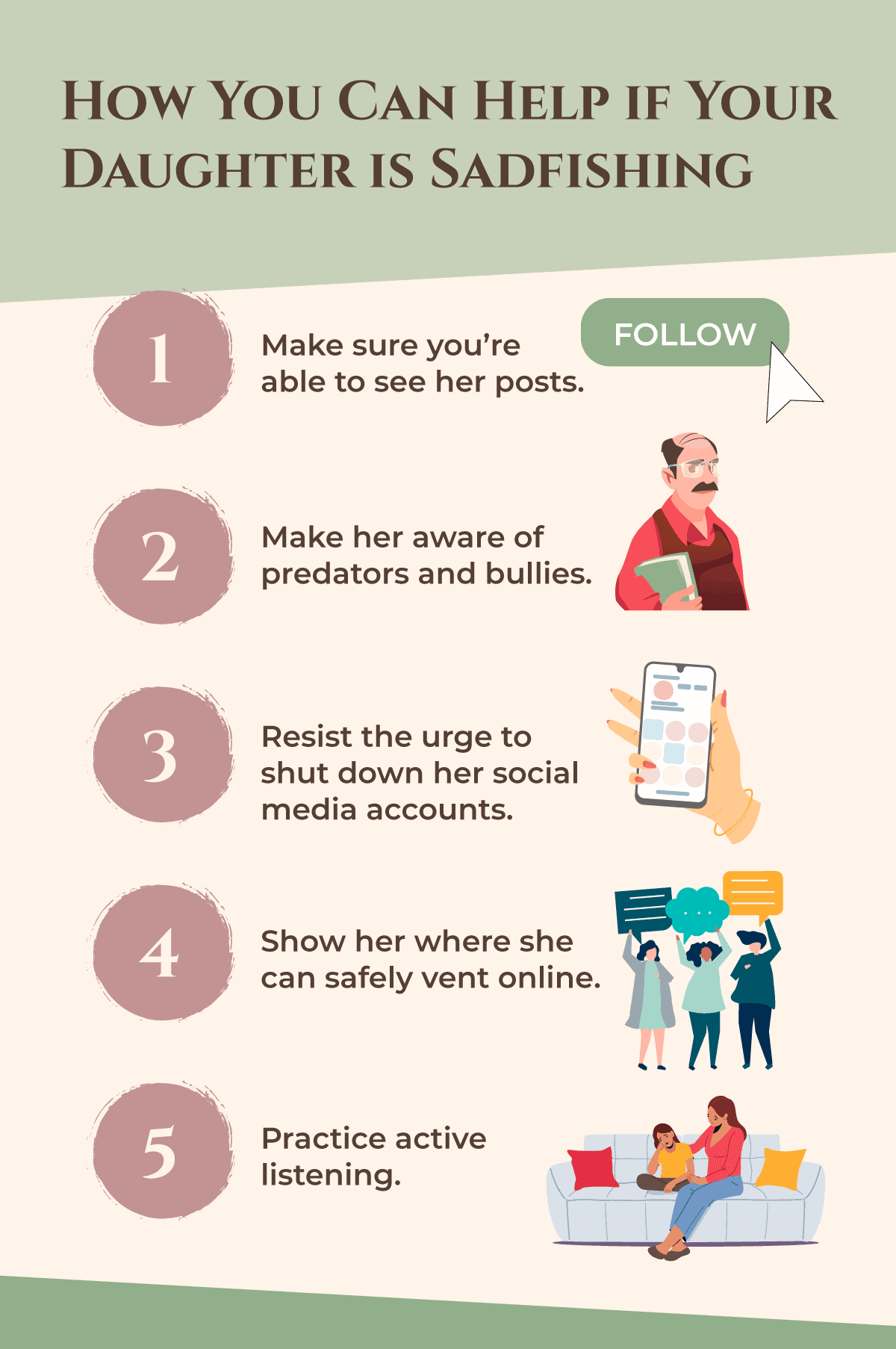
How You Can Help if Your Daughter is Sadfishing
Sometimes, you can do all of the “right” things and your daughter will still turn to the internet. She’s at the age where what her friends think and say is of the utmost importance. A certain amount of gravitation towards her peers online is to be expected. That being said, there are ways you can educate your daughters about the dangers of sadfishing.
Think of knowledge like a call to arms – the information you provide can be your child’s weapon of defense. She may not always understand what you’re telling her, but the goal is for your warnings to sink in and make her think twice. Here are some ways you can help your daughter with sadfishing:
- Make sure you’re able to see her posts. The number one thing you should be doing is following your child on all social media platforms. You need to be able to see what she’s posting. It’s also important to remember that if she wanted to, she could make her posts public to everyone but you. Facebook has this option. If she wanted to, your daughter could exclude you from any or all of her posts. Some of her posts could lean towards sadfishing, so you must be able to see those. Explain to her that you’re not using your access to judge her but merely to make sure she’s being safe. You want to follow her on social media because you genuinely care about her. Explain that you expect that she will not exclude you from her posts. In return, you won’t violate her trust by using her social media against her. You’ll also keep your activity low on her profile and won’t interfere with her friendships.
- Make her aware of predators and bullies. Anyone who uses the internet needs to be aware of online etiquette. If your daughter thinks you’re being “overdramatic” about the threat of predators (which she might), explain that as a woman, she needs to protect herself. You won’t be there to protect her forever. Show her news stories about similar things that have happened to girls who sadfish. Tell her that you just want to make sure she knows how to stay safe. She doesn’t need to be told she’s doing something wrong. She just needs a gentle reminder that you’re there looking out for her.
- Resist the urge to shut down her social media accounts. This is a big one because, as mothers, we will do absolutely anything to protect our children. If they’re in danger of being bullied or preyed upon via social media, the first thought is to take it away. But if you take away her access to her friends outside of school, it will only cause resentment. She might find another way to access her social media accounts, which will only create distance between the two of you. Rather than taking it away, try explaining why you care about it so much.
- Show her where she can safely vent online. Believe it or not, there are safe places for girls to vent online. They can join private support groups via apps or social media, they can private message friends or other family members, and they can even create confidential online journals. Remind your daughter that when she vents, it should be in a supportive environment full of people who understand what she’s going through.
- Practice active listening. It goes against our very nature to listen to our daughters without offering advice. We want them to avoid making the same mistakes we made. We want to tell them how they can fix everything. We don’t want to see them in pain. The problem is that our daughters will stop coming to us if all we do is offer advice. Our advice might be well-intentioned, experienced, and valuable. But if they can’t come to us to vent, they’ll look elsewhere. They need validation that their problems are real and their struggles are difficult. We can provide that by simply listening and empathizing. Yes, our daughters will always need our advice and encouragement. There’s always a time and a place, though. When they’re hurting, it’s best to just listen. Wait for her to ask for your advice. Remind her that you’re her safe place – she can come to you without the fear of being judged or burdening you. After all, you’ve been through all of this before. You know what it feels like to struggle. Show her that.
At Roots Renewal Ranch, we remember what it was like to be a teenage girl. We know the challenges it can present and how much you want to help. Our expert staff is standing by to help with evidence-based techniques and compassion. If you’re interested in mental health treatment for your daughter, please call us at (888) 399-0489.