Some wounds don’t show up on the surface. For many teenage girls, trauma lives quietly in the background: shaping how they see the world, how they connect with others, and how safe they feel in their own skin.
Maybe your daughter has become distant or angry. Maybe she startles easily, doesn’t sleep, or seems overwhelmed by things that never used to bother her. Sometimes, these aren’t just signs of “acting out” and are instead effects of adolescent trauma, leaving her nervous system stuck in survival mode.
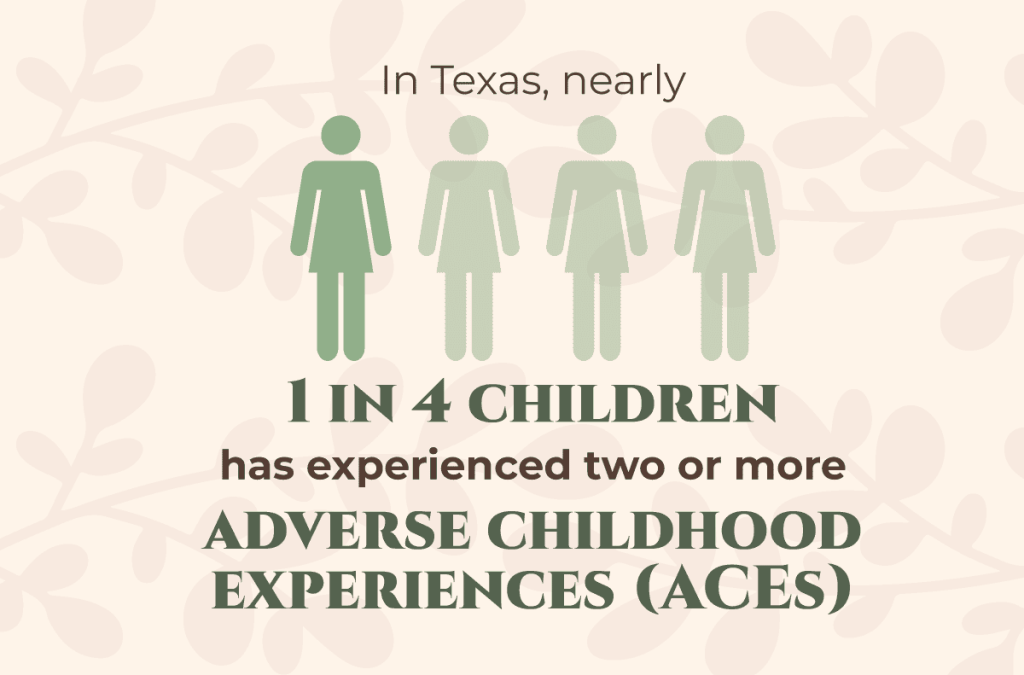
In Texas, nearly 1 in 4 children has experienced two or more adverse childhood experiences (ACEs) – events like abuse, neglect, or witnessing violence. These experiences are strongly linked to mental health challenges later in life, including depression, substance use, and PTSD. And in the Dallas–Fort Worth area, school counselors, therapists, and pediatricians are reporting more trauma-related symptoms in teens than ever before.
At Roots Renewal Ranch, we know that adolescent trauma looks different for every girl, but we also know what healing can look like. In this blog, we’ll break down how trauma affects the teenage brain, how it shows up in daily life, and how the right support can help your daughter feel strong, safe, and whole again.
The Profound Impact of Adolescent Trauma on Teens
Teenage years are already full of physical, emotional, and social changes. But when trauma is layered on top of that natural turbulence, it can disrupt nearly every aspect of a young person’s development. Trauma doesn’t just affect how a teen feels in the moment. It can alter how she experiences the world, how she sees herself, and how she builds relationships moving forward.
Many parents are surprised to learn that adolescent trauma isn’t always the result of one catastrophic event. It can come from chronic emotional neglect, bullying, witnessing domestic violence, or even going through a difficult medical experience. What matters most is how the brain and body interpret the threat, and how long the nervous system stays stuck in that survival state.
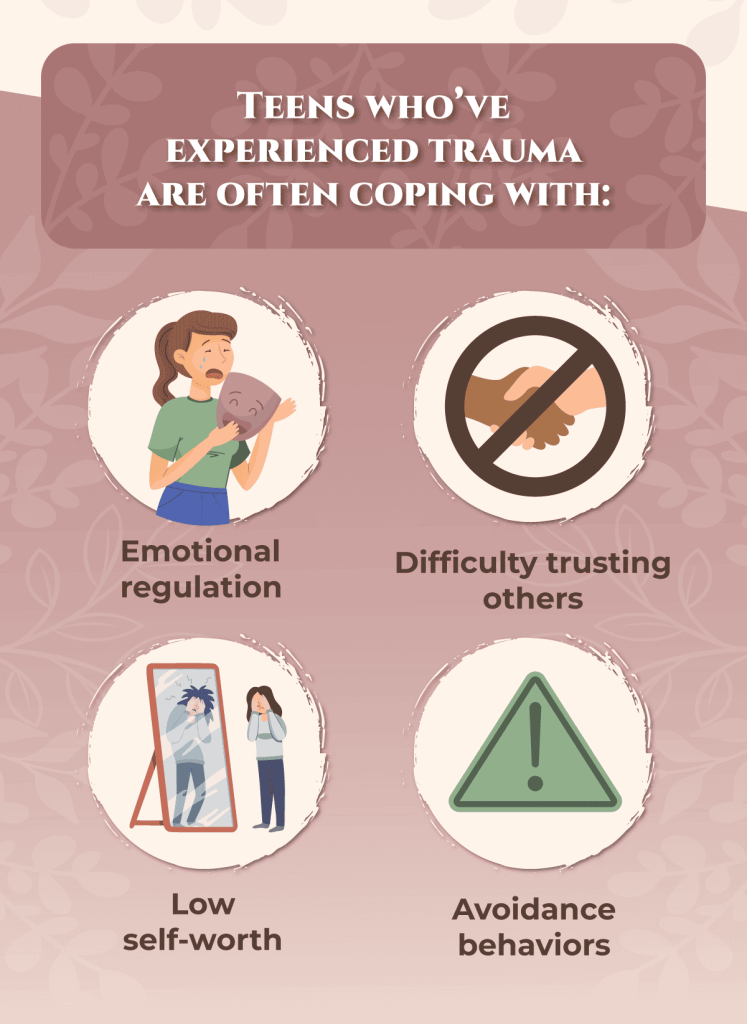
Teens who’ve experienced trauma are often coping with:
- Emotional regulation – Outbursts, mood swings, or numbness may be ways of coping with overwhelming feelings that haven’t found a safe place to land.
- Difficulty trusting others – Even loving relationships can feel unsafe when past experiences have taught her that closeness equals pain.
- Low self-worth – Trauma has a way of planting false beliefs: I’m broken. I deserved it. I’m too much. I’m not enough.
- Avoidance behaviors – School refusal, withdrawing from friends, or using substances can all be attempts to escape feelings that feel too big to handle.
What’s most heartbreaking is that many of these responses are misunderstood. Instead of receiving support, teens are often labeled as defiant, dramatic, or manipulative. But at Roots Renewal Ranch, we see the truth underneath those behaviors. We know they’re often signs of pain, not personality.
When adolescent trauma goes unaddressed, it doesn’t just fade away. It follows teens into adulthood, shaping the way they form relationships, work, and even parent. That’s why early, trauma-informed intervention is so important, and why recognizing these signs can be the first step in giving your daughter the future she deserves.
Impact on Daily Functioning
For teens carrying unresolved trauma, the effects don’t just show up in big, dramatic ways. Sometimes they stealthily seep into everyday life. The classroom, the dinner table, a text from a friend… any moment can become overwhelming when the brain is constantly on alert.
Many parents will begin to notice that something is off, even if they can’t quite name exactly what is wrong. Maybe her grades have slipped, or she’s suddenly refusing to go to school. She might sleep too much, or maybe not at all. Maybe she’s always on edge, snapping at siblings or shutting down completely when asked a simple question. These aren’t just behavioral issues. They’re survival responses. Ways of managing an inner world that feels chaotic or unsafe.
Trauma can disrupt daily functioning in areas like:
- Academic performance: Trouble concentrating, difficulty retaining information, and a tendency to “zone out” in class are all common.
- Sleep and appetite: Nightmares, insomnia, or changes in eating patterns are the body’s way of processing – or avoiding – distress.
- Relationships: A teen may isolate herself from family and friends, or alternate between clinging and pushing others away.
- Self-care: Hygiene, personal safety, and emotional regulation can all take a backseat when she’s simply trying to survive the day.
These daily disruptions are often invisible to others, but they’re deeply felt by teens. And when they’re met with frustration or punishment instead of understanding, it can reinforce the very sense of powerlessness that trauma is creating.
At Roots Renewal Ranch, we don’t expect teens to “just get over it” or push through. We meet them where they are, gently helping them rebuild their daily routines with structure, compassion, and trauma-informed tools that actually work.
Effects of Adolescent Trauma on Brain Development
The teenage brain is still under construction. It’s a time of massive growth, pruning, and reorganization. A window of vulnerability, but also one of incredible opportunity. When trauma enters the picture, it can disrupt these developmental processes in ways that ripple into adulthood.
One of the most impacted areas is the amygdala, the brain’s fear center. In teens who’ve experienced trauma, this region can become hyperactive, constantly scanning for danger even when none is present. The prefrontal cortex, responsible for decision-making, impulse control, and emotion regulation, often develops more slowly under chronic stress. And the hippocampus, which helps with memory and learning, can actually shrink in size, making it harder to focus or retain new information.
This isn’t about a weakness. It’s simple biology. A traumatized brain is doing its best to protect the person it belongs to, even if that means misinterpreting a slammed door or raised voice as a threat. For teens, whose identities and coping skills are still forming, this rewiring can lead to lasting troubles with anxiety, depression, emotional dysregulation, and dissociation.
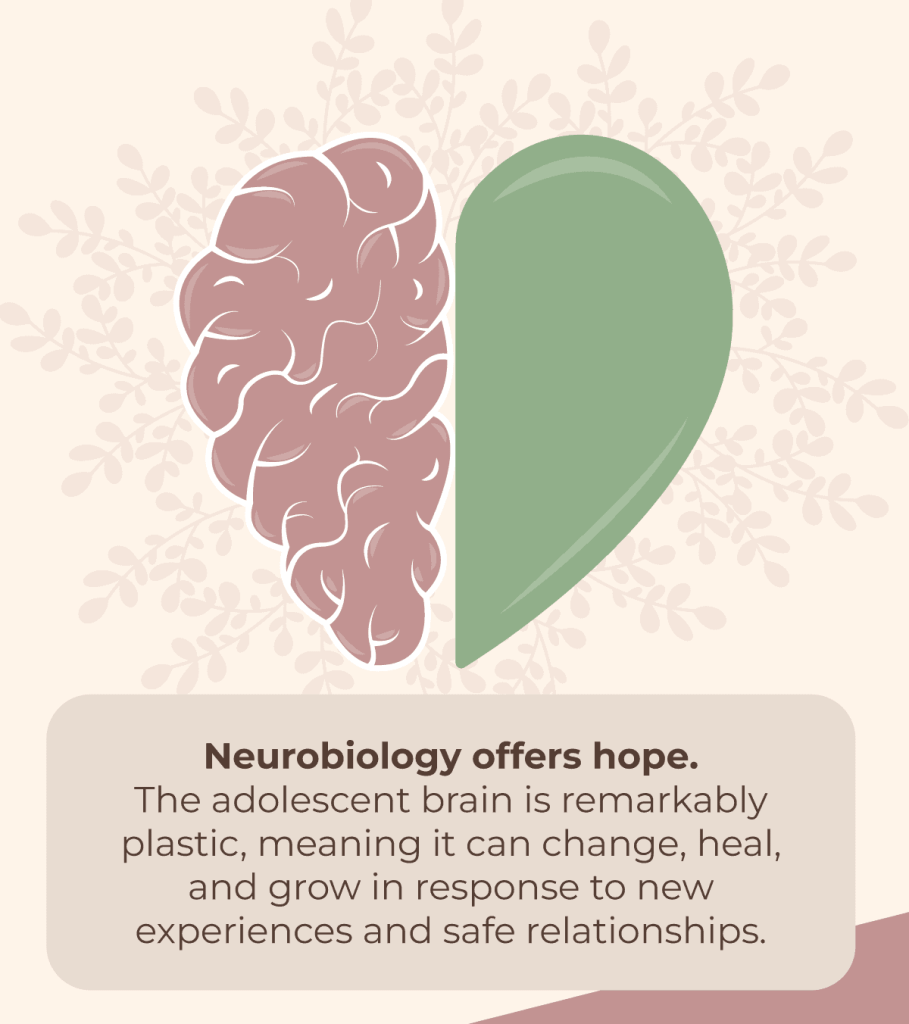
Neurobiology offers hope. The adolescent brain is remarkably plastic, meaning it can change, heal, and grow in response to new experiences and safe relationships.
How Trauma-Informed Care Can Help Your Teen
When a teen is dealing with trauma, it’s natural for their parents to want solutions.
But with trauma, healing doesn’t begin with fixing – it begins with understanding.
Trauma-informed care isn’t about forcing change. It’s about creating the conditions where change becomes possible – like safety, stability and trust. At its core, trauma-informed care asks one essential question: “What happened to you?” instead of “What’s wrong with you?” This shift in perspective is subtle but powerful. It moves the conversation away from blame and toward healing, helping teens feel seen and safe, often for the first time in a long time.But this approach goes beyond just asking better questions. True trauma-informed care means building a treatment plan around each teen’s lived experiences – not despite them. It honors each teen’s story, their resilience, and their pace. It means that every aspect of a teen’s day – from therapy and school to casual conversations – is built to foster real connection, restore their sense of control, and offer choices that honor each story.
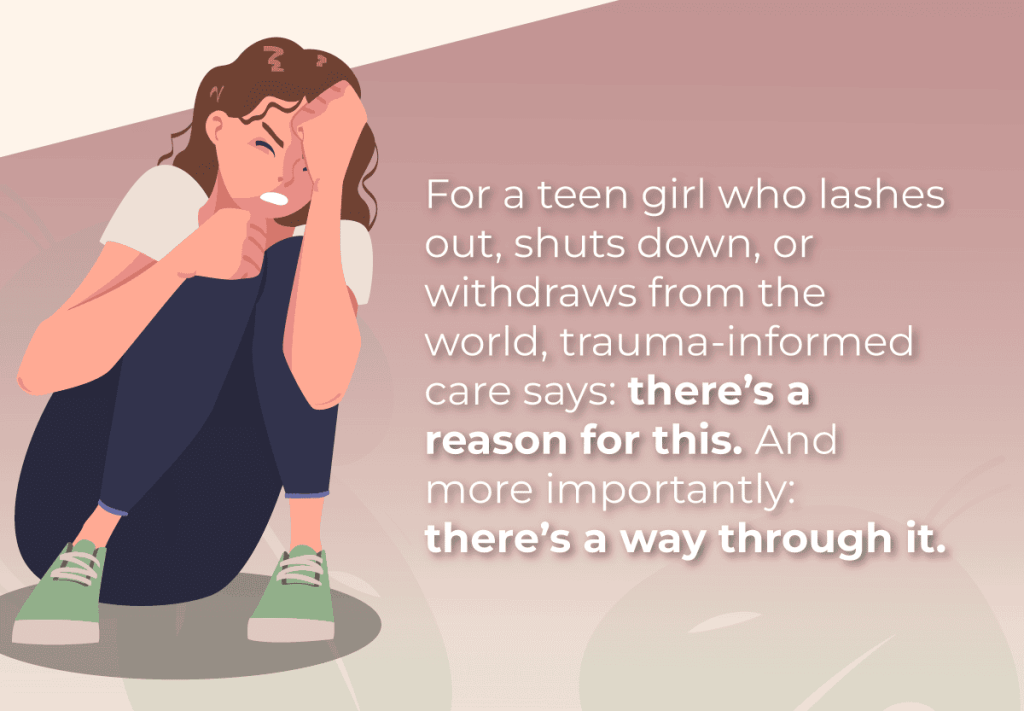
A trauma-informed approach recognizes how past experiences shape behavior, mood, and relationships. Rather than treating symptoms in isolation, it addresses the deeper wounds underneath. For a teen girl who lashes out, shuts down, or withdraws from the world, trauma-informed care says: there’s a reason for this. And more importantly: there’s a way through it. This healing starts with understanding. It means designing every part of the program to meet teens exactly where they are. For instance:
- Offering a girl choices at mealtime because she grew up in a home where she had no control over what she ate.
- Letting a teen skip making her bed without punishment because that was a task that was once used for severe discipline.
- Ensuring a girl who once survived in isolation and confinement has windows in her room.
- Giving a teen the option to sit near the door in therapy, because feeling trapped can trigger her fear response.
- Allowing breaks during schoolwork, because focus takes time to rebuild after trauma.
These all may seem like small details, but they send a powerful message: You are safe now, and you matter here.
Treating Adolescent Trauma in Texas at Roots Renewal Ranch
Trauma-informed care is grounded in understanding, not judgment. The goal is to create a space where teens feel safe, respected, and genuinely supported – because true healing can only begin when a young person feels secure enough to let their guard down.
This means:
- Building trust through consistent, respectful relationships with therapists, staff, and peers.
- Providing choice and empowerment, helping girls regain control over their own lives.
- Creating safety, not just physically, but emotionally, – so every girl knows she can let her guard down without fear.
- Responding, not reacting, to behavior. Understanding that even the most difficult moments are expressions of pain, not defiance.
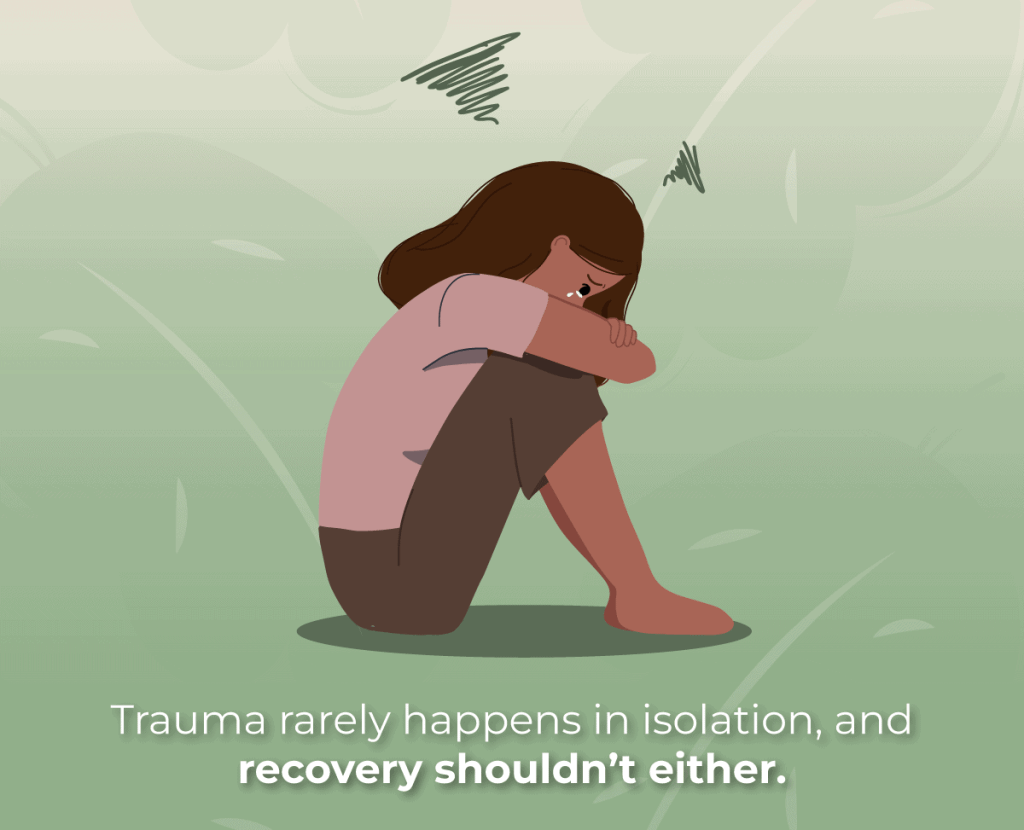
The most effective trauma-informed programs also engage the entire family system. Trauma rarely happens in isolation, and recovery shouldn’t either. When families are included in the process, teens are more likely to return to environments that reinforce healing, resilience, and long-term growth.At Roots Renewal Ranch, we don’t just treat trauma. We create space for transformation. Our approach to trauma-informed care for teens blends clinical excellence with real-life connection. From daily animal therapy sessions that help regulate the nervous system, to hands-on family involvement that rebuilds trust at home, every aspect of care is designed to meet girls where they are, and walk with them toward where they want to go.

If your teen is hurting, you don’t have to wait another day. Call us at (888) 399-0489 to learn how Roots Renewal Ranch can help your daughter heal, reconnect, and believe in herself again.
“She is strong, she is loved, and she is enough.”

