
Is your daughter or another girl age 13-17 struggling with a substance use disorder or a mental health condition like social anxiety, depression, or post-traumatic stress disorder (PTSD)? Maybe they’ve even confided to you that they’ve had some suicidal thoughts. If a girl in your life is going through something like this, it may be a very stressful time for you and for them. Getting them the support they need is, of course, a top priority. Watching them go through something this difficult before they have even graduated from high school can be heartbreaking.
Since the spring of 2020, many teens in Texas and throughout the country have had to move to attending school virtually. For girls who are already struggling, this can add to their mental load and make what they are going through all the more difficult for them to deal with. Virtual schooling has left many teens in Texas feeling isolated from their peers and fatigued by endless Zoom calls.
Almost all Texas schools shifted to some or all virtual schooling at the beginning of the COVID-19 pandemic. By August of 2021, many schools were going back to primarily in-person learning.
This kind of isolation can be linked to serious problems, including mental health disorders and addiction. In her TED Talk, neuroscientist Rachel Wurzman discusses how isolation and a lack of social interaction fuel mental illness and opioid addiction. Opioid receptors are related to the emotional, psychological, and chemical benefits we receive from social interactions, and when we lack that social interaction, opioids activate the brain’s reward system in a way that is similar to how social interaction would.
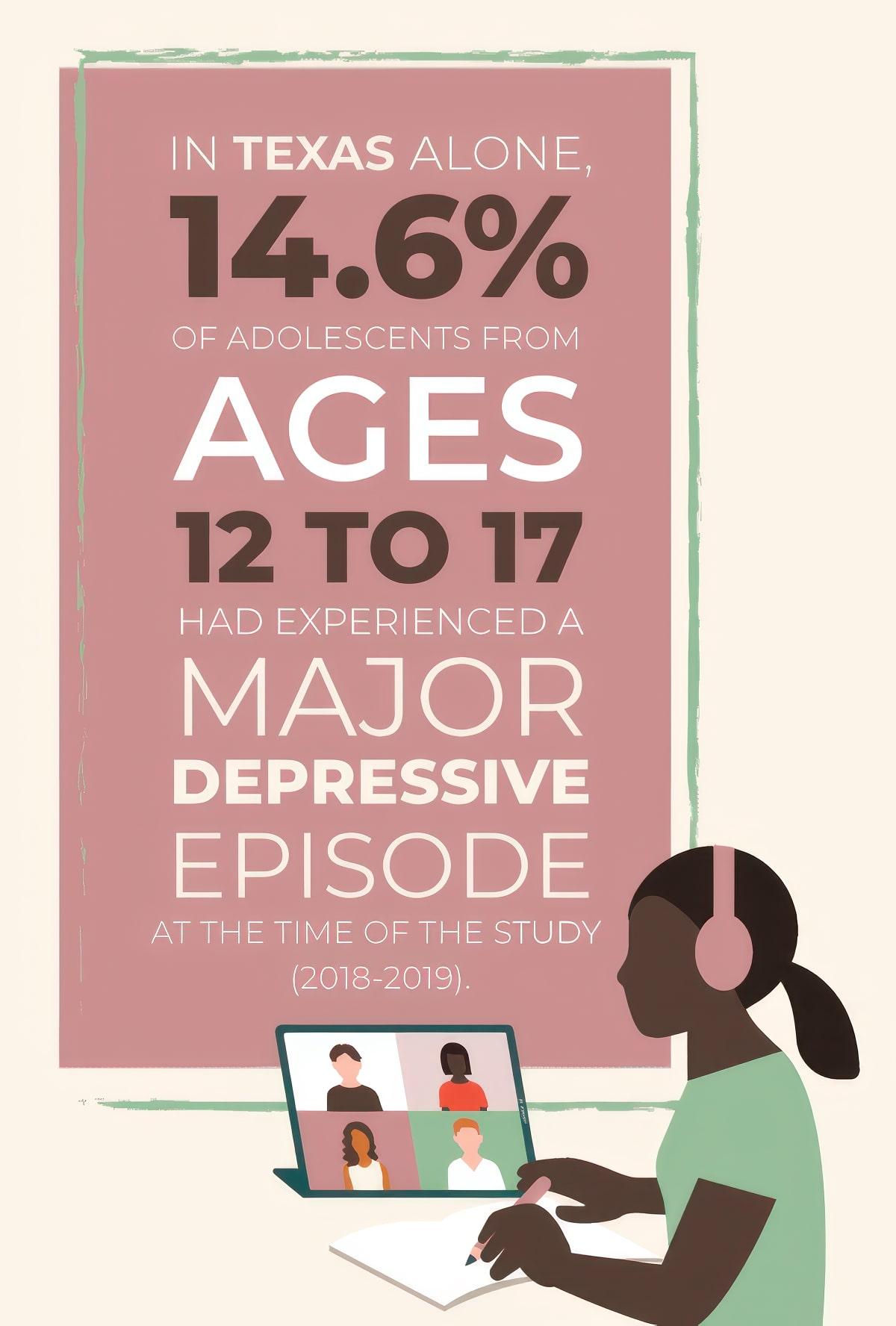
With the ever-increasing number of young people in a virtual schooling environment, it is important to consider how many of those children are already suffering from a mental illness. According to the Kaiser Family Foundation (a nonprofit that focuses on public health data and information), in Texas alone, 14.6% of adolescents from ages 12 to 17 had experienced a major depressive episode at the time of the study (2018-2019).
For many of the girls in this age group, their mental health continued to decline when they had to face the isolation of online schooling, social distancing, and regular quarantining away from family and friends .
How Are Texas Children Being Impacted?
In the spring of 2020, adolescents everywhere, including Texas, had to start taking almost all of their classes virtually with practically no warning. There was a steep learning curve, which impacted children’s social, emotional, and academic learning.
Many children experience Zoom fatigue. The American Academy of Pediatrics (AAP) previously recommended no more than two hours of screen time a day for school-aged children. For most adolescents, this is not a reality so much as a pipe dream.
Teens in Texas and across the world are spending their days in Zoom classrooms and their nights on their phones, laptops, gaming consoles, and televisions. The AAP has updated its guidelines to reflect the truth of modern life. The AAP now suggests that parents and children alike try to cultivate healthy relationships with their electronic devices. This means not necessarily putting a strict time limit on your device time, but instead limiting the situations and contexts in which you use your device.
The main reason for trying to limit the time children spend on their devices is an attempt to protect their mental health from the digital world. Even before the 2020 pandemic required children to spend extensive amounts of time on their devices, adolescents were already struggling with mental health.
According to the National Institute of Mental Health, 11.2% of adolescent girls had social anxiety when they conducted a study from 2001-2004. In the nearly 20 years since that study, girls have faced social isolation, especially in the last few years, which is a known contributing factor to social anxiety.
In addition, children in Texas are already facing a number of other mental illnesses. According to the Substance Abuse and Mental Health Services Administration, an average of 33.7% of Texas teens with a major depressive episode received care for depression from 2016 to 2019.
Online Bullying
Another result of all social interaction for teens being confined to the Internet and social media is online bullying or “cyberbullying.” Cyberbullying is any form of bullying or harassment that occurs online over social media, messaging apps, or other forms of digital correspondence. According to a survey conducted by the Cyberbullying Research Center, in 2019, 35.6% of Texas children ages 12 through 17 had been the victim of cyberbullying in their lifetime, and 17.4% had been bullied within 30 days of the study.
Cyberbullying often feels unrelenting for teenagers. While there was a day and time when children could escape their bullies when they were at home, cyberbullying often makes children feel like there is no hope and that the torment is pervasive in every part of their lives.
When a child is being bullied, they often feel socially isolated. Isolation can contribute to many mental health issues, including suicidal thoughts. The Centers for Disease Control and Prevention recently published findings that the number of ER visits made by teenage girls for suspected suicide attempts doubled nationwide in 2021 compared with the same period in 2019. One of the major contributing factors being considered is the isolation this age group has experienced due to the COVID pandemic and the lack of social interaction outside of online formats.
Some warning signs of suicidal tendencies in teens include:
- Giving away belongings when there is no other logical explanation
- Developing personality changes
- Being severely anxious or agitated
- Talking or writing about suicide (e.g., “I’m going to kill myself,” or “I won’t be a problem for you much longer”)
- Changing normal routine
- Changes in eating
- Changes in sleeping patterns
- Taking part in risky or self-destructive behavior
- Withdrawing from social contact
- Having mood swings
- Increasing use of alcohol or drugs
- Feeling trapped, hopeless, or helpless about a situation
Negative Impact of Social Media
Social media can also have harmful effects on teenage girls. A 2019 study published in The Lancet Child & Adolescent Health found that social media appears to have harmful effects on teenage girls that do not show up as readily in boys. The girls in the study experienced issues with sleep disruption, lowered physical activity, and cyberbullying. This resulted in lower overall well-being than among the boys in the study as well as lower reported levels of happiness and life satisfaction, along with higher rates of anxiety.
Since the beginning of the COVID-19 pandemic in 2020, so much of young people’s social lives have taken place over social media. These virtual connections have been much more consistently available than in-person friendships and traditional socialization. This isolation and digital landscape could be another contributing factor to the fact that suicide rates doubled among teenage girls in 2021.
What Are the Psychological Effects of Long-Term Virtual Schooling?
While a student will have opportunities to speak and interact with other students virtually, including possibly from their home school, there is a definite lack of face-to-face human interaction that comes with long-term virtual schooling.
As we have traversed the COVID-19 pandemic, we have learned a lot about virtual learning and the effects it has on our youth.
An article posted on the American Psychological Association (APA) website broke down some of the possible downfalls of virtual learning.
In the article, it says, “Those moments of working alongside a friend or asking a teacher for guidance allow students to feel connected to others, and this sense of belonging influences students’ engagement in class.”
Allison Ryan, an education professor at the University of Michigan, recently released a study diving more into what the APA states about students finding belonging in being at school physically.
In the study that followed 50 students in math and science classrooms, Ryan concluded, “Spending time with friends is often a student’s favorite part of school, and without that sense of belonging, it may be harder for kids to stay focused.”
Losing the sense of belonging that is created by in-person classes can worsen already existing behavioral issues, like social anxiety, depression, and general anxiety.
As discussed above, isolation can cause serious mental health issues and even fuel substance use disorders. As Rachel Wurzman points out, social isolation makes our brains hungry for the reward of social interaction.
When people lack that social interaction, they begin to crave it, which makes people, especially teenage girls, anxious and depressed. Wurzman points out that when a person’s brain is craving that interaction, they will do pretty much anything to fulfill that craving for connection.
Unfortunately, that often looks like seeking connections online or finding that satisfaction through other means, like substances and food, which can lead to substance use disorders and eating disorders.
So What Can Parents Do to Help Their Daughters Combat the Negative Effects of Isolation Brought On by Pandemic Restrictions?
Of course, every parent wants to help their child when they are experiencing painful problems or life changes. But what can you do about the isolation of a pandemic and the ever-present nature of technology?
Here are a few tips from Roots on how to improve your daughter’s mental health when it comes to the topic of isolation, technology, and online bullying:
Talk to your daughter regularly and openly, even if it is about difficult topics. Explain that you are always there for them, even if she has done something she feels is embarrassing or that would disappoint you. Talking to a teen about sensitive subjects can be hard.
Here are some tips:
- Make sure she knows that her safety is your number one priority.
- Open by volunteering information that you might not prefer to share. Maybe you had experience with cyberbullying, sexual pressure, or others issues as a teen. By being vulnerable yourself, your teen will feel more comfortable opening up.
- Start with a public story. Find an online article about such problems teen girls face. There are many such news stories online these days, and this can be a good way to make it clear any potential actions by your daughter aren’t unique, as well as give her insight into how you are reacting to events in the story.
- Keep the conversation hypothetical at first. Open with a line such as, “I wanted to speak with you about some dangers of online social sites. I’m not asking if you’ve done or are aware of any such actions in your friend group, but I want to have a conversation to help you if and when the situation does come up. If you have something you’d like to share, I’m here to help you with that, but I’m not going to ask you either way. I just want to talk with you about some of the dangers out there in case you do come across them.”
- Let her know that anything she tells you is completely confidential and you’re only seeking to help. She may fear repercussions or judgment if she opens up about something like sharing risque photos.
Schedule time in your day for one-on-one time with your daughter as well as family time. Enjoy a meal together or do an activity together that you know your daughter specifically enjoys. It is also important to encourage interaction with wider groups of family and friends as you are comfortable with in-person interaction as pandemic restrictions lessen.
Another tip is to encourage exercise and time spent outdoors. Sunlight and exercise have positive effects on mental health. Engaging with nature can also help students get out of their own head and away from the technology they may feel consumed by. According to a 2006 study from The Primary Care Companion to the Journal of Clinical Psychiatry, a 10-minute outdoor walk every day results in improved mood, improved sleep, and improved stress relief.
FAQ:
Does virtual schooling have a negative impact on teens’ mental health?
While every teen is different, sole reliance on virtual schooling may have a negative impact on teenage girls’ mental health. Virtual schooling and internet activity can make girls feel very isolated. We have seen some of the potential effects of this long-term isolation since the COVID pandemic began, such as the fact that suicide attempts for teen girls doubled in 2021.
Why did suicide attempt rates for teen girls double in 2021?
There are many contributing factors to why suicide attempt rates for teenage girls doubled in 2021. Many experts link isolation to suicidal thoughts and actions. We can also see that issues like extensive social media use and cyberbullying are worsening the mental health of teenage girls.
How does more time spent online impact my teen daughter’s mental health?
Spending a lot of time online can have a severe negative effect on a teenage girl’s mental health. Social media often leads to unrealistic standards for girls and has been linked to a loss of sleep and an overall loss of satisfaction with their lives.
