The most common age to start self-harming is 13 years old.
If you have a young teen, that’s a terrifying thought. It might also be a confusing one. They’re still so young, after all. What reasons would they have to hurt themselves?
Actually, there are quite a few reasons why teens turn to self-harm.
At Roots Renewal Ranch, we work with teen girls daily, talking through their concerns and helping them heal. Today we are covering the signs of self-harm, the reasoning behind it, and what to do if you think your teen might be in trouble. We know this is a heavy, scary topic, so take a deep breath. We’ll walk you through it.
Why Would My Teen Turn to Self-Harm?
This might be one of the first questions you have as a parent, and it’s an understandable one, especially if your teen hasn’t shown any indications of emotional pain to you. That’s what it’s about though: teens think self-harm is the best way to relieve the tension, stress, and turmoil they feel.
Those emotions can come from a lot of different places. Abuse and other trauma can be a huge influence, as can the death of a loved one, substance use, and mental health concerns. With self-harm typically starting at such a young and impressionable age, sometimes all it takes is knowing someone else who self-harms. It can pique curiosity, cause a teen to try it, and then lead to an unsafe habit.
If you’re on this page, it means you’re concerned about your child. It’s important to know your teen turning to self-harm is not your fault, and it’s not an indication of poor parenting. You’re doing the right thing by learning more about this topic, and we’ll help you with the next steps.
It’s just as important not to place blame on your teen, even if you don’t understand why they would hurt themselves. Self-harm is an unhealthy coping mechanism for deep pain, and is not a moral failing. Focus on what you can do to help your teen heal, not on chastising them for their decisions.
How Do I Know If My Child Is Harming Themselves?
Because self-harm is such a physical act, there are usually a lot of noticeable signs of it if you know what to look for. Keep in mind that if your teen shows these signs of self-harm but denies it if you ask, or you can’t find other evidence, they could still benefit from help from a mental health professional.
How to Spot the Physical, Psychosocial, and Behavioral Signs of Self-Harm in Teens
Physical signs are the clearest indication of potential self-harm, but teens will often try to hide them. Because self-harm revolves around emotional distress, there are also emotional and psychological signs. Behaviors will sometimes indicate self-harm as well. Most likely, teens will exhibit a combination of the signs below:
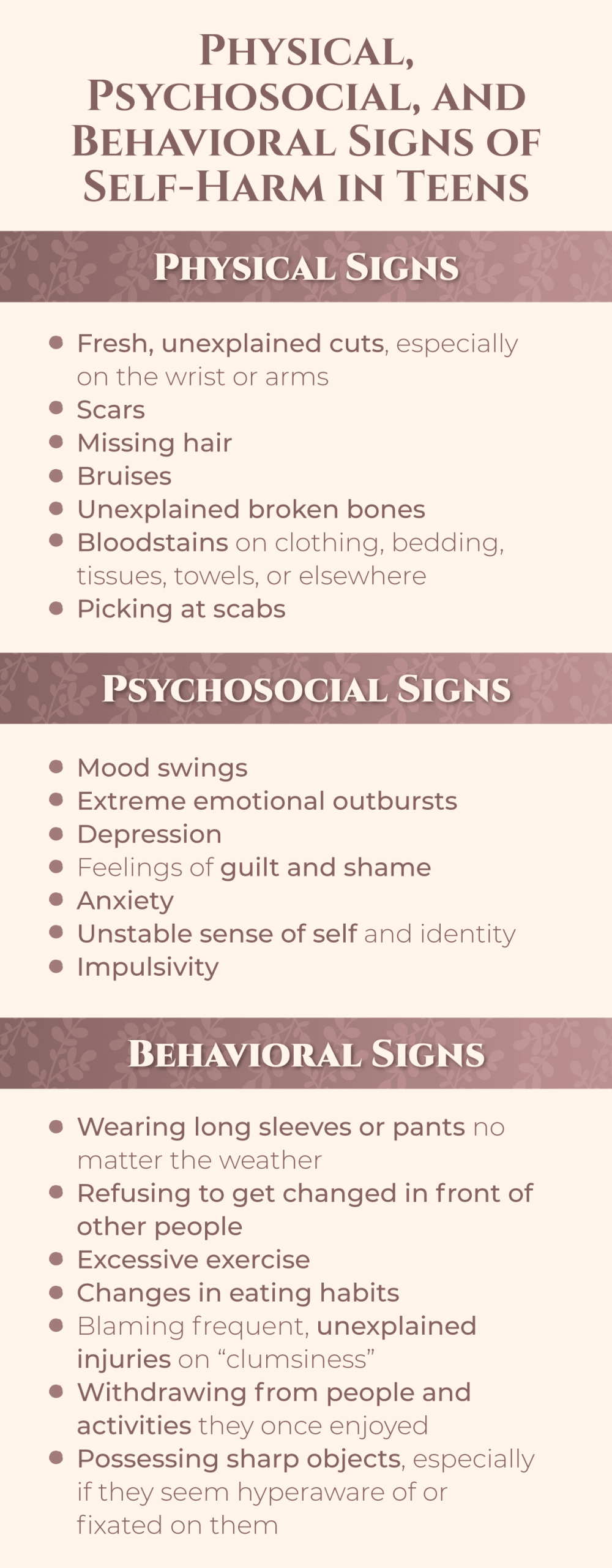
| PHYSICAL SIGNS | PSYCHOSOCIAL SIGNS | BEHAVIORAL SIGNS |
|---|---|---|
| Fresh, unexplained cuts, especially on the wrist or arms | Mood swings | Wearing long sleeves or pants no matter the weather |
| Scars | Extreme emotional outbursts | Refusing to get changed in front of other people |
| Missing hair | Depression | Excessive exercise |
| Bruises | Feelings of guilt and shame | Changes in eating habits |
| Unexplained broken bones | Anxiety | Blaming frequent, unexplained injuries on “clumsiness” |
| Bloodstains on clothing, bedding, tissues, towels, or elsewhere | Unstable sense of self and identity | Withdrawing from people and activities they once enjoyed |
| Picking at scabs | Impulsivity | Possessing sharp objects, especially if they seem hyperaware of or fixated on them |
Is Cutting the Only Form of Self-Harm? Different Types of Self-Harm and Their Signs
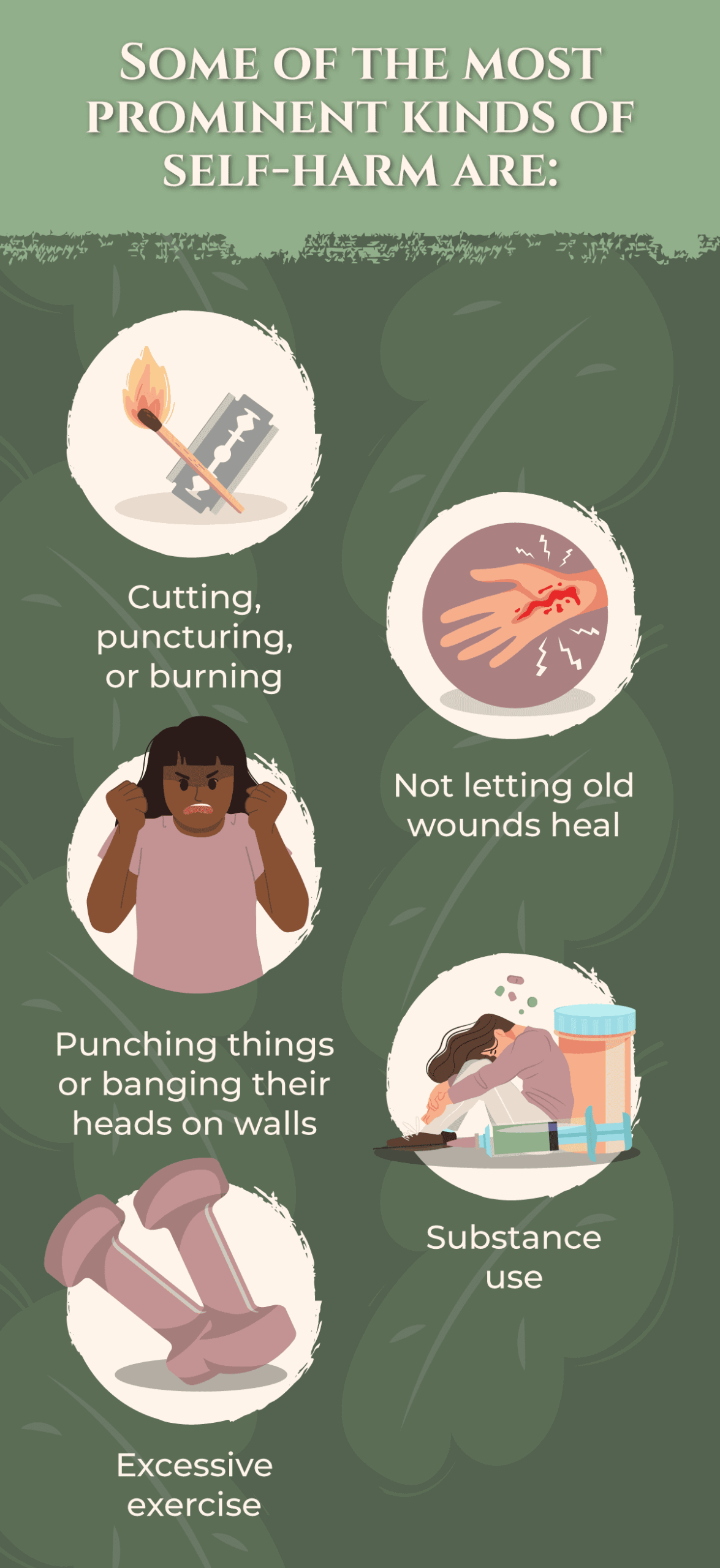
While cutting is the most common and most well-known form of self-harm, it isn’t the only one. Some of the most prominent kinds of self-harm are:
- Cutting, puncturing, or burning. Evidence of these actions will be on their bodies, whether scars, small puncture wounds, or healing burns.
- Not letting old wounds heal. This is an often overlooked form of self-harm, but picking at scabs is a form of self-harm, too.
- Punching things or banging their heads on walls. This is harder to recognize physically, but unexplained bruises could be a sign.
- Substance use. Some teens will drink or use other substances, whether they’re taking medications illicitly or involved with street drugs. Sometimes, this is due to the positive feelings that come with them. Other times, they know it’s harmful to their bodies and take them for that reason, too.
- Excessive exercise. Some teens will exercise until they hurt themselves or collapse. While exercise is usually a positive thing, keep an eye on your teen and make sure they set healthy limits and give their body a break when needed.
How the Digital Age is Impacting Self-Harm
There’s also a more recent phenomenon known as “digital self-harm.” This is when a teen posts hateful anonymous comments about themselves online. While not directly physically harmful, a 2022 study found teens who digitally self-harm are nine to fifteen times more likely to attempt suicide than their peers who don’t. your teen turning to self-harm is not your fault,
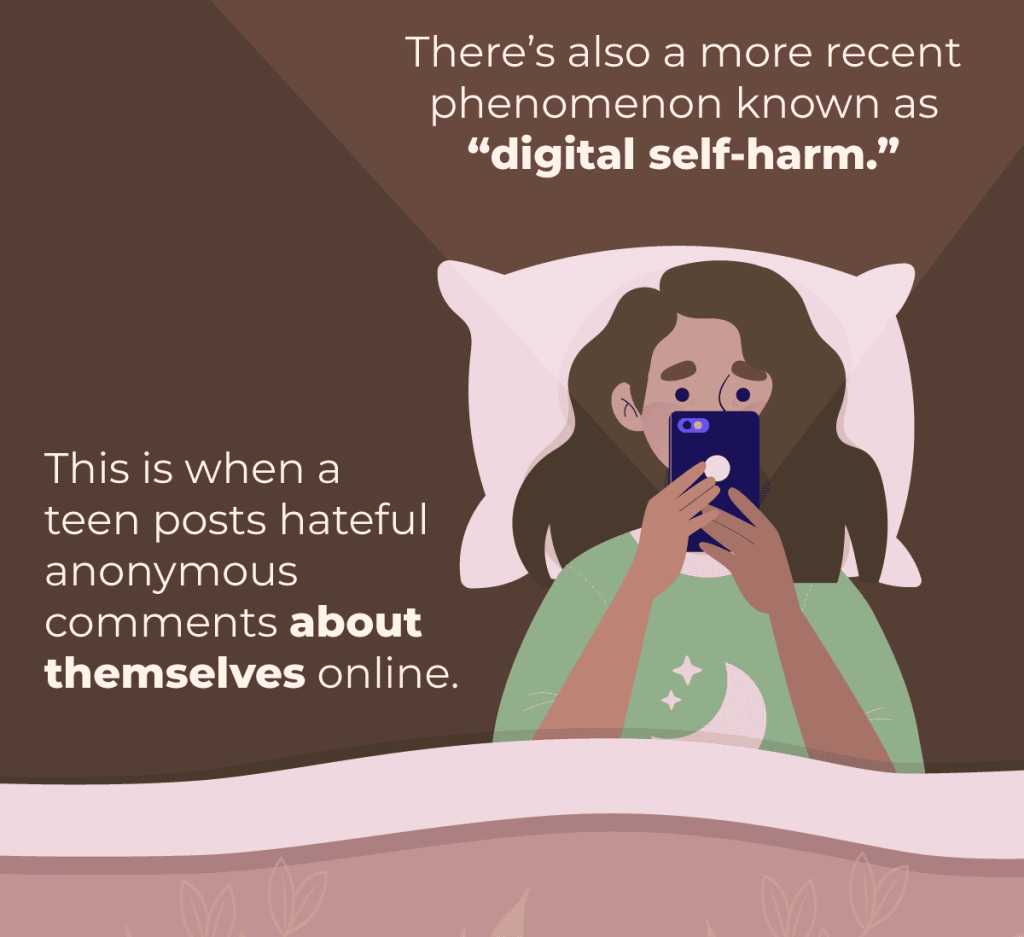
If your teen demonstrates a lot of the psychosocial signs of self-harm and spends a lot of time online, it’s a good idea to keep track of their social media profiles if possible. If you see hate comments, that doesn’t mean your teen is sending them to themselves. It does warrant a conversation, though. Your child could use some encouragement no matter what.
The Relationship Between Self-Harm and Co-Occurring Disorders
Self-harm isn’t a mental health condition or diagnosis by itself, but if your teen self-harms, chances of them having a mental health condition are high. A 2023 study found that 90% of participants who frequently self-harmed had a co-occurring mental health condition, the most common ones being alcohol use disorders, borderline personality disorders, and major depressive disorders. Even ADHD diagnoses in childhood can indicate a greater likelihood of self-harm in the teenage years, according to another study.
This is why it’s so vital to get teens who self-harm the professional help they need.
Taking the First Step Toward Healing: Getting Help for Self-Harm
Self-harming is just a symptom of some deeper emotional pain or mental health condition. You can adopt a bunch of strategies to encourage your teen not to go through the action of self-harming anymore, but that’ll be incredibly difficult without addressing what’s motivating the self-harm to begin with.
If your teen exhibits the signs of self-harm outlined in this blog, don’t panic. We know that’s a lot easier said than done, but there are ways to help your daughter heal. We recommend getting your child mental health and self-harm treatment as soon as possible. Whether the care is just therapy or something more intensive, like a residential program, it’s essential to stop your teen’s desire to self-harm.
Your teen might not be receptive to getting help. If this is the case, make sure you don’t get upset with them. The best first step is to speak to your teen openly and honestly. Let them know you care about them and are concerned about them, and that you want to listen to what they’re going through, and help them manage it. Some teens might not want to open up right away, and that’s okay. Patience is key, as is persistence, but finding the balance is important.
It might help to do some research on treatment available, so you can share more information with your teen about their options, and their effectiveness. Teens are smart and are more likely to believe something will work for them if they understand it and see evidence of it working for other people.
Focusing on what your teen wants out of mental health treatment can be a game-changer, too. While your goal is probably for them to stop self-harming and be healthy and happy, they might have other goals. They might want to feel more included in their friend groups, or feel less stressed out about school, for example. If you get down to what your teen wants, you can work with them to address what matters to them, and also tell them how a professional can help with their goals. What your teen wants matters, and by making sure they know what they want is important to you, too, they’ll trust you and the process more.
It also might be beneficial to seek therapy for the whole family. It can benefit any family, even if you don’t notice any dysfunction with your own. It also takes some pressure off your teen, and makes sure they don’t feel like “they’re the problem.” It also proves you’re serious about making their situation better, even if it means making changes yourself.
Finding Treatment Options for Self-Harm in Teens in Texas
If your teen is experiencing suicidal ideation or you fear their life is in danger, don’t wait to get help. Seek help for them as soon as possible, whether they want it or not. It can be hard to go against your teen’s wishes, but their life and safety are most important. Everything else is secondary.
Regardless of the kind of care your teen needs, know they’re not alone, and neither are you.
Roots Renewal Ranch is a mental health treatment center for girls ages 13-17, located in the Dallas-Fort Worth area. We’re experts in our field, experienced in trauma-informed care and helping teens manage aggression – both of which can be key in addressing self-harm. We approach everything with empathy and warmth, too, because we know what it’s like. Our staff is in recovery too. We’re ready to welcome your daughter with open arms, and so are all the Roots family animals. Just give us a call at 888-399-0489. Your daughter is strong, she is loved, and she is enough.

FAQs
What should I do if my teen is displaying signs of self-harm?
It’s important to seek mental health treatment for them as soon as possible. Talk to them openly and honestly about your concerns, actively listen to theirs, and start a discussion about getting help.
How can I help my daughter stop self-harming?
It’s not reasonable to put the pressure on yourself to get your daughter to stop self-harming. Contact a mental health professional, who is trained in this topic. Encouraging her to punch pillows, tear paper into pieces, hold ice cubes, listen to music, make art, or exercise when she feels the urge to self-harm can also help the recovery process.

